How to Select Fans for Potato Storage: Airflow, Static Pressure and Uniformity
Expert perspective: Alexander Samsonov, Agricultural Storage Engineer. Read the original LinkedIn perspective.
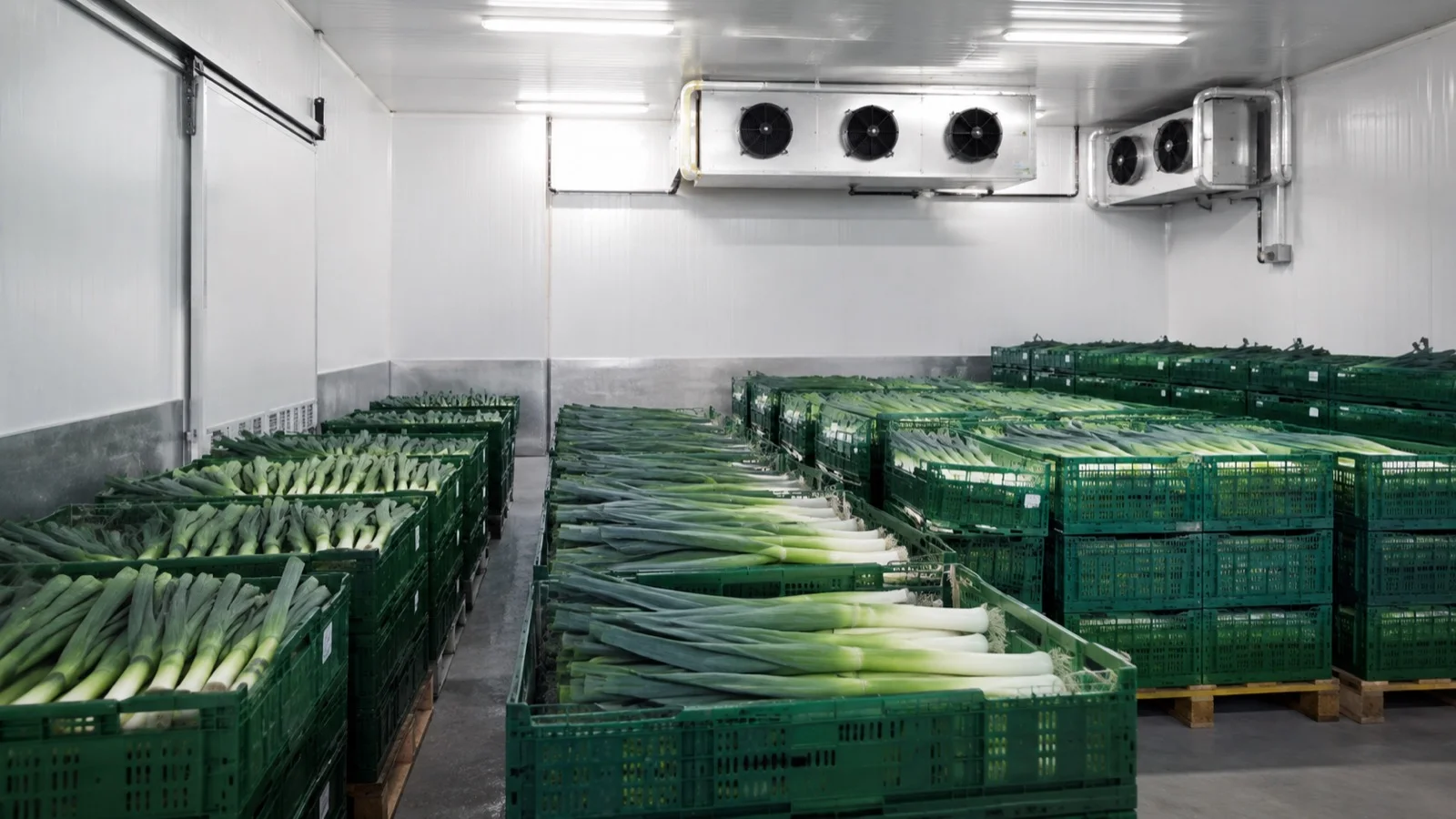
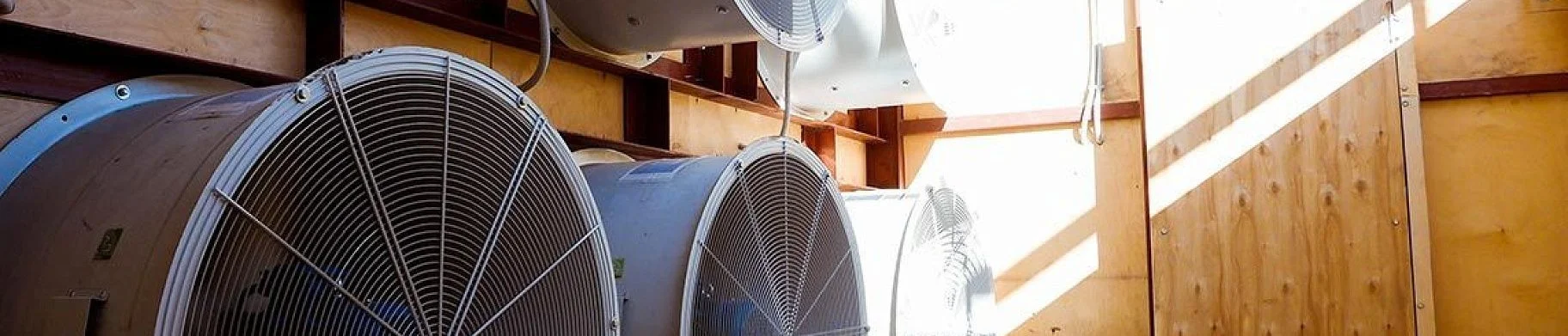
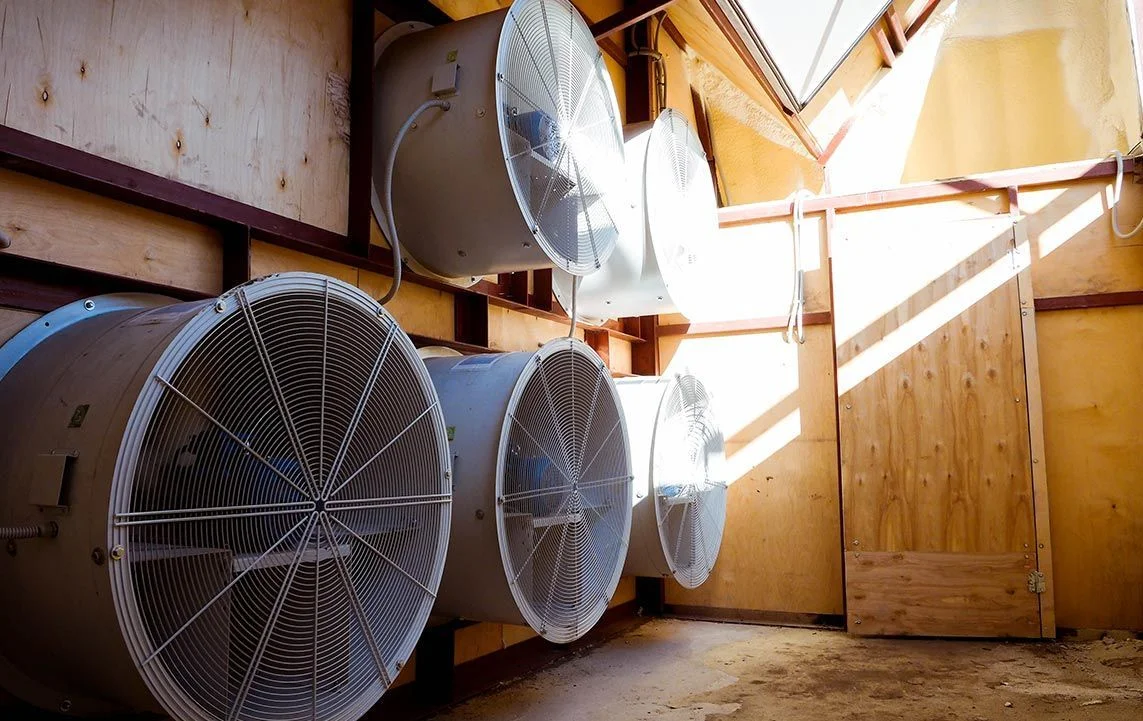
A potato storage fan is not selected by diameter or free-air volume alone. It must deliver the required airflow at the static pressure created by ducts, floors, boxes, bags or the bulk crop.
Alexander Samsonov describes why axial fans are common in crop storage: they can move large air volumes efficiently in the pressure range of many agricultural systems. The important qualification is that not every storage has low resistance.
Start with the Required Operating Modes
Curing, pull-down, holding, recirculation, fresh-air cooling, gas correction and sprout-control application may require different airflow. Define each mode before selecting the fan and control method.
Build the System Curve
Resistance comes from fan guards, transitions, dampers, heat exchangers, plenums, ducts, perforated floors, boxes, bags and the crop itself. It increases as airflow rises and can change during the season as the pile settles or passages become obstructed.
The design duty is therefore expressed as airflow at static pressure. A free-air rating describes a point with almost no system resistance and is not a storage selection criterion.
Axial or Centrifugal?
Axial fans are often effective where the system requires high volume at low or moderate static pressure. Centrifugal designs may be appropriate where the air path has higher resistance or different control requirements. NCCD guidance explicitly recommends selecting fan type from desired airflow and static pressure.
Some agricultural axial fans are designed for higher pressure than ordinary circulation fans. The category name alone is insufficient; compare certified or tested fan curves at the calculated duty point.
Uniformity Is More Important Than Average Volume
A correct total airflow can still produce poor storage when ducts are spaced incorrectly, holes are unbalanced, leakage bypasses the crop or part of the load is compacted. Measure pressure and temperature across the chamber and correct the distribution network before increasing fan speed.
Account for Installation Effects
AMCA describes system effect as the loss caused by non-uniform or swirling airflow near a fan inlet or outlet. Abrupt elbows, blocked inlets, short transitions and poorly positioned dampers can move the real operating point away from the catalogue curve, increasing power, noise and vibration.
- Provide a clean, uniform fan inlet.
- Avoid abrupt transitions immediately before or after the fan.
- Include guards, dampers and heat exchangers in the pressure calculation.
- Commission the installed system with airflow and pressure measurements.
Use Variable Speed Carefully
A variable-frequency drive can reduce airflow and energy during holding periods. Fan affinity laws mean power can fall strongly with speed, but only if the lower speed still maintains acceptable distribution. Some systems become less uniform when total airflow is reduced.
Minimum Selection Data
- Crop, loading method, pile or stack geometry and maximum depth.
- Required airflow for every operating mode.
- Calculated pressure loss of the full system.
- Fan curve, motor power, efficiency, noise and speed-control range.
- Number of fans, redundancy and behaviour when one unit is unavailable.
- Measurement points for commissioning and seasonal verification.
The correct question is not “How many cubic metres per hour does this fan move?” It is “How much air will the installed system deliver through every part of the potatoes?”
Compare Agrovent's ASP high-pressure fans, VRE recirculation fans and perforated storage ducts. Send the chamber geometry and storage method to Agrovent India for fan selection.
Sources and Further Reading



More articles
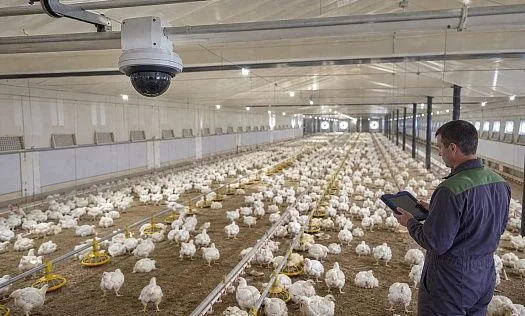 From CCTV to Flock Intelligence: A Practical ValentinaCV Pilot
ValentinaCV turns existing poultry-house video into a structured seven-day behaviour audit — without replacing the climate controller or taking control away from farm staff.
News
From CCTV to Flock Intelligence: A Practical ValentinaCV Pilot
ValentinaCV turns existing poultry-house video into a structured seven-day behaviour audit — without replacing the climate controller or taking control away from farm staff.
News
 African Agriculture in a New Context
Africa holds enormous agricultural potential, but progress requires investment in smallholder farmers, water infrastructure, innovation, and climate-resilient policies. Explore the key challenges and solutions shaping the future of African food systems.
Harvest
African Agriculture in a New Context
Africa holds enormous agricultural potential, but progress requires investment in smallholder farmers, water infrastructure, innovation, and climate-resilient policies. Explore the key challenges and solutions shaping the future of African food systems.
Harvest
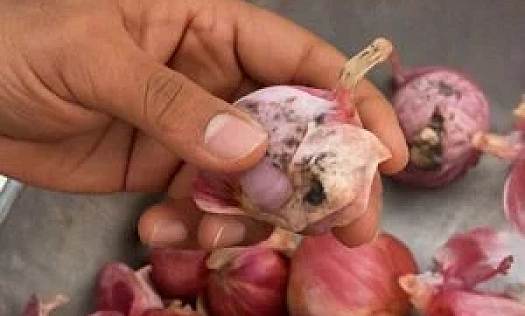 Detecting Onion Storage Hot Spots: Temperature, Humidity, VOCs and Inspection
How temperature and humidity trends, odour and VOC sensors, airflow checks and visual inspection can help detect onion spoilage zones before losses spread.
News
Detecting Onion Storage Hot Spots: Temperature, Humidity, VOCs and Inspection
How temperature and humidity trends, odour and VOC sensors, airflow checks and visual inspection can help detect onion spoilage zones before losses spread.
News
 Why do food systems need innovation in intensive refrigeration?
How is food stored in developing countries?
News
Why do food systems need innovation in intensive refrigeration?
How is food stored in developing countries?
News
 Breathing and suffocating of sugar beet root crops during storage
Beet respiration intensity factors. Measures to prevent suffocation of root crops
News
Breathing and suffocating of sugar beet root crops during storage
Beet respiration intensity factors. Measures to prevent suffocation of root crops
News
 Global Onion Storage Guide: Temperatures, Humidity, Ventilation & Regional Best Practices
Learn how to store onions safely for 6-10 months using bulk or container systems. Explore temperature, humidity, airflow requirements, varieties, harvest maturity, and regional practices across Europe, India, Africa, and South America.
Global Onion Storage Guide: Temperatures, Humidity, Ventilation & Regional Best Practices
Learn how to store onions safely for 6-10 months using bulk or container systems. Explore temperature, humidity, airflow requirements, varieties, harvest maturity, and regional practices across Europe, India, Africa, and South America.

Leave your contacts and we will get back to you