


High-Pressure Air Supply for Crop Storage Ventilation
ASP high-pressure fans are designed for crop storage ventilation systems where air must be pushed through pressure channels, ducts, floor systems or crop layers with significant resistance. They are used in vegetable storage projects that require reliable airflow at defined pressure points rather than only free-air performance.
The fan must be selected from the real operating point of the system. For storage applications, this means considering crop height, duct geometry, floor openings, channel resistance, damper positions and the operating mode required by the climate-control strategy.
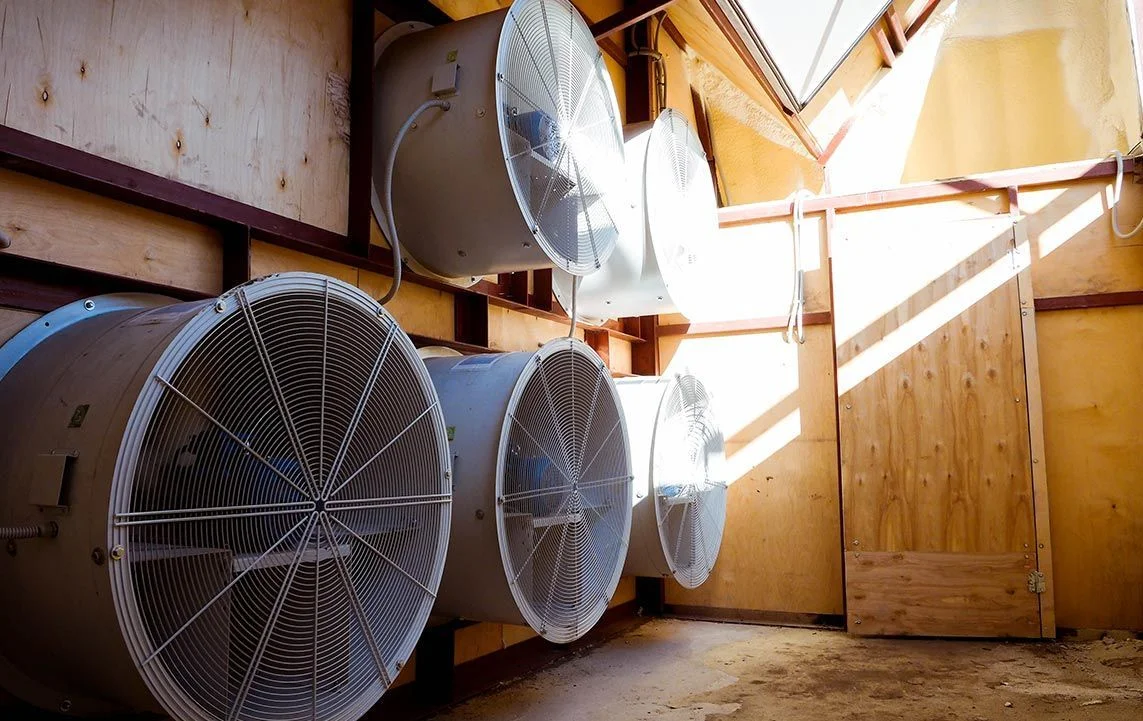
Application and Operating Environment
ASP fans are suitable for non-explosive air and gas mixtures that do not aggressively corrode carbon steel. They are intended for clean agricultural air streams with limited dust and without sticky or fibrous materials. This makes them suitable for ventilation rooms and pressure chambers in vegetable storage facilities.
The fans are designed for continuous operation in demanding agricultural buildings. Typical environmental limits are from -40 to +40 C, with IP54 motor protection and three-phase 380 V power supply.
Construction
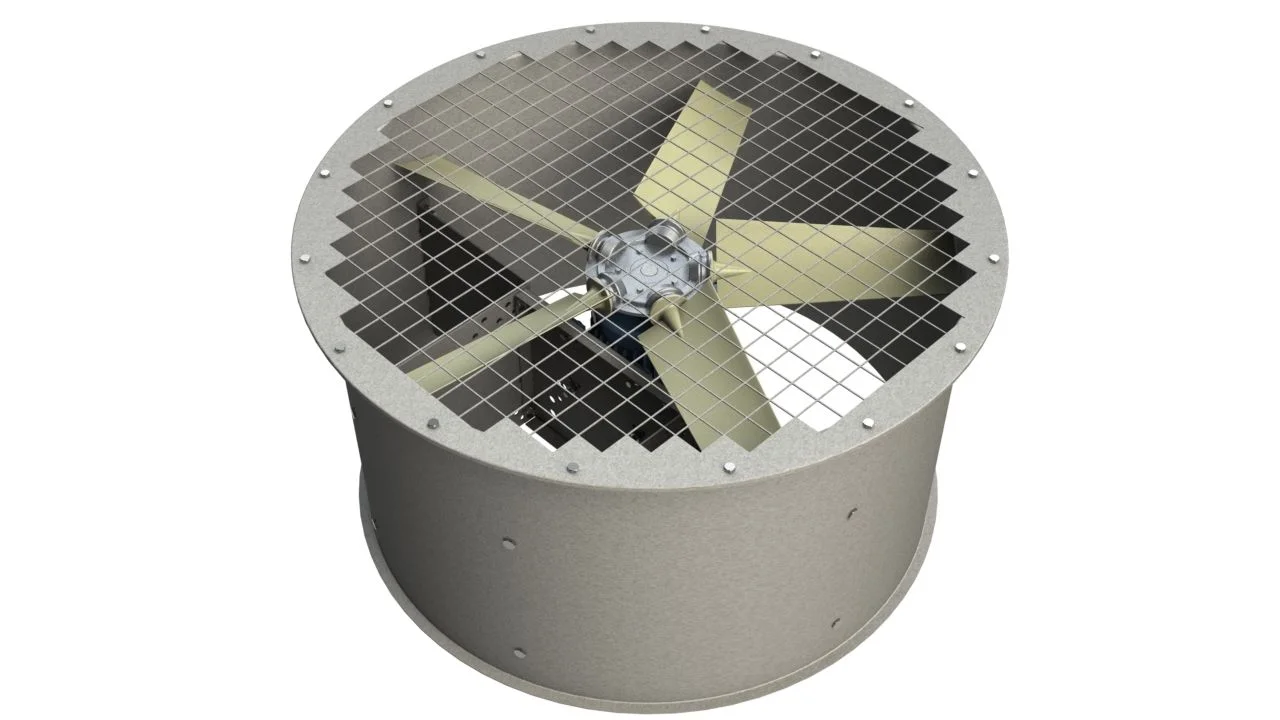
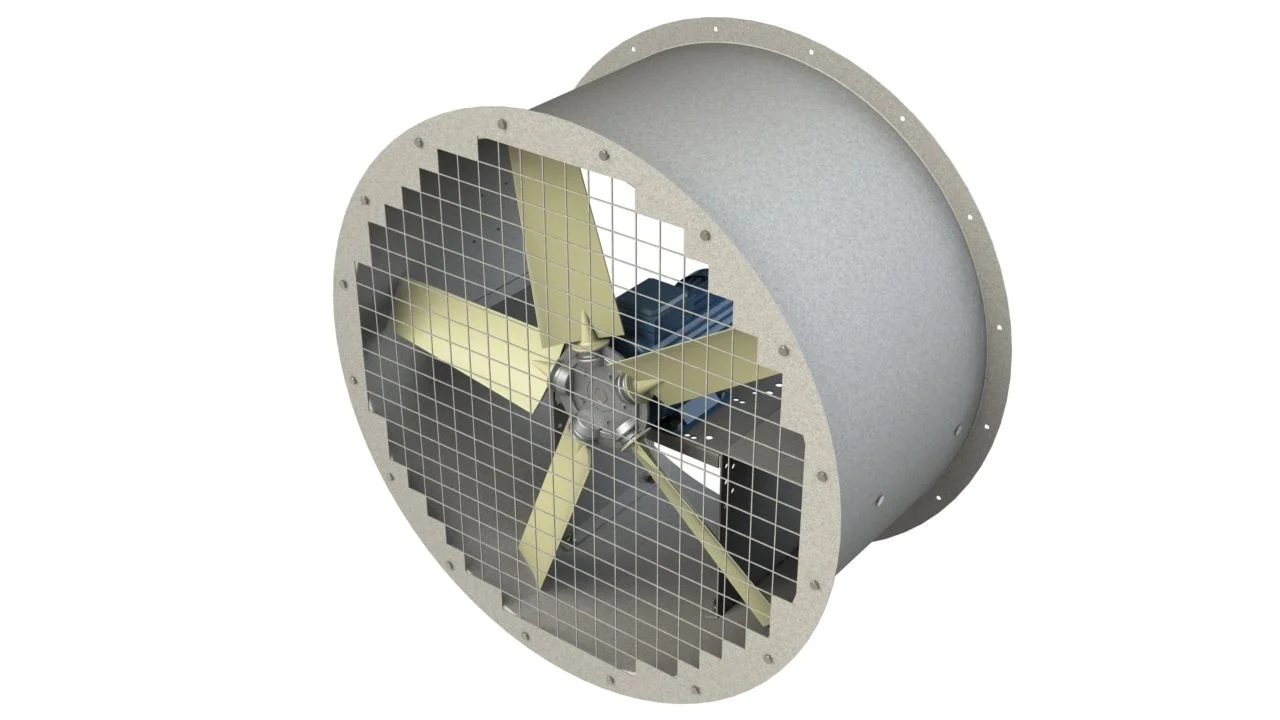
- Coated galvanized casing: supports long-term use in storage ventilation rooms.
- Aluminum alloy wheel components: reduce corrosion risk and keep rotating parts light.
- Glass-filled polyamide blades: provide stable blade geometry for axial fan operation.
- Three-phase motor: 380 V asynchronous motor platform for industrial agricultural use.
- Continuous-duty design: suitable for storage ventilation modes with long operating periods.
Performance Range
ASP-630-2.2
- Airflow at 100 Pa
- 17,172 m3/h
- Airflow at 200 Pa
- 14,555 m3/h
- Airflow at 250 Pa
- 12,721 m3/h
- Motor class
- 2.2 kW
- Noise
- 86 dBA
ASP-800-2.2
- Airflow at 100 Pa
- 23,425 m3/h
- Airflow at 200 Pa
- 20,415 m3/h
- Airflow at 300 Pa
- 15,593 m3/h
- Motor class
- 2.2 kW
- Noise
- 84 dBA
ASP-800-4.0
- Airflow at 100 Pa
- 32,646 m3/h
- Airflow at 200 Pa
- 29,267 m3/h
- Airflow at 300 Pa
- 24,721 m3/h
- Motor class
- 4.0 kW
- Noise
- 91 dBA
ASP-900-5.5
- Airflow at 100 Pa
- 43,291 m3/h
- Airflow at 200 Pa
- 38,995 m3/h
- Airflow at 300 Pa
- 33,577 m3/h
- Motor class
- 5.5 kW
- Noise
- 92 dBA
ASP-1000-5.5
- Airflow at 100 Pa
- 41,027 m3/h
- Airflow at 200 Pa
- 37,754 m3/h
- Airflow at 300 Pa
- 34,135 m3/h
- Motor class
- 5.5 kW
- Speed
- 1,440 rpm
Selection Notes
The same nominal fan diameter can have different configurations and performance curves. Selection should therefore be based on the required airflow at the calculated static pressure, not only on model name or impeller diameter. Where a storage system includes dampers, reverse dampers or several operating stages, the complete control sequence should be checked.
A high-pressure fan works best when the surrounding air path is designed correctly: sufficient intake area, smooth pressure-channel geometry, controlled leakage and properly selected outlet openings. Without those details, even a powerful fan may not deliver the expected airflow through the crop.
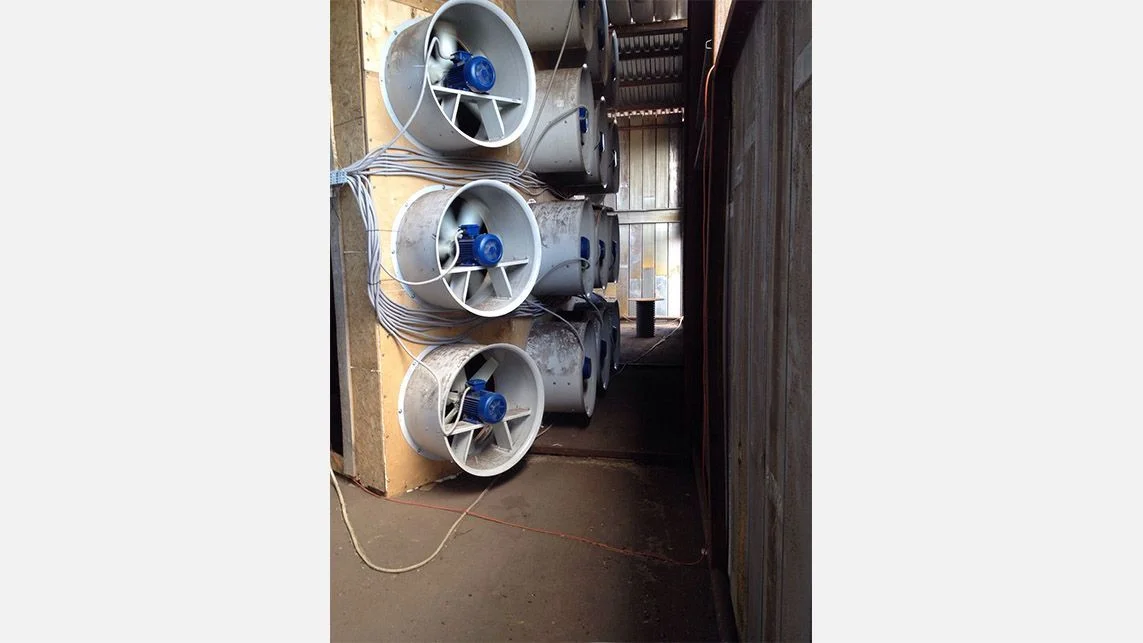
Discuss the equipment and installation requirements with Agrovent.
Discuss your project
