Global Onion Storage Guide: Temperatures, Humidity, Ventilation & Regional Best Practices

Why do some onion stores keep quality for 10 months while others lose 20–40% in just a few weeks? The answer lies in temperature, humidity, airflow, and the right storage method for each climate. This updated guide explains global onion storage practices - from Europe to South Asia and Africa - and shows how proper technology cuts losses to under 5%.
Onion Storage Parameters and Regional Practices
Long-term onion storage requires precise control of temperature, humidity, airflow, and CO₂ — supported by proper agronomy and the right variety selection. Below is a complete guide to global storage strategies used in temperate, tropical, and export-oriented regions.
1. Storage Capacity & Air Requirements
Storage chambers typically range from 500 to 3,500 tons, depending on the site design and logistics.
For stable long-term quality, ventilation should supply 200–250 m³ of air per ton of onions.
This maintains temperature equilibrium, removes moisture, and prevents CO₂ buildup.
2. Temperature, Humidity & CO₂ Levels
Target temperature: 0 °C
Relative humidity: 70% — prevents mold while minimizing shrinkage
CO₂ concentration: Must stay below 3% to avoid physiological disorders and off-odors.
3. Storage Duration
-
With refrigeration: full year-round storage is possible (8–10 months of high-quality output).
-
With ventilation only: storage is usually safe until April, depending on outside temperatures.
4. Four Essential Phases of Onion Storage
1) Drying (Curing)
Incoming onions must be dried at 2–3 °C above bulb temperature.
This strengthens skins, closes the neck, and reduces post-harvest moisture.
2) Cooling
A gradual temperature step-down to avoid condensation and internal rot.
3) Storing
Maintain:
-
0 °C
-
70% RH
-
Airflow 200–250 m³/ton
4) Monitoring
Regular checks for:
-
hot spots
-
sprouting
-
fungal growth
-
airflow uniformity
Bulk and containerized storage are both used worldwide depending on farm scale and mechanization.
5. Common Problems in Onion Storage
Even with good equipment, several issues can compromise quality:
-
Sprouting due to unstable temperatures
-
Fungal infections (Aspergillus niger, black mold)
-
Dehydration in regions with very low humidity
-
Weight loss and poor marketable appearance
-
20–40% losses when onions are stored wet or immature
6. Equipment Required for Modern Onion Storage
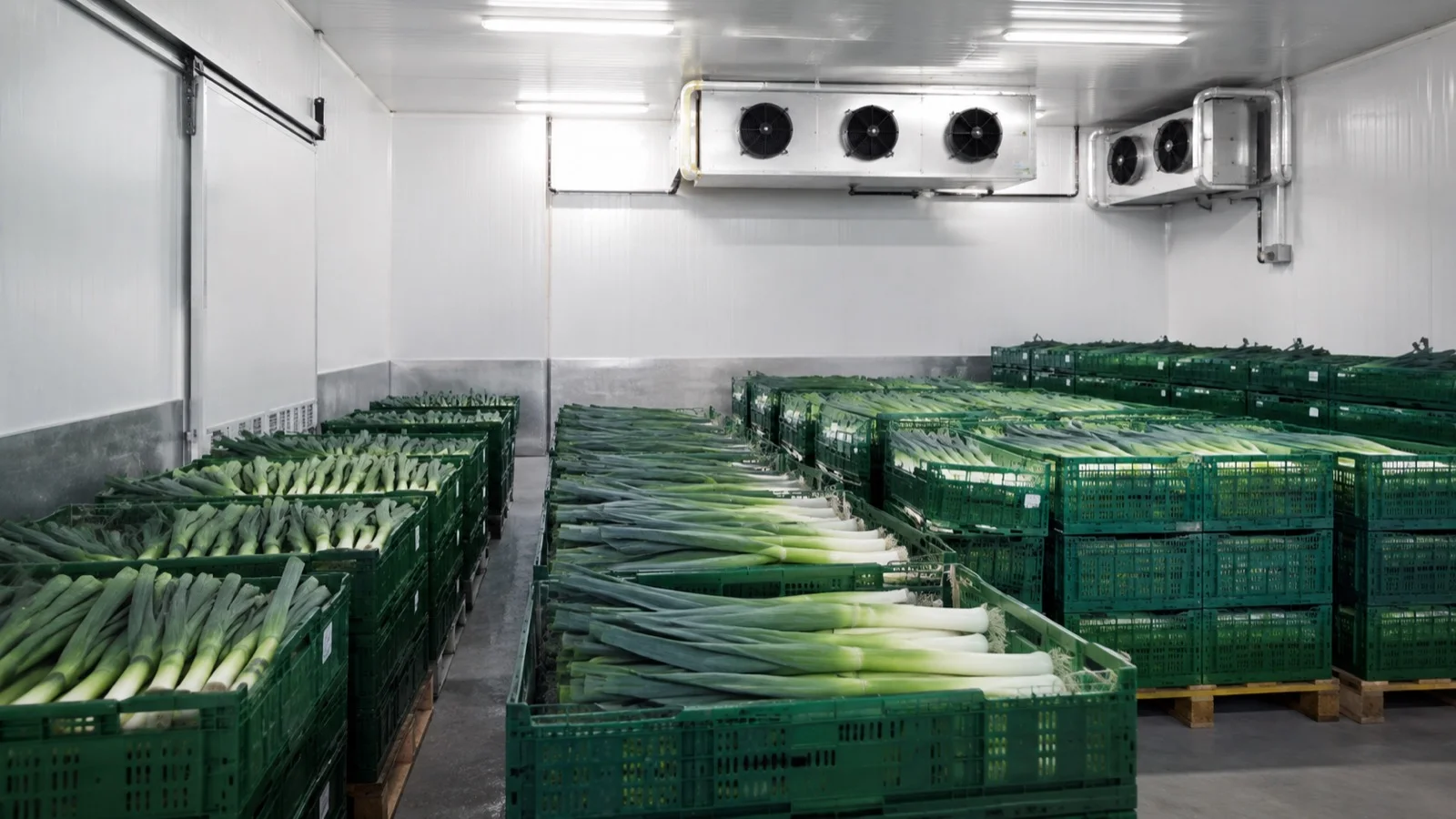
A high-performance facility typically includes:
-
Ventilation systems: axial or centrifugal fans sized for 200–250 m³/ton
-
Cooling units for year-round temperature control
-
Ducting and air distribution for uniform microclimate
-
Monitoring sensors (CO₂, temperature, humidity)
-
Storage containers: pallet boxes, mesh bags, or crates for airflow optimization
7. Variety Selection & Harvest Timing
Storage success begins long before onions reach the warehouse.
Variety
Only firm, dense, late-season cultivars with thick skins and dry necks can store 6–10 months.
Early varieties with thin skins should be sold quickly.
Harvest Maturity
Onions should be lifted only when:
-
necks are fully dry,
-
skins are well-formed,
-
moisture is low.
Immature onions rot early; overripe onions attract fungal infections.
8. Regional Harvesting & Storage Practices
Europe & North America (Temperate Climates)
-
Harvest: August–September
-
Field curing: 10–14 days when weather permits
-
Cold storage at 0–2 °C is economical due to cool winters
-
Long-day varieties dominate, bred for long shelf life
South America (Tropical & Subtropical: Brazil, Peru, Argentina)
-
Tropics (northern Brazil): harvest during dry season to avoid fungal pressure
-
Subtropics: late spring to early summer
-
Shorter-day varieties with shorter storage potential
-
Ventilated bulk storage until March–April
-
Refrigerated storage expanding for export in Peru
South Asia (India, Bangladesh)
-
Greatest storage challenges due to high heat + high humidity
-
Harvest during dry periods is essential
-
Shade curing with ventilation is standard
-
Black mold is widespread; microbial treatments being tested
-
Warm storage 27–31 °C, 60–65% RH is cost-effective
-
Losses still 15–25% without proper ventilation
Africa (East & Southern Regions)
-
Harvest aligned with dry seasons: June–August (East Africa), December–February (Southern Africa)
-
Limited infrastructure forces rapid marketing
-
Cold storage investment increasing with exports (South Africa, Tanzania → Gulf states)
9. Best Storage Solutions by Climate
Temperate Regions (Europe, North America)
Cold storage is highly efficient and provides 8–10 months of premium quality.
Tropical Regions (India, Brazil, Africa)
Warm storage + strong ventilation is common.
Refrigeration is recommended for premium onions and export programs.
Export-Oriented Regions (Peru, Argentina, South Africa)
Refrigerated storage ensures stable pricing and year-round supply.
Conclusion
Successful onion storage is not just about building a warehouse. It requires:
-
the right variety,
-
the right harvest maturity,
-
the right storage technology,
-
and the right strategy for each climate.
With modern ventilation, cooling, and monitoring systems, post-harvest losses can drop from 20–40% to under 5%, giving farmers and exporters predictable quality and stable income.
👉 Agrovent Delivers Turnkey Onion Storage Solutions Worldwide
From India to Africa, from South America to the Middle East — we design and build storage facilities adapted to:
-
regional climate,
-
market needs,
-
crop varieties,
-
and your budget.
📞 Call: +971 50 437 7119
📧 Email: info@agrovent.com



More articles
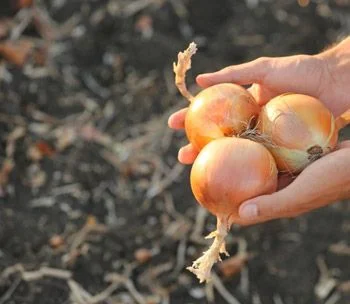 Storing Onions the Smart Way: Proven Methods That Actually Work
Onion storage isn’t guesswork - it’s a science. From choosing the right variety to managing temperature and humidity, small decisions determine whether your crop lasts weeks or months. Here’s a clear, practical guide to what truly works.
News
Storing Onions the Smart Way: Proven Methods That Actually Work
Onion storage isn’t guesswork - it’s a science. From choosing the right variety to managing temperature and humidity, small decisions determine whether your crop lasts weeks or months. Here’s a clear, practical guide to what truly works.
News
 How to store carrots in a vegetable store?
Ventilation and cooling of vegetable storage of carrots, as a guarantee of efficient crop storage
News
How to store carrots in a vegetable store?
Ventilation and cooling of vegetable storage of carrots, as a guarantee of efficient crop storage
News
 Potato storage technology
Learn how bulk and container potato storage systems work, how to manage drying, healing, cooling, humidity and CO₂, and how to protect quality long-term
News
Potato storage technology
Learn how bulk and container potato storage systems work, how to manage drying, healing, cooling, humidity and CO₂, and how to protect quality long-term
News
 From Orchard to Bottle: How Apple Growers Can Profit from the Global Cider Boom
It’s apple season - and the question for many growers is what to do with all that abundance. One answer: cider. Around the world, cider is transforming from a niche beverage into a global trend. Here’s how apple farmers can tap into this growing market - and how Agrovent supports them from storage to production.
News
From Orchard to Bottle: How Apple Growers Can Profit from the Global Cider Boom
It’s apple season - and the question for many growers is what to do with all that abundance. One answer: cider. Around the world, cider is transforming from a niche beverage into a global trend. Here’s how apple farmers can tap into this growing market - and how Agrovent supports them from storage to production.
News
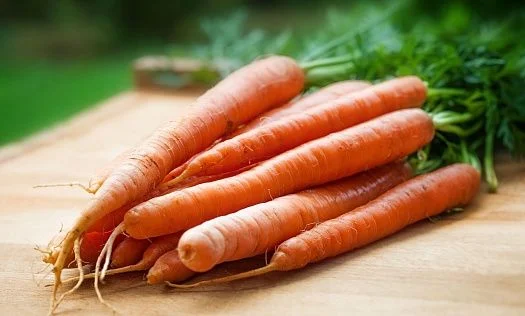 Carrots. Storage parameters
Preparation of the product. The volume of goods. Storage temperature.
News
Carrots. Storage parameters
Preparation of the product. The volume of goods. Storage temperature.
News
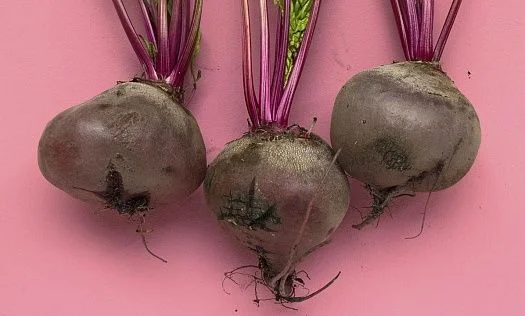 Beets. Storage parameters
Preparation of the product. The volume of goods. Storage temperature.
Beets. Storage parameters
Preparation of the product. The volume of goods. Storage temperature.

Leave your contacts and we will get back to you