Poultry

Why Poultry Microclimate Matters?

A well-managed microclimate is essential for high performance in poultry farming. Proper control of temperature, humidity, air quality (ammonia, ventilation), and lighting directly impacts bird health, production efficiency, and profitability. Neglecting these elements can lead to higher mortality, lower egg production, and increased veterinary and feed costs.

Our services

We see our vocation in creating modern agricultural facilities with a high level of productivity. The main goal of our work is to create high - quality livestock conditions, independent of the external environment, in order to fulfill the goals and objectives of your business

img: Launch Launch

We carry out a comprehensive analysis of all stages of your production, from equipment to logistics

img: Farm audit Farm audit

We carry out a comprehensive analysis of all stages of your production, from equipment to logistics

img: Microclimate Microclimate

We carry out a comprehensive analysis of all stages of your production, from equipment to logistics

img: Service Service

We carry out a comprehensive analysis of all stages of your production, from equipment to logistics

The microclimate plays a vital and multifaceted role in the productivity of a poultry farm. Its careful management directly impacts the health, growth, and overall performance of the birds, ultimately influencing the farm’s profitability. Here’s why the microclimate is crucial:

Optimal Growth & Development: Maintaining the correct temperature, humidity, and air quality (oxygen levels, ammonia control) is critical for the birds’ growth and development. Chicks, in particular, are highly sensitive to temperature fluctuations. A suitable microclimate ensures proper feed conversion, weight gain, and feather development, leading to efficient production cycles.

Efficient Feed Conversion & Feed Intake: Microclimate influences feed intake, which is a key driver of growth. Optimal temperature allows birds to dedicate energy to growth rather than thermoregulation. Maintaining a comfortable environment encourages consistent feed intake, leading to better feed conversion ratios (FCR) and reducing feed costs.

Disease Prevention & Control: Poor ventilation and high humidity create favorable conditions for the proliferation of pathogens and the spread of diseases like coccidiosis, respiratory infections, and fungal diseases. Proper ventilation removes harmful gases like ammonia, reduces humidity, and introduces fresh air, thereby minimizing disease incidence and mortality rates, lowering veterinary costs and increasing production efficiency.

Enhanced Egg Production (Layer Hens): For layer hens, the microclimate directly impacts egg production. Temperature, light, and ventilation are all crucial factors. Maintaining the correct temperature range promotes consistent egg laying and egg quality. Furthermore, effective ventilation reduces stress and disease, resulting in higher egg yields and a longer laying period.

Broiler Performance & Meat Quality: In broiler production, consistent temperature control is vital for achieving the target weight and meat quality. Heat stress leads to reduced weight gain, poor meat quality, and increased mortality. A well-managed microclimate ensures even growth, reduces stress, and results in higher-quality meat, improving market value.

Bird Welfare & Reduced Stress: Maintaining a comfortable and healthy microclimate minimizes stress on the birds. Reduced stress leads to improved immune function, enhanced performance, and improved animal welfare standards, which are increasingly important to consumers and regulatory bodies.


img: Poultry

Microclimate technologies of poultry farms

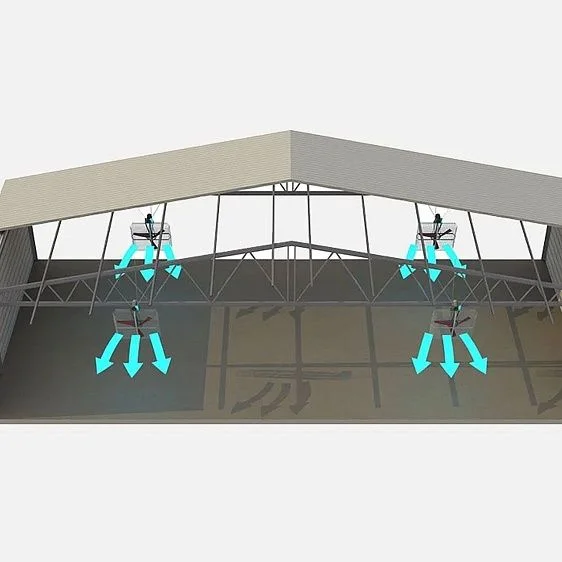
Various ventilation systems are used in poultry farms to maintain an optimal microclimate. Here are the main ones:

Tunnel ventilation system

In a tunnel ventilation system, all exhaust fans are located closer to one end, and all air intakes are located to the opposite end. The air enters at a speed of 2-2.5 m/s along the entire length of the poultry house, while taking away moisture, hot air and dust. The air flow creates the effect of wind cooling, which allows you to create a so-called felt temperature 5-12 degrees below the actual temperature. Air exchange in tunnel ventilation mode can reach 18 m3/kg of live weight. When calculating tunnel ventilation, the speed of air exchange in the room is an important criterion. The air must be changed once a minute. This avoids the effect of heat accumulation in the room. Limitations: The use of tunnel ventilation in a room with young chickens can negatively affect their health. Even an air velocity of 0.5 m/s can cause severe hypothermia of chickens, so it is necessary to maintain basic ventilation until the age of 14 days.

Equal pressure system

The equal pressure system is implemented by supplying air through ventilation shafts.

The uniformity of the distribution of supply air elements determines the uniformity of the indoor climate by 80%. And if fans are installed in the supply shafts, then it is possible to implement an equal pressure system, the distinctive feature of which is the least dependence on external weather conditions, the influence of wind and sudden temperature changes. In the first case, the following conditions must be met: the exclusion of uncontrolled air leaks, the provision of hermetic air distributors in the closed position, and during operation, the possibility of regulating not only the volume and velocity of incoming air, but also its direction.

Minimum ventilation system

The minimum ventilation in the range of 0.7-2.5 m3/hour is sufficient to maintain the concentration of carbon dioxide and humidity within the maximum permissible values.

All modern minimum ventilation systems are based on the principle of negative pressure. They must provide the necessary level of ventilation during the winter and transition period, low energy consumption, uniform air distribution, and mixing with warm air before entering the containment area.

A widespread scheme with air supply through side valves and exhaust through exhaust shafts or end fans corresponds to these conditions. The second option for implementing this scheme is to supply air through ventilation shafts and exhaust the exhaust air with axial fans installed in the side walls. In both the first and second cases, the following conditions must be met: the exclusion of uncontrolled air leaks, ensuring tightness of the air distributors in the closed position, and during operation, the possibility of regulating not only the volume and velocity of incoming air, but also its direction.

Do you have any questions or need a consultation?

img: Do you have any questions or need a consultation?