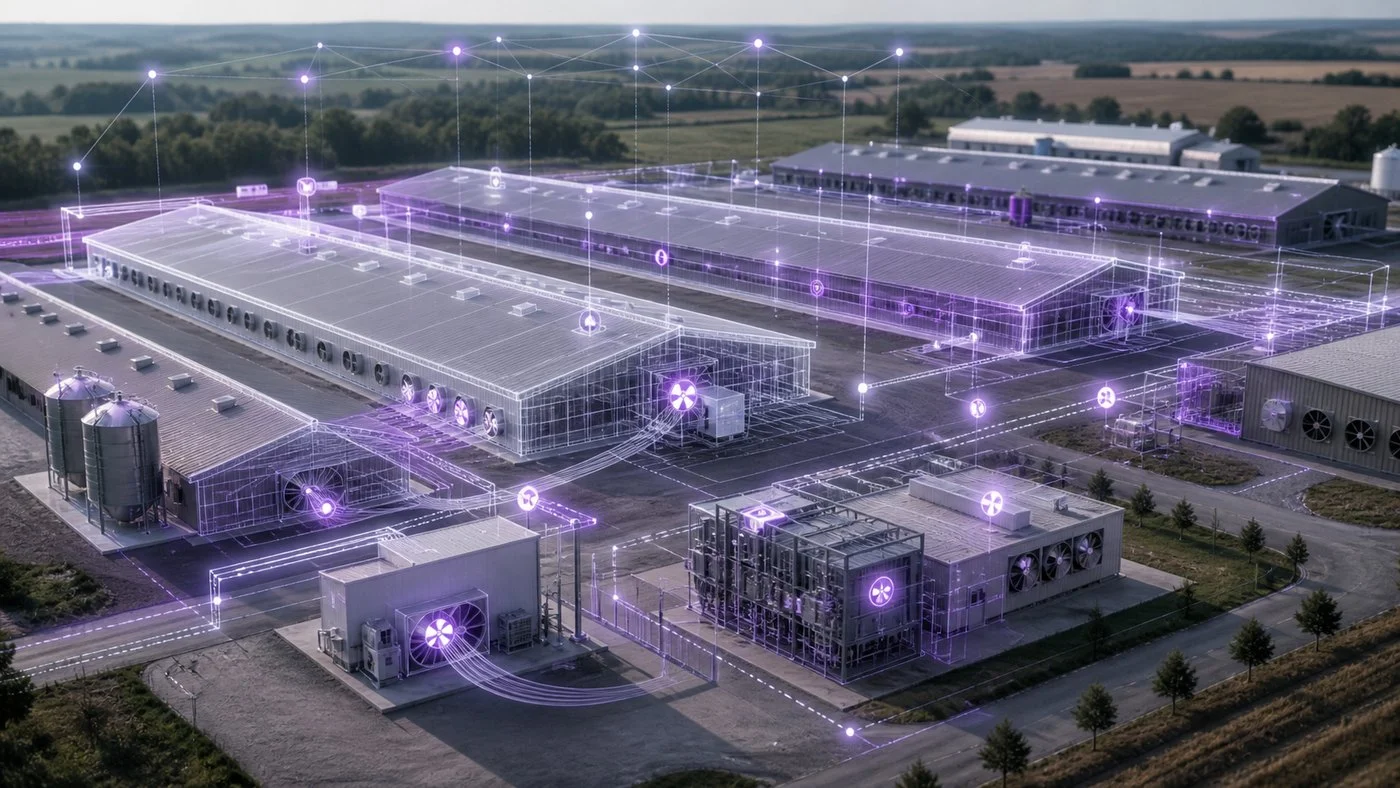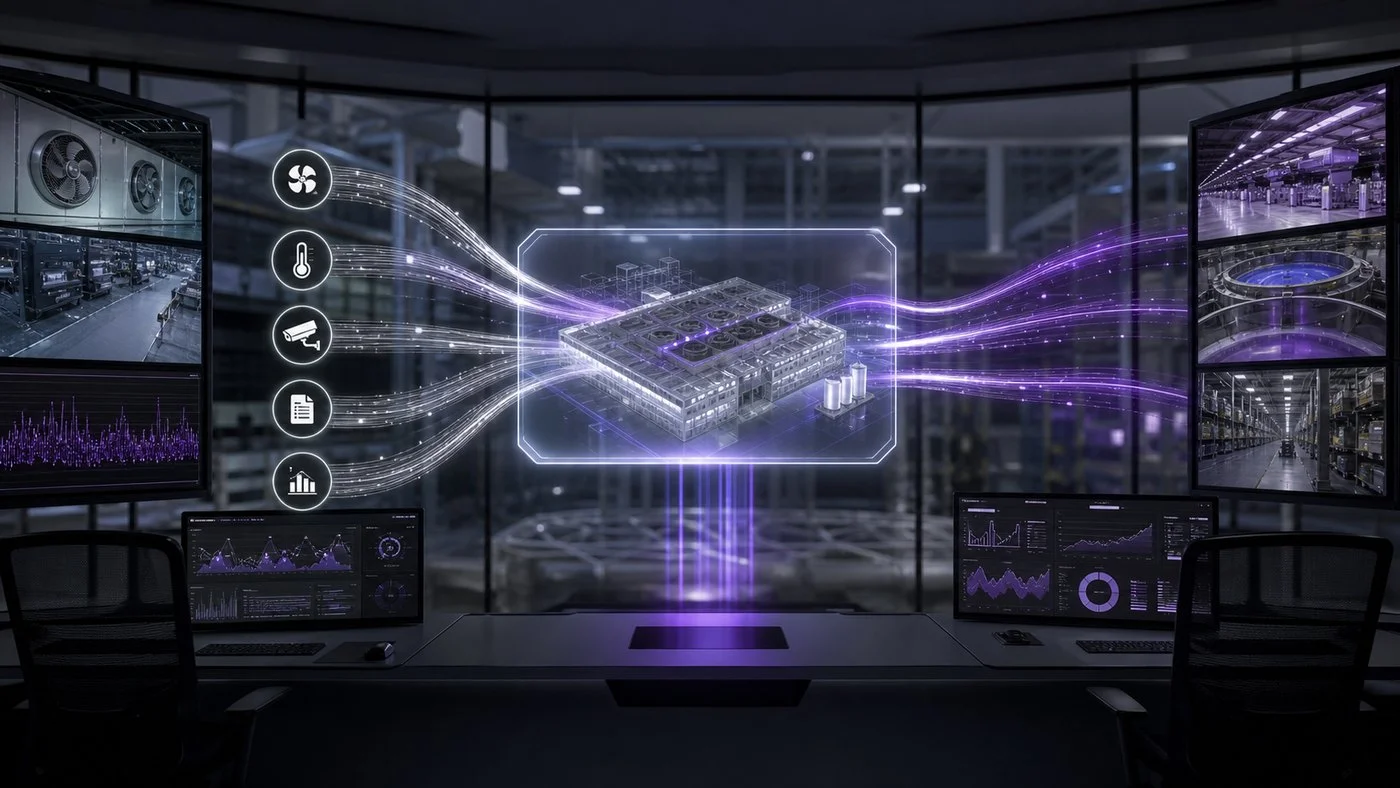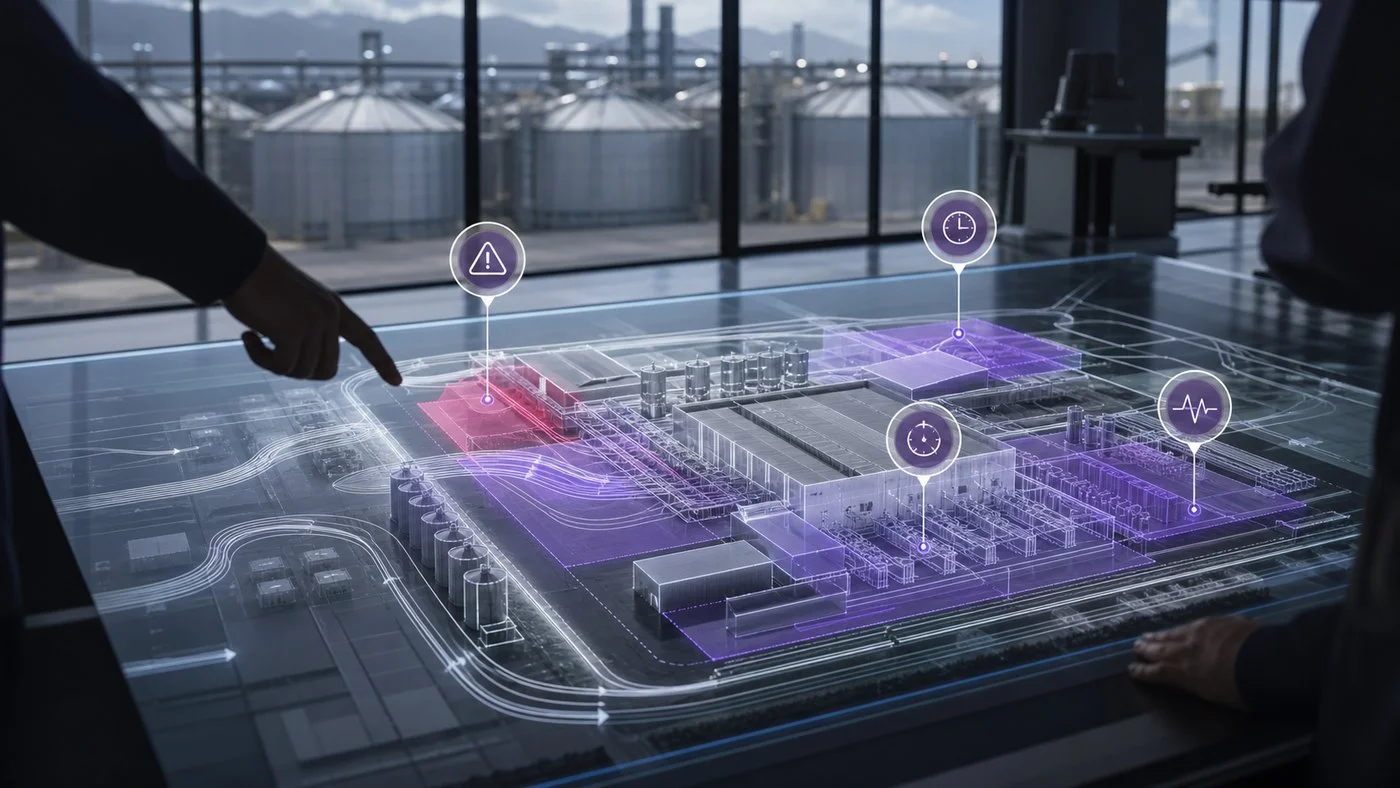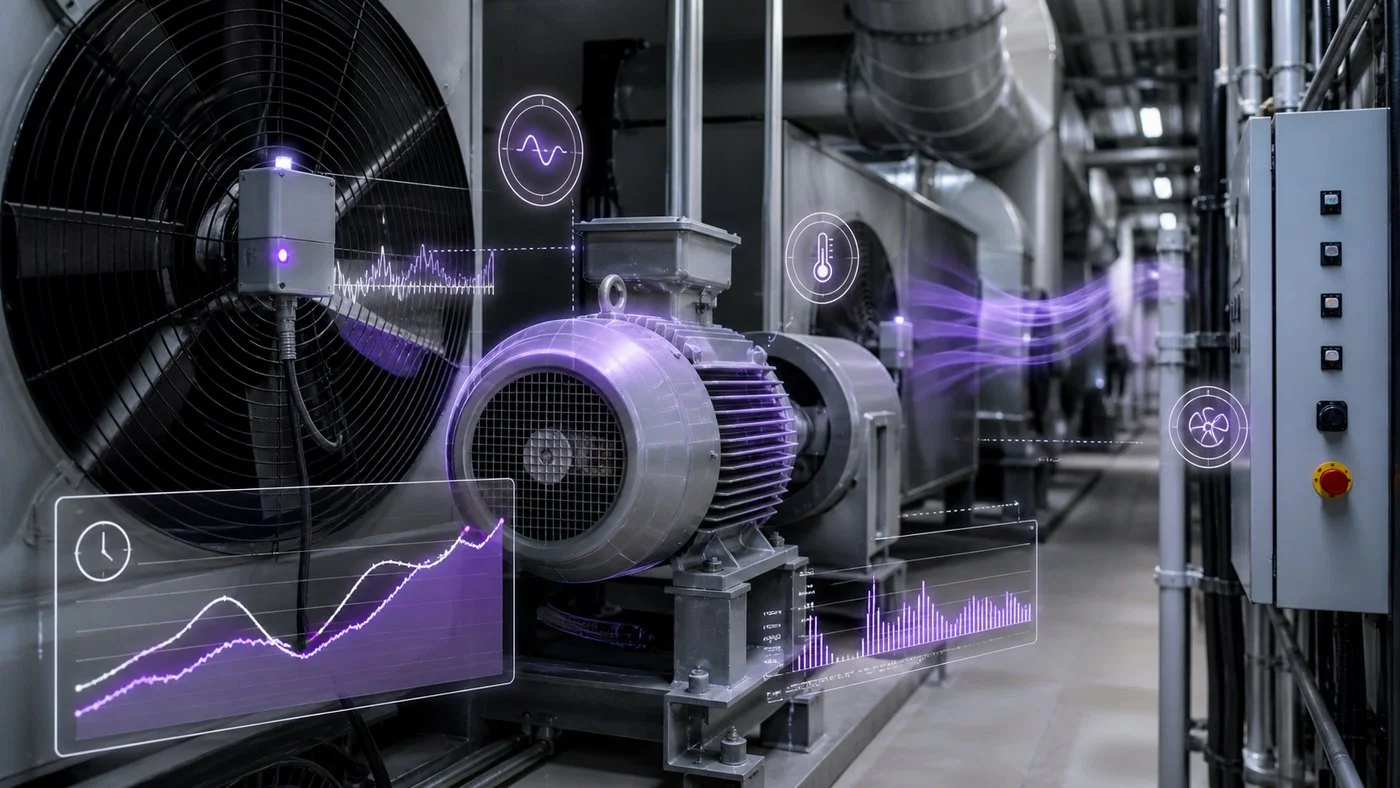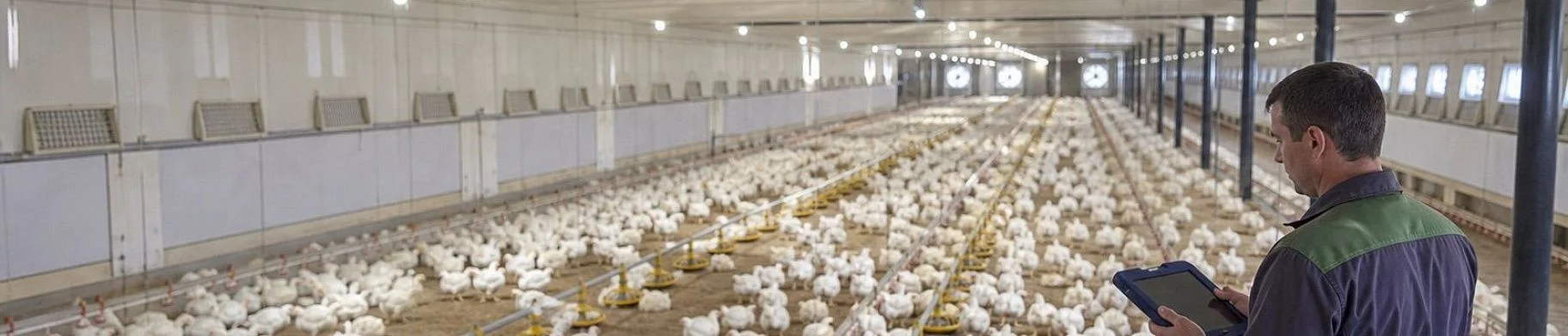
Most poultry farms already generate more video than they can realistically review. Cameras are used for security, remote checks and investigation after an incident. ValentinaCV Pilot tests whether that same video can become a useful behavioural data source.
The format is intentionally practical: one broiler house, one or two cameras and seven days of observation. No replacement of the climate controller and no automatic change to equipment settings.
This article continues our analysis of the global data gap between poultry climate systems and flock response. The production model may differ between an integrated company, a contract grower and an independent farm, but the operational question is similar: can the team detect a developing spatial or activity pattern before it becomes visible in production results?
What ValentinaCV looks for
ValentinaCV evaluates the flock as a dynamic system rather than attempting to diagnose individual birds from a single image. During the pilot, the analysis can include:
- overall activity and how it changes through the day;
- distribution of birds across defined house zones;
- areas that remain empty or consistently underused;
- local crowding and movement toward walls or equipment;
- sudden shifts in distribution or activity;
- time intervals that require comparison with climate, lighting or management events.
The pilot is designed for different farm models
| Farm model | Typical question | Useful pilot output |
|---|---|---|
| Integrated company | Why does one house behave differently from comparable houses? | A repeatable behavioural baseline and a focused list of periods for technical review. |
| Contract grower | Is the flock using the house evenly, especially at night or during ventilation transitions? | Simple distribution and activity evidence that can be discussed with the integrator or service team. |
| Independent commercial farm | Can existing cameras help verify airflow or management concerns without replacing automation? | A low-risk diagnostic audit before investing in permanent monitoring. |
| Welfare-focused producer | Can continuous observation direct staff to possible behavioural deviations? | Objective time windows for human welfare and environmental assessment. |
What the farm receives after seven days
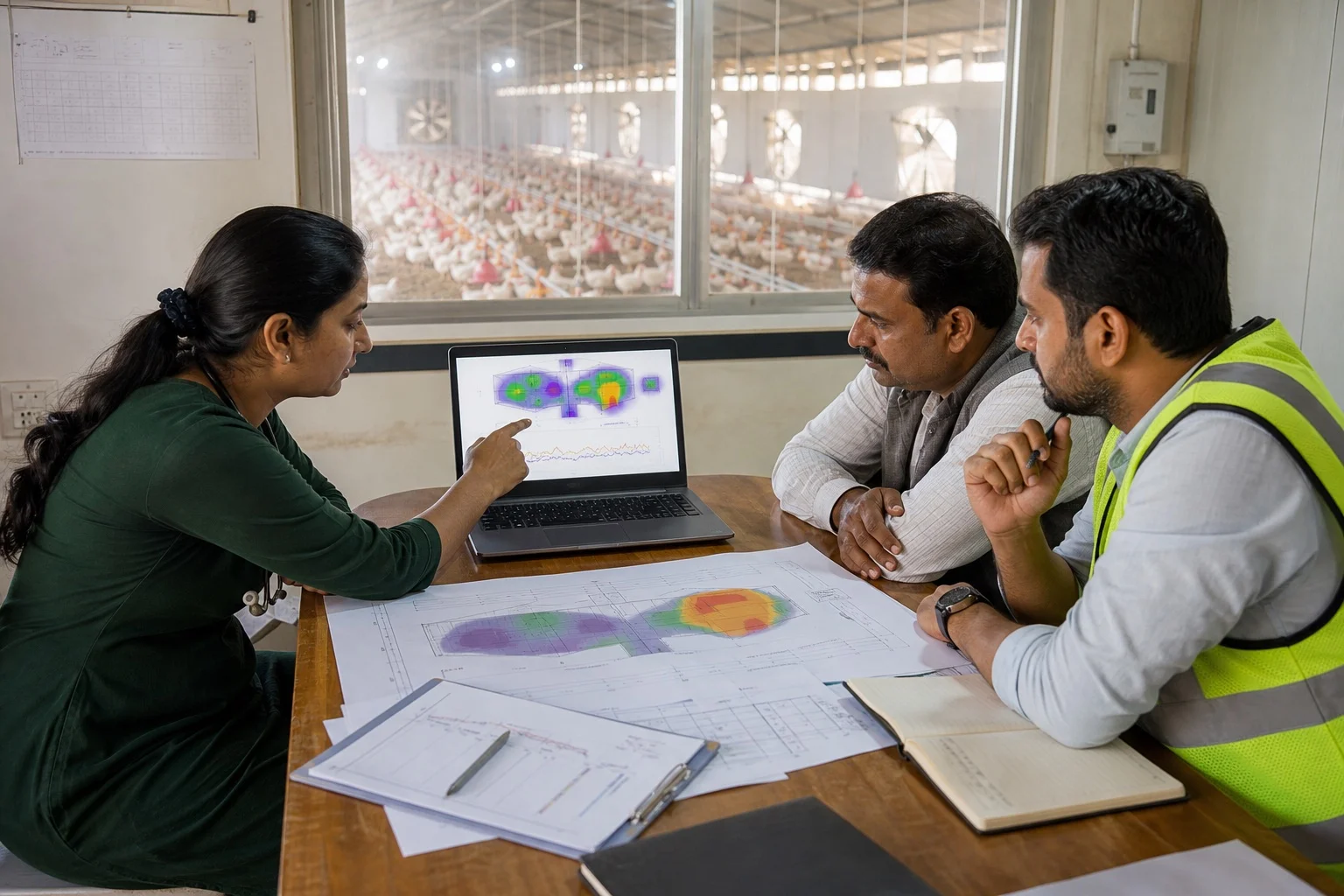
The deliverable is not a live screen that someone must watch continuously. It is a structured audit that can contain:
- an activity timeline;
- zone-use and distribution maps;
- examples of empty areas or local clustering;
- marked time intervals for investigation;
- notes about camera angle, lighting and data quality;
- operational hypotheses and questions for the farm team;
- a recommendation on whether permanent monitoring is justified.
What the pilot does not do
ValentinaCV Pilot does not diagnose disease, certify welfare compliance, identify the definitive cause of every behavioural change or guarantee improvement in mortality and feed conversion. It does not change fan stages, inlet positions, heating or controller set points.
Camera requirements matter
Computer vision cannot recover information that the camera never captured. Before the audit, Agrovent checks:
- whether the view covers a meaningful part of the usable floor area;
- whether feeders, drinkers or structural elements obstruct the flock;
- whether day and night lighting provide usable contrast;
- whether the stream is stable and its resolution is sufficient;
- whether local privacy, cybersecurity and data-access rules are satisfied.
Why start with seven days
A short pilot is long enough to include daily cycles, management routines and several ventilation transitions, while remaining small enough to evaluate without a major IT project. It answers three commercial questions early:
- Does the current camera position contain useful behavioural information?
- Can the findings be connected to real farm decisions?
- Is the value sufficient to justify a longer observation period or more houses?
How ValentinaCV can develop after a successful pilot
The next stage may include continuous monitoring, additional houses and comparison with climate-controller data such as temperature, humidity, CO₂, pressure, fan operation and alarms. This should only happen after the behavioural indicators and the farm's response process have been validated.
For large integrators, that creates a route toward cross-house comparison. For contract and independent farms, it can remain a focused operational tool rather than becoming a heavy central platform.
Discuss a pilot for one poultry house
Agrovent can begin by reviewing a short video sample, the house layout and the operational question you want to investigate. If the camera view is suitable, the next step is a seven-day audit.
Contact Agrovent


 Prolonging the life of seeds
These findings are particularly interesting for seed storage in tropical climates, where storage in a cool place is expensive.
Prolonging the life of seeds
These findings are particularly interesting for seed storage in tropical climates, where storage in a cool place is expensive.  Wind machines to protect the garden from frost
How to provide good frost protection in the garden?
Wind machines to protect the garden from frost
How to provide good frost protection in the garden?  Cold Sweetening in Stored Potatoes: Reducing Sugars, Fry Colour and Acrylamide
How storage temperature, variety, maturity and reconditioning affect reducing sugars, fry colour and acrylamide risk in potatoes for chips and French fries.
Cold Sweetening in Stored Potatoes: Reducing Sugars, Fry Colour and Acrylamide
How storage temperature, variety, maturity and reconditioning affect reducing sugars, fry colour and acrylamide risk in potatoes for chips and French fries.  What is permaculture?
Basic principles and history of permaculture
What is permaculture?
Basic principles and history of permaculture  Apple Storage: How Controlled-Atmosphere (CA) Technology Extends Shelf Life and Profitability
Harvesting apples is only half the job - keeping them fresh is where the real challenge begins. Learn how modern cooling and Controlled-Atmosphere (CA) storage can protect your apples from spoilage, preserve nutrients, and keep your profits growing all year long.
Apple Storage: How Controlled-Atmosphere (CA) Technology Extends Shelf Life and Profitability
Harvesting apples is only half the job - keeping them fresh is where the real challenge begins. Learn how modern cooling and Controlled-Atmosphere (CA) storage can protect your apples from spoilage, preserve nutrients, and keep your profits growing all year long.  Livestock housing ventilation technologies
Learn how accelerator fans improve heat dissipation, stabilize barn microclimates, and increase milk yield by optimizing airflow for dairy cattle
Livestock housing ventilation technologies
Learn how accelerator fans improve heat dissipation, stabilize barn microclimates, and increase milk yield by optimizing airflow for dairy cattle