Bulk Potato Storage in India: Engineering for Fries and Chips

Expert perspective: Alexander Samsonov, Agricultural Storage Engineer. Read the original LinkedIn perspective.
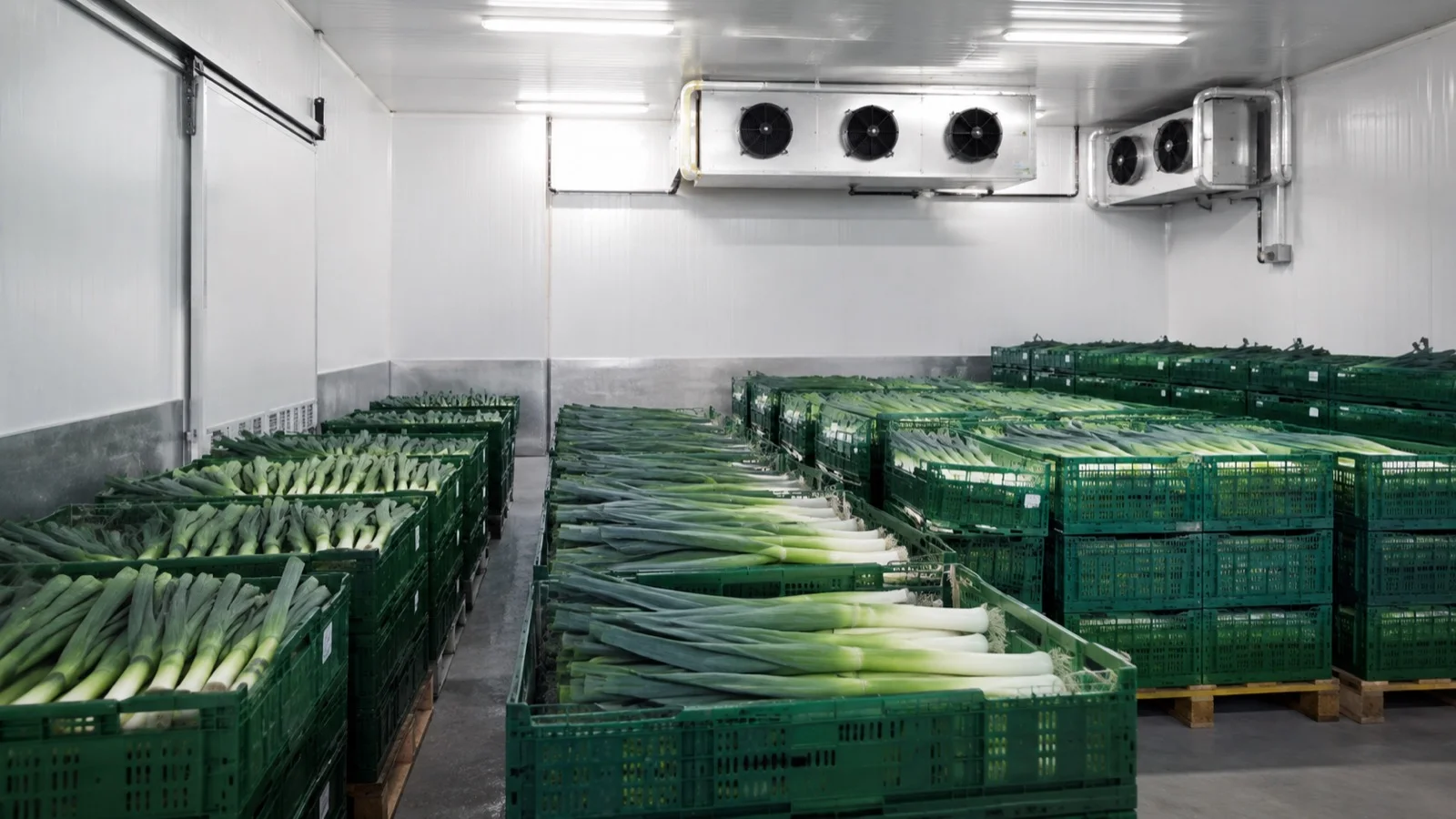
Bulk storage is widely used for processing potatoes because it removes repeated bag handling, uses chamber volume efficiently and can deliver controlled airflow through the crop. It is not, however, a foreign standard that can be copied unchanged into India.
Alexander Samsonov argues that India needs its own bulk-storage engineering logic: adapted to local varieties, harvesting, ambient conditions, farm logistics and processor requirements.

Why Processing Potatoes Are a Separate Storage Product
A processor buys consistency, not only tonnage. Tuber size, dry matter, reducing sugars, fry colour, defects and delivery timing determine whether a lot is suitable for fries or chips. The storage design must therefore begin with the processor's specification and the behaviour of the selected variety.
Where Bulk Storage Creates Value
- Space utilisation: product occupies the chamber without aisles and repeated bag stacks.
- Air distribution: a pressure system can move conditioned air through the whole crop mass when ducts, floor openings and pile depth are correctly engineered.
- Handling efficiency: mechanised intake and unloading reduce labour and repeated bag movements.
- Batch continuity: a chamber can be operated around a defined variety, harvest window and processing schedule.
The Conditions That Must Be Solved First
Variety and bruise sensitivity
Bulk pressure and mechanical handling are not suitable for every variety or maturity condition. Genetics, skin set, tuber shape and susceptibility to black spot or shatter bruise must be evaluated with the buyer and agronomy team.
Intake temperature and damage
Drop heights, conveyors, grading points and filling sequence can determine more of the final loss than the nominal cooling capacity. The intake line should limit impacts and distribute soil and tuber sizes without creating compacted zones.
Pile geometry and resistance
Airflow resistance changes with pile depth, tuber size distribution, soil, sprouts and settlement. Fan selection must use the expected system curve—not only a free-air volume from a catalogue.
Climate and energy
Outdoor air that is useful for cooling in one region may add heat or moisture in another. The controller must decide when to use fresh air, recirculation, refrigeration and humidity correction from measured enthalpy, crop temperature and operating targets.
Why a Bulk Store Should Not Become a Bag Store “Just in Case”
A chamber designed for bulk storage uses its geometry, pressure system and mechanised handling as one system. Filling it with bags can sharply reduce usable capacity and create air paths the original design did not anticipate. The building investment remains, while throughput and revenue potential fall.
If the business requires both models, they should be evaluated as separate operating scenarios with explicit capacities, air-distribution calculations and handling plans.
An India-Specific Design Brief
- Define processor specification, varieties and dispatch calendar.
- Map production radius, harvest temperatures and daily intake rate.
- Test bruise risk and set maximum drop heights.
- Calculate pile depth, pressure losses, duct spacing and fan duty.
- Design curing, pull-down, holding and reconditioning modes.
- Model heat loads and energy use for the actual Indian location.
- Commission with product and verify fry colour and reducing sugars throughout storage.
See Agrovent's advanced bulk potato storage guide, perforated air ducts and vegetable storage solutions. Discuss an India-specific processing potato project with Agrovent India.
Sources and Further Reading



More articles
 Tomato storage and growing technology
Learn how to store tomatoes for maximum shelf life and quality. Ripeness stages, temperatures, humidity, controlled atmosphere, ethylene treatment, sorbilene, and best practices for long-term tomato storage
News
Tomato storage and growing technology
Learn how to store tomatoes for maximum shelf life and quality. Ripeness stages, temperatures, humidity, controlled atmosphere, ethylene treatment, sorbilene, and best practices for long-term tomato storage
News
 What is permaculture?
Basic principles and history of permaculture
News
What is permaculture?
Basic principles and history of permaculture
News
 Agritechnica, we’re coming!
We announce participation in the exhibition Agritechnica-2019, Hannover, meet us!
News
Agritechnica, we’re coming!
We announce participation in the exhibition Agritechnica-2019, Hannover, meet us!
News
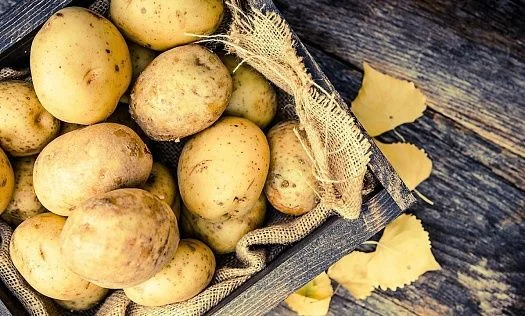 Potatoes. Storage parameters
Learn optimal potato storage conditions: temperature, humidity, CO₂ control, and bulk height. Engineered solutions for India, Africa, and Saudi Arabia.
News
Potatoes. Storage parameters
Learn optimal potato storage conditions: temperature, humidity, CO₂ control, and bulk height. Engineered solutions for India, Africa, and Saudi Arabia.
News
 Agrovent opening a front office in the Republic of Kazakhstan
Explore new opportunities with our presence in Kokshetau, Kazakhstan.
News
Agrovent opening a front office in the Republic of Kazakhstan
Explore new opportunities with our presence in Kokshetau, Kazakhstan.
News
 Alex Samsonov interview
Alex Samsonov, a seasoned expert in vegetable and potato storage, shares insights from his years of experience designing and implementing innovative solutions. With a global perspective and a focus on both technical efficiency and economic viability, Alex offers practical advice for addressing the challenges of modern storage practices.
Alex Samsonov interview
Alex Samsonov, a seasoned expert in vegetable and potato storage, shares insights from his years of experience designing and implementing innovative solutions. With a global perspective and a focus on both technical efficiency and economic viability, Alex offers practical advice for addressing the challenges of modern storage practices.

Leave your contacts and we will get back to you