Advanced Potato Storage Technology: Bulk Ventilation, Climate Control & Engineering Specs

Long-term potato storage requires far more than a cold room. Explore how a modern bulk storage facility preserves product quality with precise ventilation, humidity control, cooling, CO₂ management, and automated monitoring.
Advanced Potato Storage Technology: Engineering a Stable Microclimate for Long-Term Quality
Potatoes remain one of the world’s most important staple crops-and their value depends on how well they are stored after harvest. Modern agricultural businesses require storage systems that maintain both quality and nutritional value for many months.
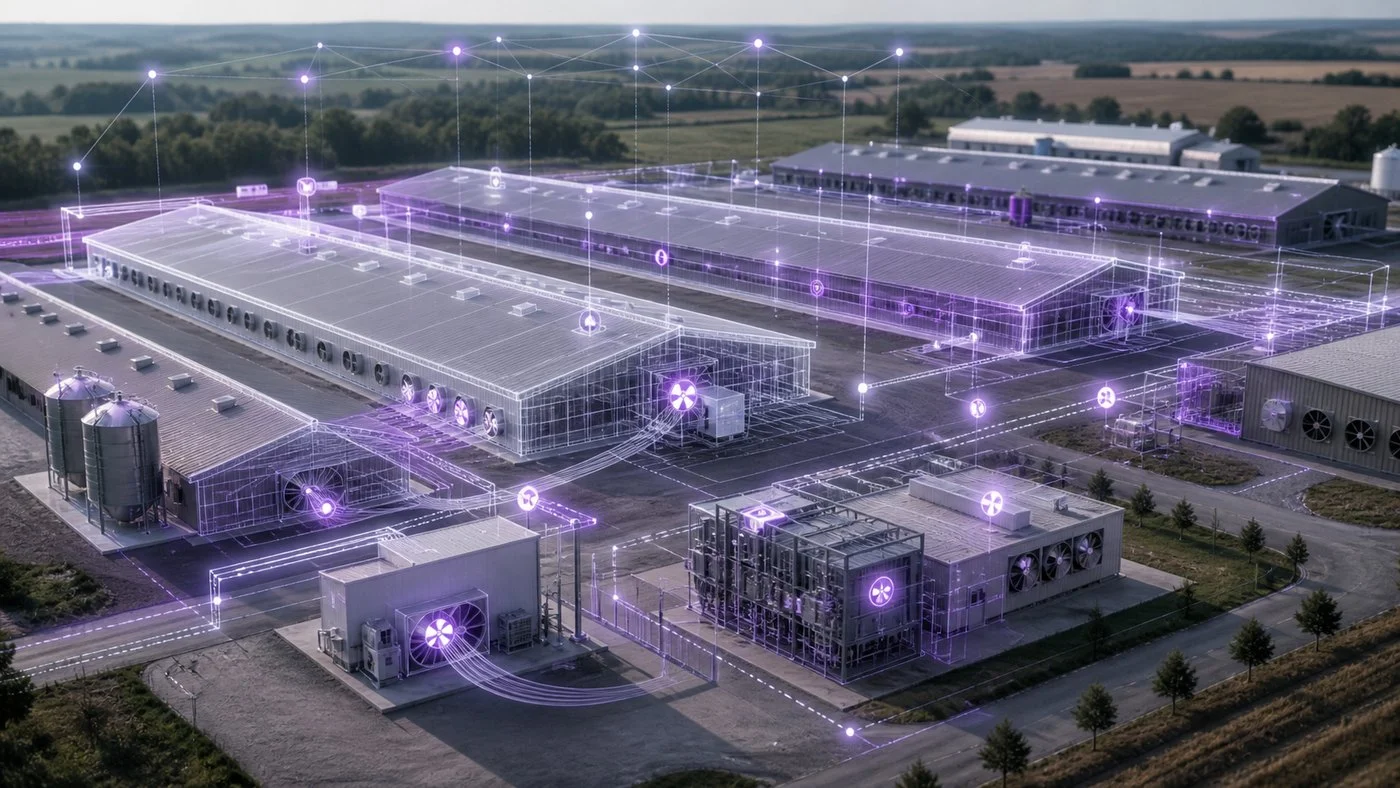
Below is a real example of a high-efficiency bulk potato storage facility, designed to meet industrial standards for frozen-product manufacturers and large food processors.
Storage Conditions & Capacity
Usable storage volume:
20 × 30 × 4.5 m = 2,700 m³
Loading density:
0.65 t/m³
Total storage capacity:
2,700 m³ × 0.65 = 1,755 tons
Storage Technology (Bulk Method)
Bulk resistance: 150 Pa
Ventilation capacity: 120 m³/h per ton
Temperature: +6…+8 °C
Relative humidity: 92–95%
CO₂ concentration: 2,500–3,000 ppm
Cooling capacity required: 100 W/t
Maintaining stable temperature, controlled humidity, and uniform ventilation is essential to preserving flavor, texture, and internal structure.
System Components
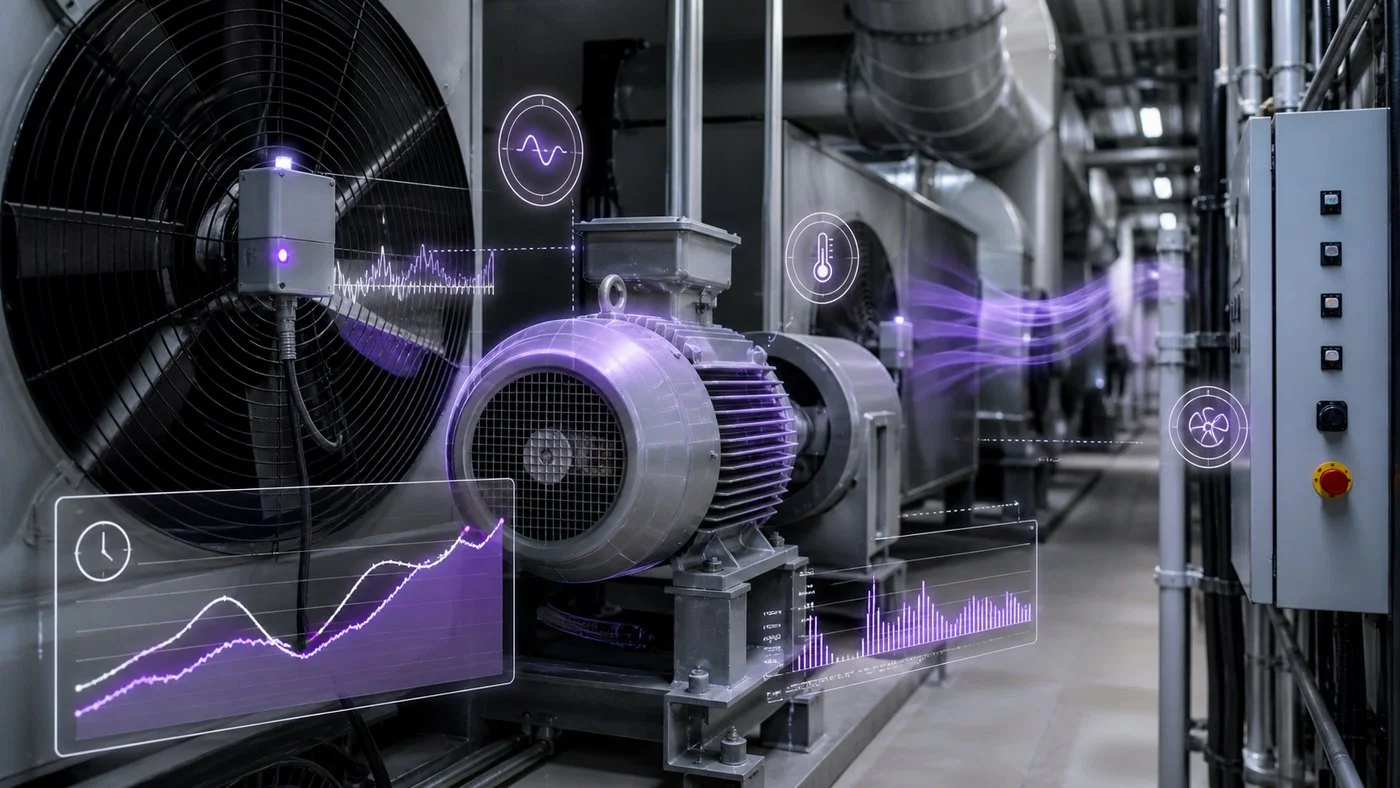
1. Ventilation Fans
-
Required airflow: 120 m³/h per ton
-
Total airflow:
120 × 1,755 = 210,600 m³/h
To achieve this, multiple fans of 800, 900, and 1000 mm were installed.
EC motors were chosen to reduce electricity consumption and improve modulation.
2. Fresh Air Inlets
To maintain optimal inflow velocity (≤ 6 m/s), the inlet area must be:
S = 210,600 m³/h / 6 m/s / 3600 = 9.75 m²
To prevent freezing:
-
Aluminum frame with thermal inserts
-
Non-combustible PIR insulation
-
Safety switches for fault protection
3. Ventilation Ducts & Floor Channels
The project uses floor ducts and underground channels.
Advantages of underground channels:
-
+7% usable storage volume
-
Gentle air distribution
-
Reduced product injury
-
Easy loading/unloading
-
Stable air velocity (6–8 m/s in ducts, 3.5–4 m/s in slots)
4. Humidification System
Installed along the entire ventilation chamber.
Benefits:
-
No droplets → no wet onions/potatoes
-
Prevents mechanical damage
-
Enables adiabatic cooling
-
Maintains precise RH without spraying product surfaces
5. Air Purification
UV + photo-oxidation technology removes:
-
Ethylene
-
Microorganisms
-
Odors
-
Airborne contaminants
Outcome:
Sterile air quality and reduced disease pressure.
6. CO₂ Monitoring & Exhaust
Elevated CO₂ leads to:
-
Browning during frying
-
Texture changes
-
Decreased storage stability
The CO₂ control system vents excess gas without opening main ventilation, keeping temperature stable.
7. Refrigeration Equipment
If stored too cold, potatoes convert starch to sugar → dark spots after frying.
Therefore, temperature must stay within +12…+18 °C during conditioning.
Cooling system uses glycol or freon for optimal energy efficiency.
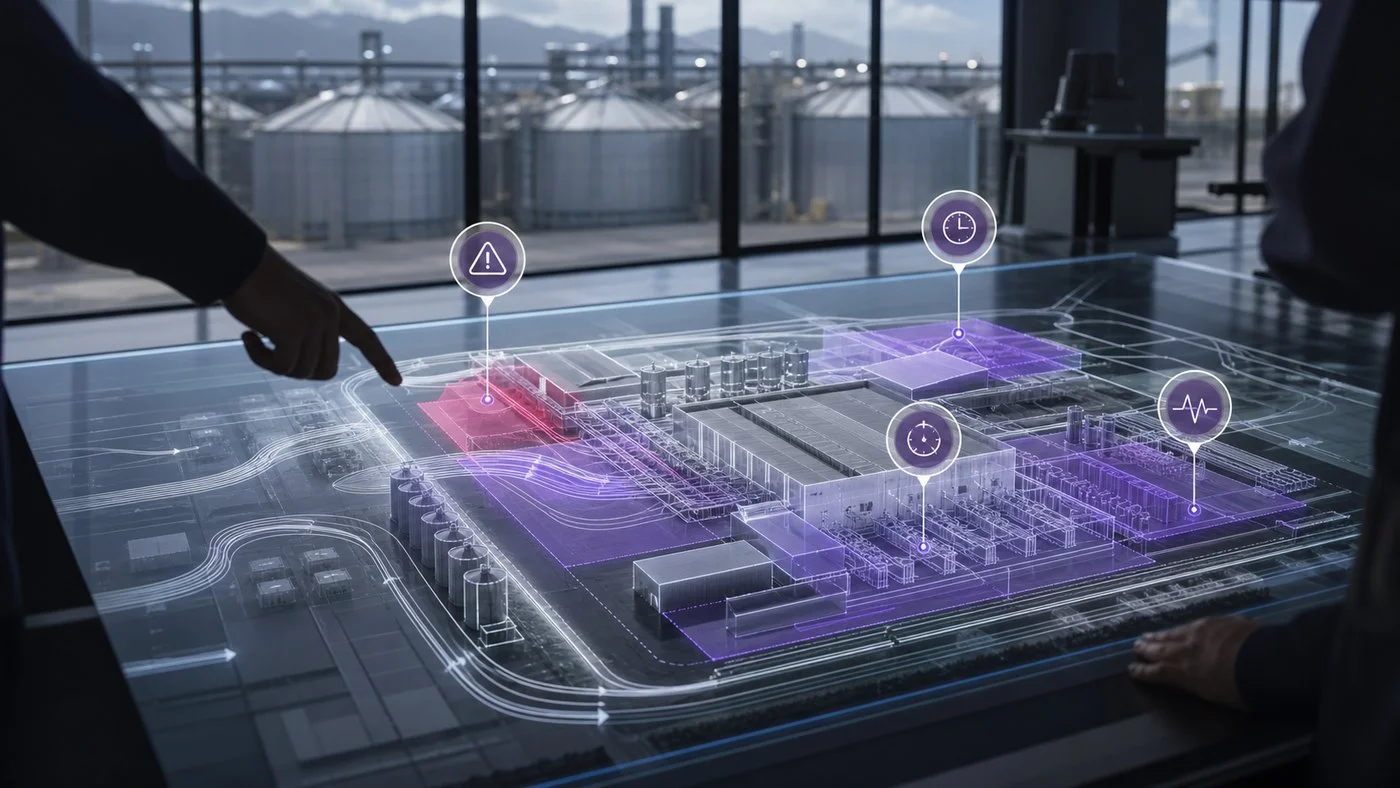
8. Monitoring & Automation
The facility includes:
-
Temperature, humidity, CO₂ sensors
-
Shrinkage measurement
-
24/7 remote access
-
Automated airflow and cooling regulation
-
Data logging for quality control
This ensures full transparency and continuous optimization of the microclimate.
Conclusion
A well-engineered potato storage facility is more than a building-it is a climate management ecosystem. When temperature, airflow, humidity, and CO₂ are controlled with precision, potatoes maintain quality for months, ensuring minimal losses and maximum profitability.
Want a Storage Facility Like This?
Agrovent designs and builds climate-controlled bulk potato storage systems for all climate zones worldwide.
📞 +971 50 437 7119
📩 info@agrovent.com
Or contact our specialists through the form on our website to get a tailored project.



More articles
 Modern Vegetable Storage Facilities: How to Choose the Right Solution
Feeding the population isn’t only about growing crops - it’s about keeping them fresh, safe, and marketable for months. Modern vegetable storage reduces post-harvest losses, stabilizes prices, and protects farmer income. In this article we review the main types of vegetable stores and the technologies that actually work in today’s markets.
News
Modern Vegetable Storage Facilities: How to Choose the Right Solution
Feeding the population isn’t only about growing crops - it’s about keeping them fresh, safe, and marketable for months. Modern vegetable storage reduces post-harvest losses, stabilizes prices, and protects farmer income. In this article we review the main types of vegetable stores and the technologies that actually work in today’s markets.
News
 African-style potatoes
How potatoes are grown in South and East Africa
News
African-style potatoes
How potatoes are grown in South and East Africa
News
 Existing building reconstruction
The question of the necessity of reconstruction should be studied in a complex, because its cost can be equal to the cost of the building a new one...
News
Existing building reconstruction
The question of the necessity of reconstruction should be studied in a complex, because its cost can be equal to the cost of the building a new one...
News
 How will the ban on chlorprofam affect the potato market?
Analysts predict that a ban on chlorprofam will pose additional challenges for European potato producers.
News
How will the ban on chlorprofam affect the potato market?
Analysts predict that a ban on chlorprofam will pose additional challenges for European potato producers.
News
 Container storage of products
What is container storage and its benefits
News
Container storage of products
What is container storage and its benefits
News
 The Rise of Urban Farming: How Rooftops Are Becoming the World’s New Agricultural Frontier
Around the world, cities are running out of space - but not out of ideas. Urban farming is turning rooftops, abandoned industrial zones, and unused land into high-yield food production hubs. Here’s how the world’s largest rooftop farm in Paris is redefining agriculture in dense urban environments.
The Rise of Urban Farming: How Rooftops Are Becoming the World’s New Agricultural Frontier
Around the world, cities are running out of space - but not out of ideas. Urban farming is turning rooftops, abandoned industrial zones, and unused land into high-yield food production hubs. Here’s how the world’s largest rooftop farm in Paris is redefining agriculture in dense urban environments.

Leave your contacts and we will get back to you