How to reduce post-harvest losses most effectively and quickly?
The Impact of Global Warming on Food Storage and Transport
Rising global temperatures are making it increasingly difficult to store and transport perishable food safely. Products that once needed only basic cooling now require reliable cold chains to avoid spoilage and protect food safety.
In many developing regions, the lack of refrigerated storage leads to dramatic losses:
-
In India, up to 50% of perishable goods are lost because there is no access to reliable cold storage.
-
In Tanzania, as much as 97% of meat spoils for the same reason.
Without proper refrigeration, farmers struggle to move their produce over long distances. Crops and animal products often cannot survive the journey from rural areas to urban markets, causing lost income for farmers, higher prices for consumers, and increased food insecurity.
At the same time, traditional refrigeration systems contribute to climate change. It is estimated that refrigeration is responsible for around 1% of global CO₂ emissions. This creates a classic vicious circle:
-
Global warming increases the need for cooling.
-
More cooling, powered by fossil fuels, increases emissions.
-
Emissions accelerate global warming further.
To break this cycle, the world needs sustainable, low-carbon cooling solutions that protect food without worsening the climate crisis.
Available Climate-Smart Cooling Solutions
Solar-Powered Cold Rooms
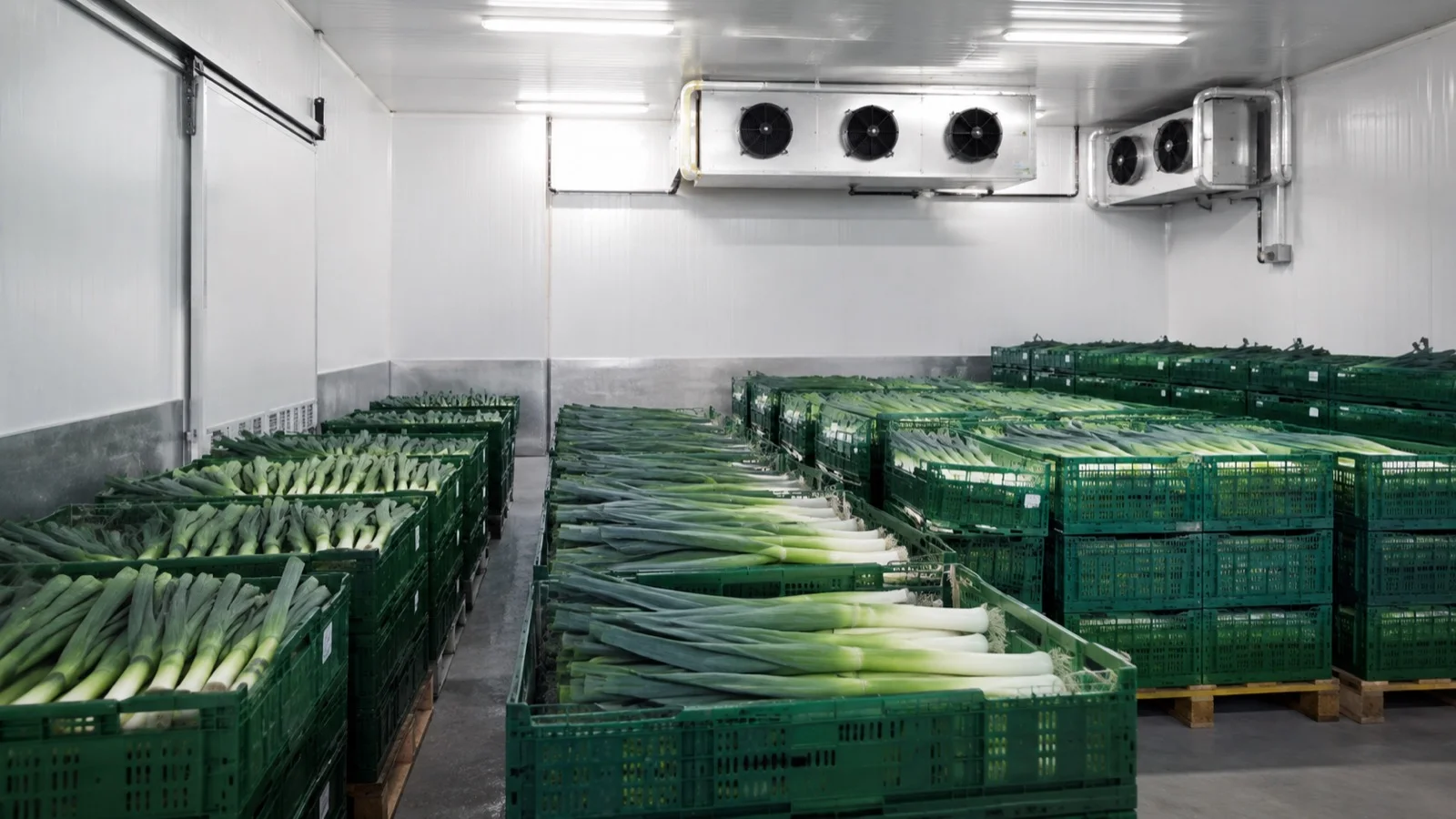
One of the most promising approaches is the use of renewable energy–powered cold storage.
-
ColdHubs, founded by a Nigerian entrepreneur, has developed modular, “plug-and-play” cold rooms powered by solar energy.
-
These units are independent of unreliable electrical grids and can be deployed directly in markets or near farms



More articles
 Agrovoltaics: The Future of Farming Powered by the Sun
Learn how solar energy and agriculture are merging through agrovoltaic technology. Discover the Insolight “Insolagrin” project - a groundbreaking solar farm that could transform global food and energy production.
News
Agrovoltaics: The Future of Farming Powered by the Sun
Learn how solar energy and agriculture are merging through agrovoltaic technology. Discover the Insolight “Insolagrin” project - a groundbreaking solar farm that could transform global food and energy production.
News
 How will the ban on chlorprofam affect the potato market?
Analysts predict that a ban on chlorprofam will pose additional challenges for European potato producers.
News
How will the ban on chlorprofam affect the potato market?
Analysts predict that a ban on chlorprofam will pose additional challenges for European potato producers.
News
 Weight loss when storing potatoes
Minimization of weight loss of potatoes during storage. Relative humidity in the vegetable storage
News
Weight loss when storing potatoes
Minimization of weight loss of potatoes during storage. Relative humidity in the vegetable storage
News
 6 Key Challenges Facing Potato Growers - And How to Solve Them
Potato production is tougher than you think. From soil-borne nematodes to rising input costs, growers are battling on multiple fronts. In this article we unpack the six biggest challenges facing potato farms - and outline practical strategies to help you stay ahead.
News
6 Key Challenges Facing Potato Growers - And How to Solve Them
Potato production is tougher than you think. From soil-borne nematodes to rising input costs, growers are battling on multiple fronts. In this article we unpack the six biggest challenges facing potato farms - and outline practical strategies to help you stay ahead.
News
 Long-term storage tips for fruits and vegetables
Learn how to extend the shelf life of fruits and vegetables with proper cooling, ethylene management and post-harvest storage technology. Ideal solutions for growers in India, Africa and Saudi Arabia. Contact Agrovent for modern fruit and vegetable storage systems.
News
Long-term storage tips for fruits and vegetables
Learn how to extend the shelf life of fruits and vegetables with proper cooling, ethylene management and post-harvest storage technology. Ideal solutions for growers in India, Africa and Saudi Arabia. Contact Agrovent for modern fruit and vegetable storage systems.
News
 Breathing and suffocating of sugar beet root crops during storage
Beet respiration intensity factors. Measures to prevent suffocation of root crops
Breathing and suffocating of sugar beet root crops during storage
Beet respiration intensity factors. Measures to prevent suffocation of root crops

Leave your contacts and we will get back to you