Long-term storage tips for fruits and vegetables

How to Extend the Post-Harvest Life of Fruits and Vegetables: Key Principles for Hot and Tropical Climates
Gentle harvesting, fast logistics and the right storage technology are the three essential elements that keep crops fresh and marketable for longer. Every fruit and vegetable has an ideal post-harvest environment — and the closer you get to this “perfect climate,” the more value you retain.
Plants remain biologically active even after harvest. Like animals and bacteria, they continue to consume oxygen, release carbon dioxide, lose water and interact with the external environment. Although fruits and vegetables look still and inert, they never stop breathing, producing ethylene or responding to temperature changes.
That is why post-harvest storage conditions directly determine shelf life, quality and commercial profitability.
Respiration and Water Loss: Why Crops Deteriorate After Harvest
Respiration is the process by which harvested produce uses oxygen to release energy for cell maintenance, development and maturation. Once a fruit or vegetable is removed from the plant, its nutrient supply stops — but cellular respiration continues.
The faster the respiration rate, the faster the product:
-
loses nutritional value
-
loses moisture and weight
-
becomes soft or wilted
-
develops off-flavors
-
reaches spoilage
Crops like potatoes and apples have slow respiration and store well for long periods under cool conditions. Others — such as lettuce, broccoli and leafy greens — respire extremely fast and must be cooled and sold quickly, regardless of storage technology.
Rapid respiration also accelerates water loss, causing shriveling, weight reduction and lower marketability.
Temperature: The Most Powerful Tool for Extending Shelf Life
Cooling is the simplest and most effective way to slow respiration and moisture loss. Fast pre-cooling dramatically increases shelf life for most crops.
However, cooling is not a universal solution.
Many tropical fruits and vegetables are highly sensitive to low temperatures. When cooled below their threshold, they show chilling injury and spoil even faster.
Examples of cold-sensitive crops include:
-
tomatoes
-
eggplants
-
cucumbers
-
bananas
-
mangoes
For India, Africa and Gulf countries, where climate temperatures are high, crop-specific cooling strategies are essential to prevent spoilage.
Ethylene and Ripening: Managing the Invisible Enemy
Ethylene is a natural plant hormone that accelerates ripening. Some crops produce large amounts of ethylene (e.g., bananas, apples, papayas), while others are highly sensitive to it (e.g., leafy vegetables, cucumbers, carrots).
When ethylene-producing and ethylene-sensitive crops are stored together, spoilage speeds up dramatically.
Proper segregation and controlled-atmosphere storage are critical in hot-climate supply chains.
Why Food Spoilage Happens
Spoilage comes from two main sources:
1. Physical Degradation
Natural aging, mechanical damage, bruising or excessive moisture weaken the plant tissue.
2. Microbial Activity
Microorganisms use the crop’s nutrients to grow, appearing as mold, rot or slime.
Damaged produce accelerates microbial growth and quickly contaminates neighboring fruits and vegetables.
Damaged items must be removed immediately to protect the entire storage batch.
Soil Quality Matters More Than Most Farmers Think
The mineral composition and health of the soil strongly influence post-harvest durability.
Large commercial farms often rely on:
-
excessive nitrogen
-
chemicals
-
synthetic growth regulators
-
artificial waxes
While this may increase fruit size, it often reduces shelf life, lowers nutritional value and accelerates post-harvest losses.
Proper storage begins long before harvest — it starts in the field. Healthy soil produces stronger, more resilient crops with significantly longer post-harvest life.
Agrovent: End-to-End Storage Solutions for India, Africa and the Middle East
At Agrovent, we understand the challenges of farming in hot and tropical climates. Our expertise goes beyond climate-control engineering. For many years, our specialists have been designing and constructing professional fruit and vegetable storage facilities that reduce post-harvest losses and extend the life of your harvest.
We help growers turn fresh produce into long-lasting profit — with modern, energy-efficient technologies adapted for your climate.
Have Questions? Let’s Talk.
📞 Call: +971 50 437 7119
📧 Email: info@agrovent.com
Or message our specialist via the chat form in the lower-right corner.



More articles
 To deep rip or not?
Most storage failures are blamed on cooling or ventilation. But the real cause often lies much earlier - in soil compaction, root stress, and pre-harvest disease pressure. This article explains why the foundation of high-quality storage is built long before the crop enters the warehouse.
News
To deep rip or not?
Most storage failures are blamed on cooling or ventilation. But the real cause often lies much earlier - in soil compaction, root stress, and pre-harvest disease pressure. This article explains why the foundation of high-quality storage is built long before the crop enters the warehouse.
News
 Crop rotation: how crop rotation helps to increase yields and maintain soil fertility
Learn why crop rotation improves soil health, breaks pest cycles, prevents nutrient depletion, and boosts yields. Practical tips for building an effective rotation system
Harvest
Crop rotation: how crop rotation helps to increase yields and maintain soil fertility
Learn why crop rotation improves soil health, breaks pest cycles, prevents nutrient depletion, and boosts yields. Practical tips for building an effective rotation system
Harvest
 Detecting Onion Storage Hot Spots: Temperature, Humidity, VOCs and Inspection
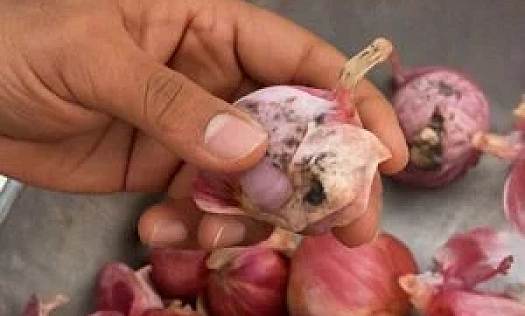
How temperature and humidity trends, odour and VOC sensors, airflow checks and visual inspection can help detect onion spoilage zones before losses spread.
News
Detecting Onion Storage Hot Spots: Temperature, Humidity, VOCs and Inspection
How temperature and humidity trends, odour and VOC sensors, airflow checks and visual inspection can help detect onion spoilage zones before losses spread.
News
 Advanced Potato Storage Technology: Bulk Ventilation, Climate Control & Engineering Specs
Learn how modern bulk potato storage systems maintain optimal temperature, humidity, CO₂ levels, and airflow to protect crop quality. Full engineering parameters, ventilation design, cooling capacity, and monitoring solutions.
Microclimate
Advanced Potato Storage Technology: Bulk Ventilation, Climate Control & Engineering Specs
Learn how modern bulk potato storage systems maintain optimal temperature, humidity, CO₂ levels, and airflow to protect crop quality. Full engineering parameters, ventilation design, cooling capacity, and monitoring solutions.
Microclimate
 Why Poultry Data Systems Miss What the Birds Are Telling Us
Poultry production ranges from integrated networks to independent and family-run farms. Across these models, sensors measure the building — but not always how the flock experiences it.
News
Why Poultry Data Systems Miss What the Birds Are Telling Us
Poultry production ranges from integrated networks to independent and family-run farms. Across these models, sensors measure the building — but not always how the flock experiences it.
News
 Bulk storage
Learn how bulk storage works: airflow design, microclimate control, perforated pipes, and slotted floors. Ideal for potatoes, onions, and beets in India, Africa, and Saudi Arabia.
Bulk storage
Learn how bulk storage works: airflow design, microclimate control, perforated pipes, and slotted floors. Ideal for potatoes, onions, and beets in India, Africa, and Saudi Arabia.

Leave your contacts and we will get back to you