

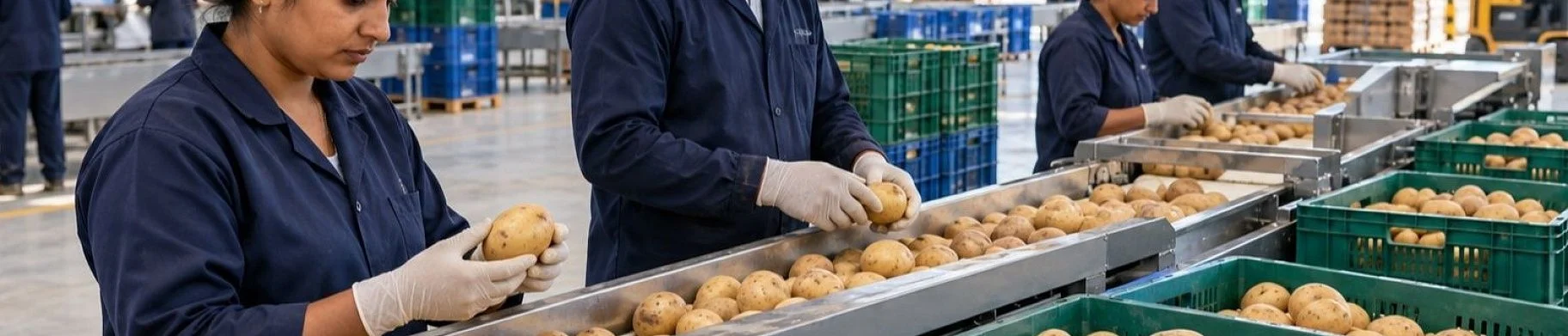
India already produces seed potatoes at commercial scale, yet only a small share reaches foreign farms. Certification recognition, plant-health agreements and established supplier relationships explain much of the gap. Storage does not remove those barriers, but it determines whether an export-ready lot remains physiologically stable, traceable and inspectable while the commercial process catches up.
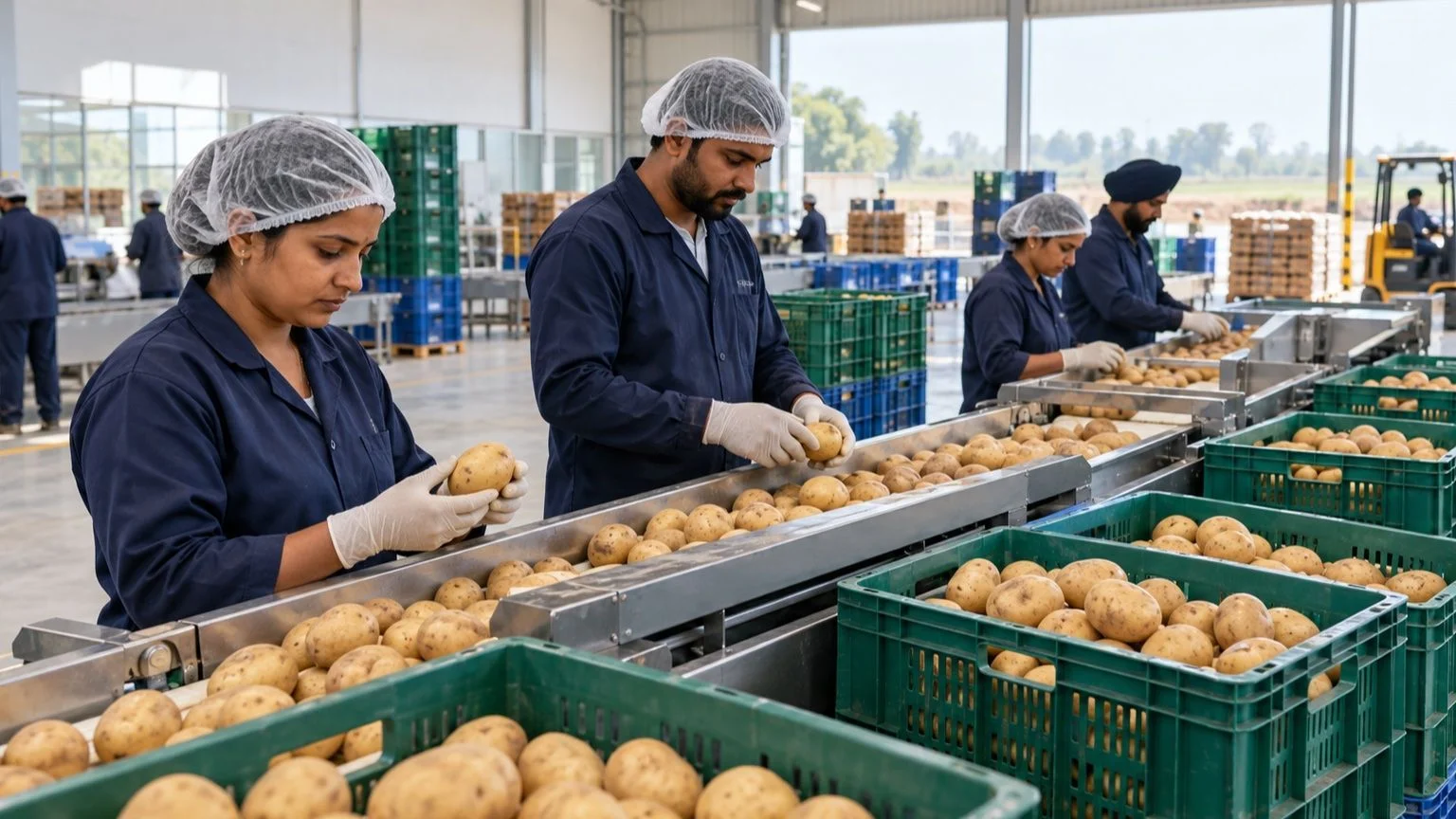
Trade analysis published by IndianPotato.com estimates that India exported seed potatoes worth about ₹16.1 crore in 2025, compared with roughly ₹770 crore of potatoes for consumption. The year was a significant increase over 2024, but most of the volume depended on one destination. That is evidence of opportunity, not yet evidence of a mature and diversified export channel.
The obstacles are wider than storage engineering. Foreign buyers need a certificate they recognise, phytosanitary clearance against their own pest lists, verifiable origin and confidence in the supplier. Agrovent does not issue seed certificates or negotiate market access. Our part begins where crop condition becomes an engineering responsibility: cooling, ventilation, humidity control, monitoring and the operating record of each lot.
Seed is not simply a smaller table potato
A table-potato buyer primarily evaluates saleable quality. A seed-potato buyer is purchasing the performance of a future crop. The tuber must remain alive and vigorous, but its physiological ageing, sprout development, dehydration and disease risk must stay within a planned window.
Stability matters more than a single set point
A temperature reading taken today cannot describe what happened to a lot over four months. Repeated warming, uneven airflow, condensation or long periods outside the target range can accelerate physiological ageing even when the current room value looks correct.
Seed storage therefore needs representative product sensors, stable cooling, controlled air movement and recorded trends. Lots with different varieties, harvest dates or intended planting windows may also require different operating decisions.
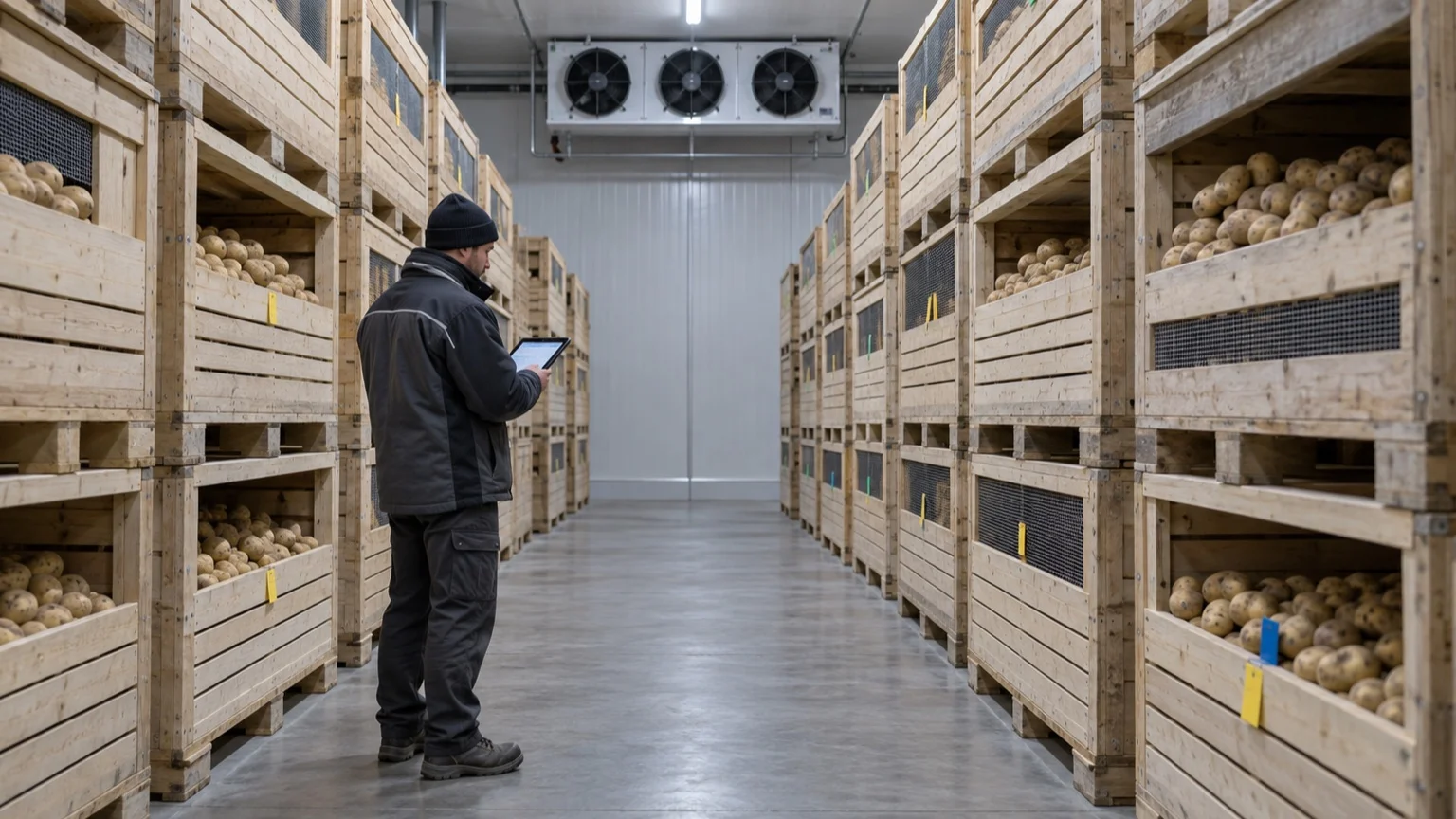
Storage cannot make a poor seed lot certifiable. It can preserve the condition of a qualified lot and create an operating history that supports inspection, claims management and buyer confidence.
The four storage risks that can weaken an export lot
Warm pockets age faster and may break dormancy earlier. A room average can hide damaging variation between boxes or zones.
Excessive drying reduces saleable weight and tuber firmness. High humidity without adequate surface control can raise condensation and disease risk.
Mixing varieties, generations or field origins breaks the chain of identity that a seed buyer expects to verify.
Without trends and alarms, the exporter cannot demonstrate how the crop was held after certification or explain a deviation.
The QR code should lead to more than a farm name
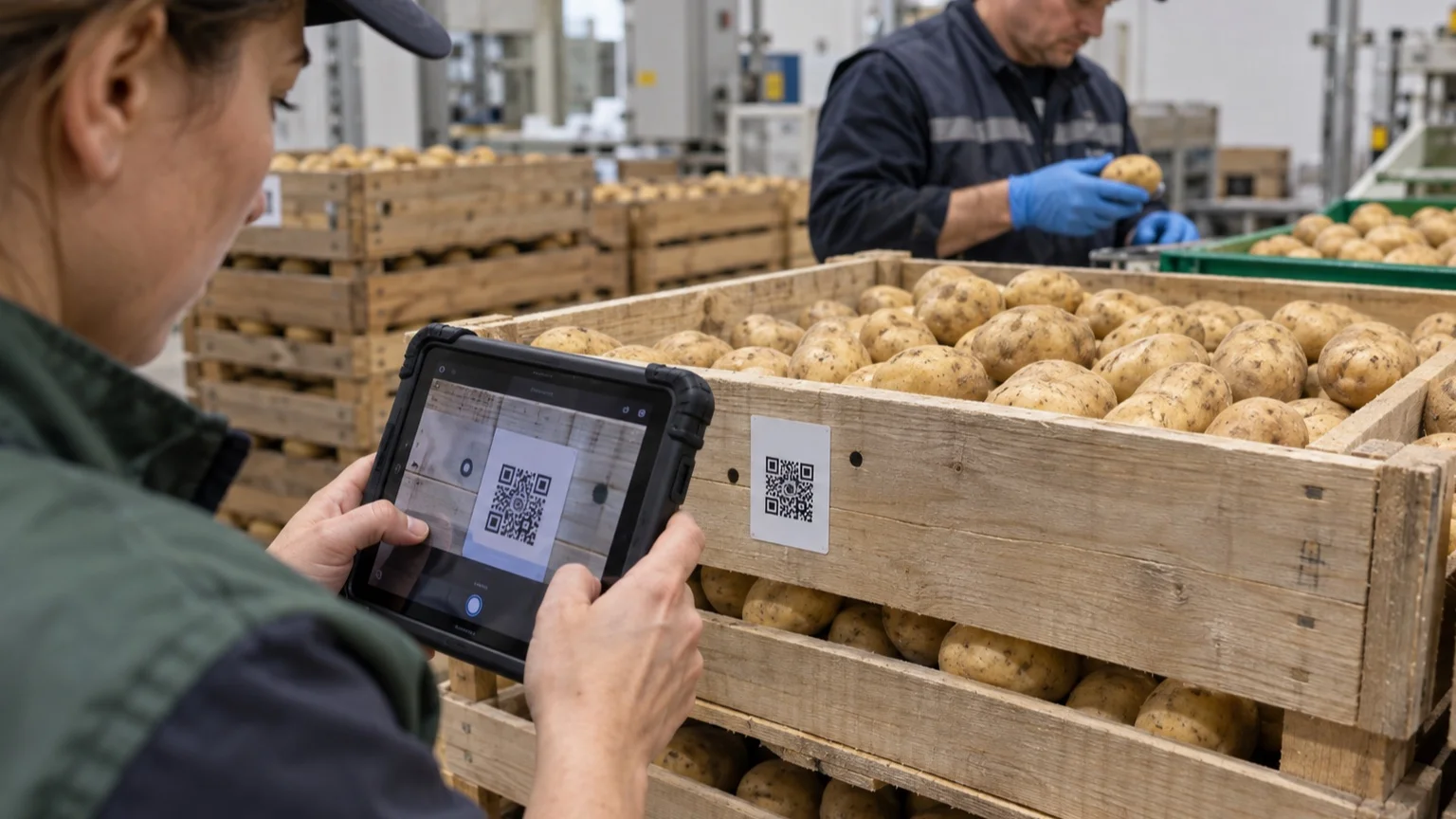
Punjab's seed-potato framework requires traceability across generations and QR-coded labels. The state-backed programme already connects seed identity with production records. Storage data can extend that chain after harvest.
For each lot, the useful record includes receipt date, variety and generation, field or producer identity, room and position, temperature and humidity history, alarms, inspections, treatments, dispatch date and receiving vehicle. The result is not a marketing dashboard. It is an auditable sequence linking the certified lot to its actual post-harvest conditions.
What an export-oriented seed store should be able to prove
- Each lot has a persistent identity from intake to dispatch.
- Room and product temperatures are measured at representative positions.
- Humidity, condensation risk and ventilation events are recorded.
- Alarms and manual interventions remain visible in the history.
- Sampling and quality checks are tied to the correct lot.
- Dispatch preserves lot separation and the required temperature chain.
The buyer needs planting performance, not merely sound appearance
Shrivelling and premature sprouting are obvious warning signs, but visual inspection alone cannot reconstruct a storage history. The operating strategy should be defined around variety, intended planting date, dormancy behaviour and destination requirements.
This is why the correct question is not “What temperature is best for seed potatoes?” It is “What condition must this lot have when it leaves, and what staged temperature, humidity and ventilation programme will preserve that condition?”
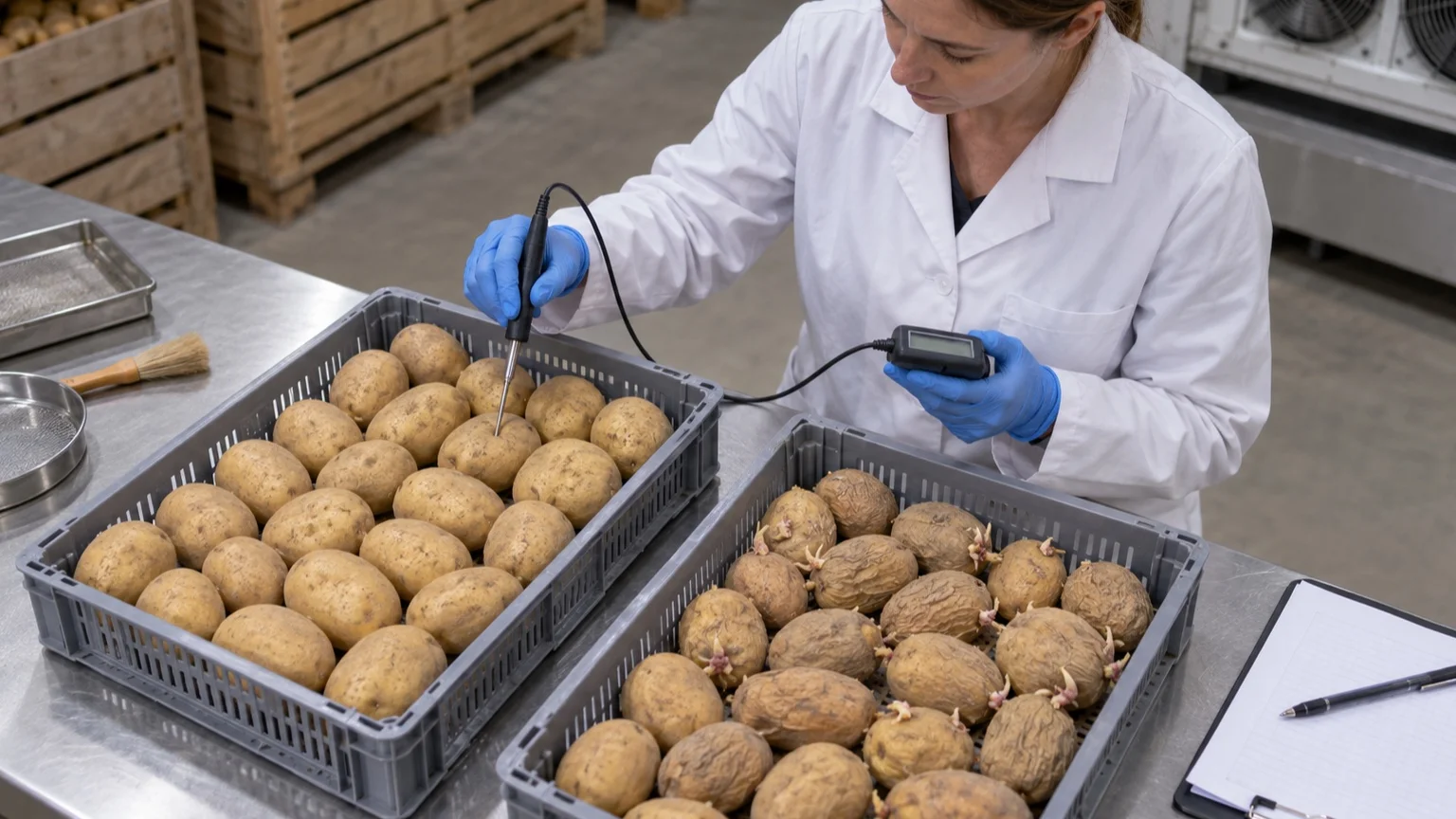
Storage is one layer of export readiness
A technically strong store does not replace UNECE-aligned classification, an importing country's phytosanitary conditions, laboratory testing or commercial distribution. It makes the certified product easier to preserve and easier to defend with evidence. That distinction matters: engineering should support the export proposition, not overstate what it can solve.
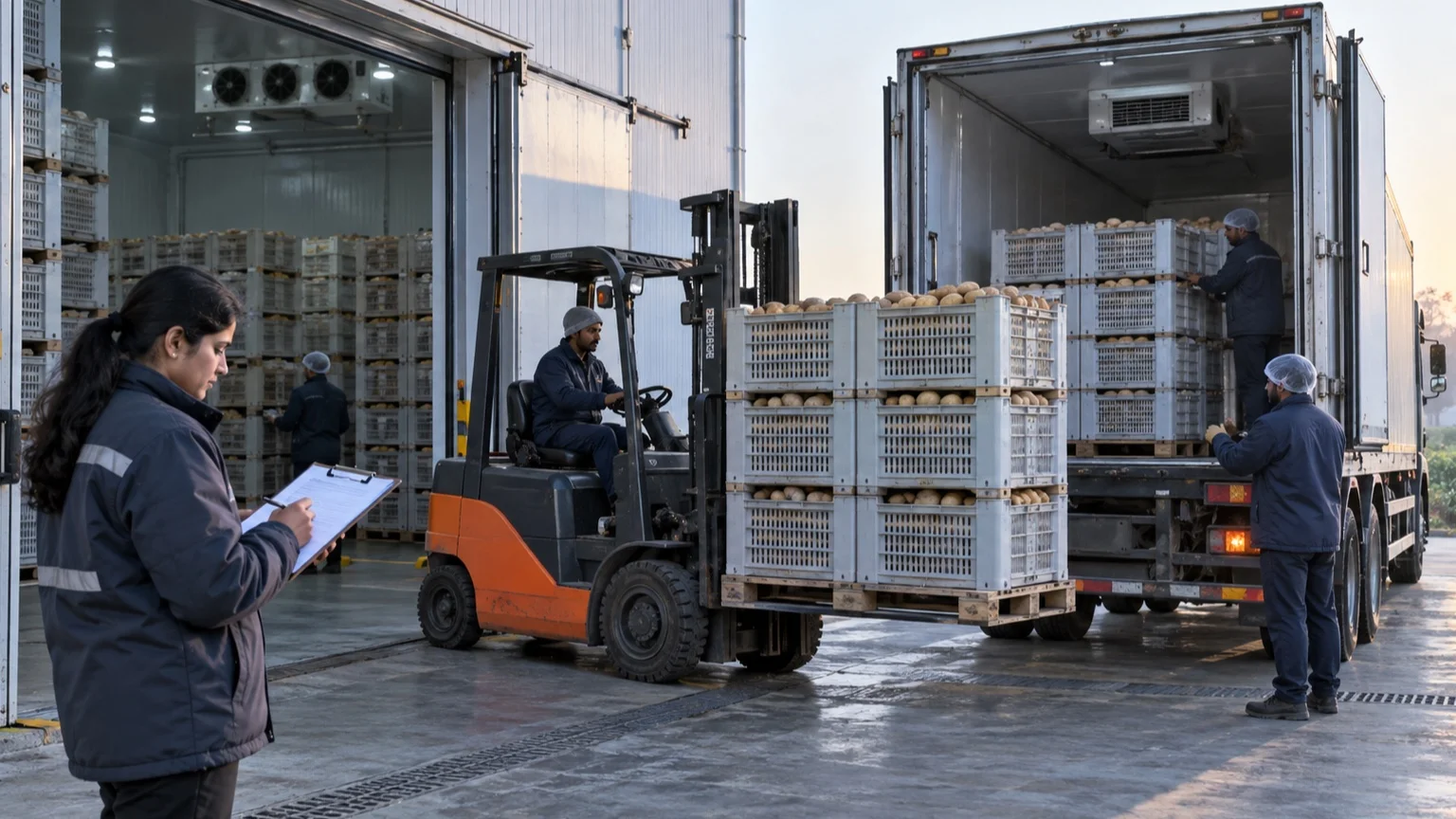
For an Indian producer, the most practical sequence is to build domestic reliability first: lower storage losses, consistent lot quality, documented conditions and repeatable dispatch. These improvements create value even when the crop remains in India. If an export buyer appears later, the operator is not trying to invent several seasons of evidence in a few weeks.
Related Agrovent guidance
Frequently asked questions
Can better storage alone unlock seed-potato exports?
No. Export also depends on recognised certification, phytosanitary access, buyer acceptance and logistics. Storage protects crop condition and provides traceable evidence within that wider chain.
What data should be recorded for each seed lot?
At minimum: identity, variety, generation, producer or field reference, intake condition, storage position, temperature and humidity history, alarms, inspections, treatments and dispatch details.
Is the lowest possible storage temperature always best?
No. The programme must preserve the desired physiological state for the variety and intended planting date. Excessively aggressive cooling, poor humidity control or unstable operation can create other quality problems.
Sources and scope
- IndianPotato.com: trade analysis of India's seed-potato exports
- Punjab Agro: seed-potato traceability programme
- Punjab Tissue Culture Based Seed Potato Act, 2020
The trade figures describe the cited source's 2025 dataset. Agrovent's analysis is limited to storage engineering and post-harvest operating practice; importing-country requirements must be confirmed with the relevant certification and plant-health authorities.
Design the storage record before the export request arrives
Send Agrovent the variety, annual volume, harvest window, required storage period, box or bulk format, location and intended market. Our engineers can define the cooling, ventilation, monitoring and control architecture needed to preserve lot condition and produce a usable operating history.
Email project data Contact Agrovent


 Why Do Potato Sprouts Sometimes Grow Inward During Storage?
Inward potato sprouting occurs from storage stress - not genetics. Stable temperature, humidity, and ventilation prevent damage and preserve quality.
 Container storage
Discover the advantages of container vegetable storage: low spoilage, fast logistics, and stable climate control. Ideal for carrots, cabbage, potatoes and onions
 Key Factors for Investing in Agriculture
Learn why agriculture is a stable long-term investment. Key benefits, risks, and strategies for choosing profitable agri projects in India, Africa, and the Middle East
 Efficient Beet Storage and Ventilation Systems by Agrovent
Required equipment, features and benefits.
 Carrots. Storage parameters
Preparation of the product. The volume of goods. Storage temperature.
 Potatoes. Storage parameters
Learn optimal potato storage conditions: temperature, humidity, CO₂ control, and bulk height. Engineered solutions for India, Africa, and Saudi Arabia.

