Control Panels for Ventilation & Refrigeration

Agrovent designs, manufactures, installs and services control panels for ventilation, refrigeration and integrated agricultural automation systems.

Designed · Manufactured · Installed · Serviced by Agrovent

Control cabinets engineered around the whole process

Agrovent develops and manufactures electrical control panels and complex automation systems for ventilation, refrigeration and agricultural production facilities. We install, commission and service the systems we deliver.

The work starts with the process: how equipment must operate together, what should happen when a condition changes and how staff will identify and respond to a fault. The cabinet brings that logic together with power distribution, motor control, instrumentation and operator interfaces.

Discuss your automation project
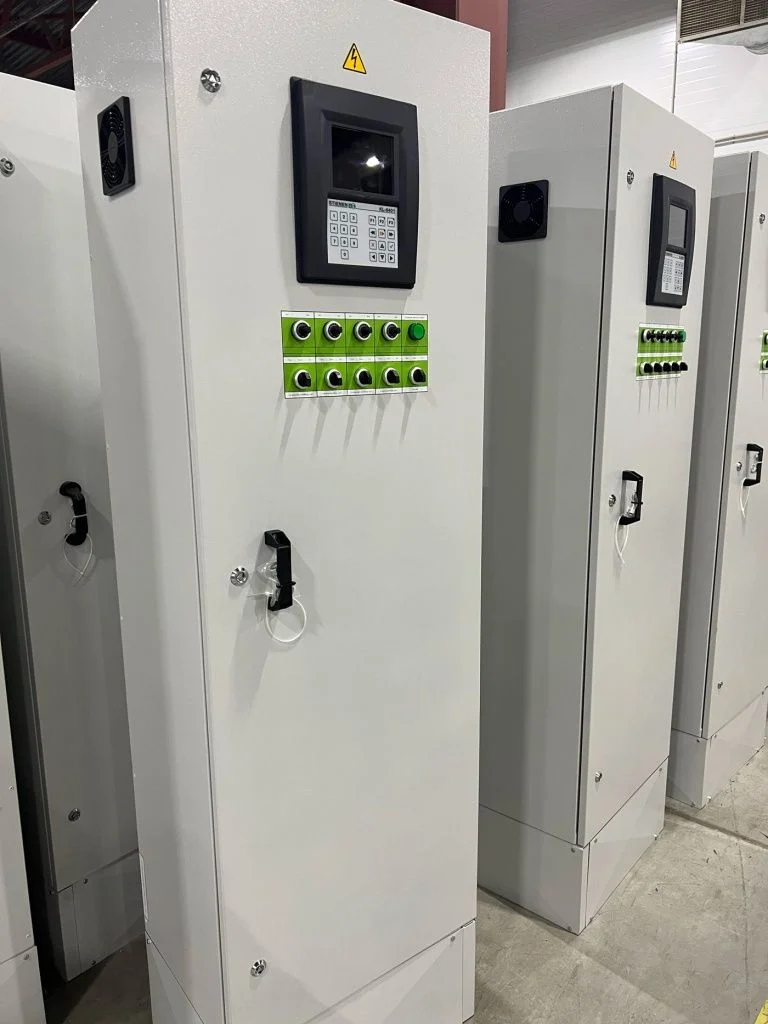
Control cabinets with operator panels and selector switches from the existing Agrovent product page
Control cabinets shown in Agrovent's existing product materials. Layout and equipment are selected for each project.

From one equipment group to a coordinated installation

Ventilation automation

Fan groups, variable-speed drives, dampers and air inlets are coordinated with the required operating mode and available measurements. The design considers staged operation, feedback, alarms and the behaviour of the remaining equipment when one unit is unavailable.

Explore ventilation equipment

Refrigeration automation

Refrigeration controls coordinate the equipment included in the project: compressor units, condensers, evaporators, pumps, valves and defrost functions. The sequence must respect equipment requirements and the process operating envelope.

Explore refrigeration equipment

Integrated climate systems

Storage and production facilities often combine ventilation, cooling, heating and humidification. A coordinated design defines priorities and permitted combinations so that individual equipment groups support the same process objective.

Explore vegetable storage solutions
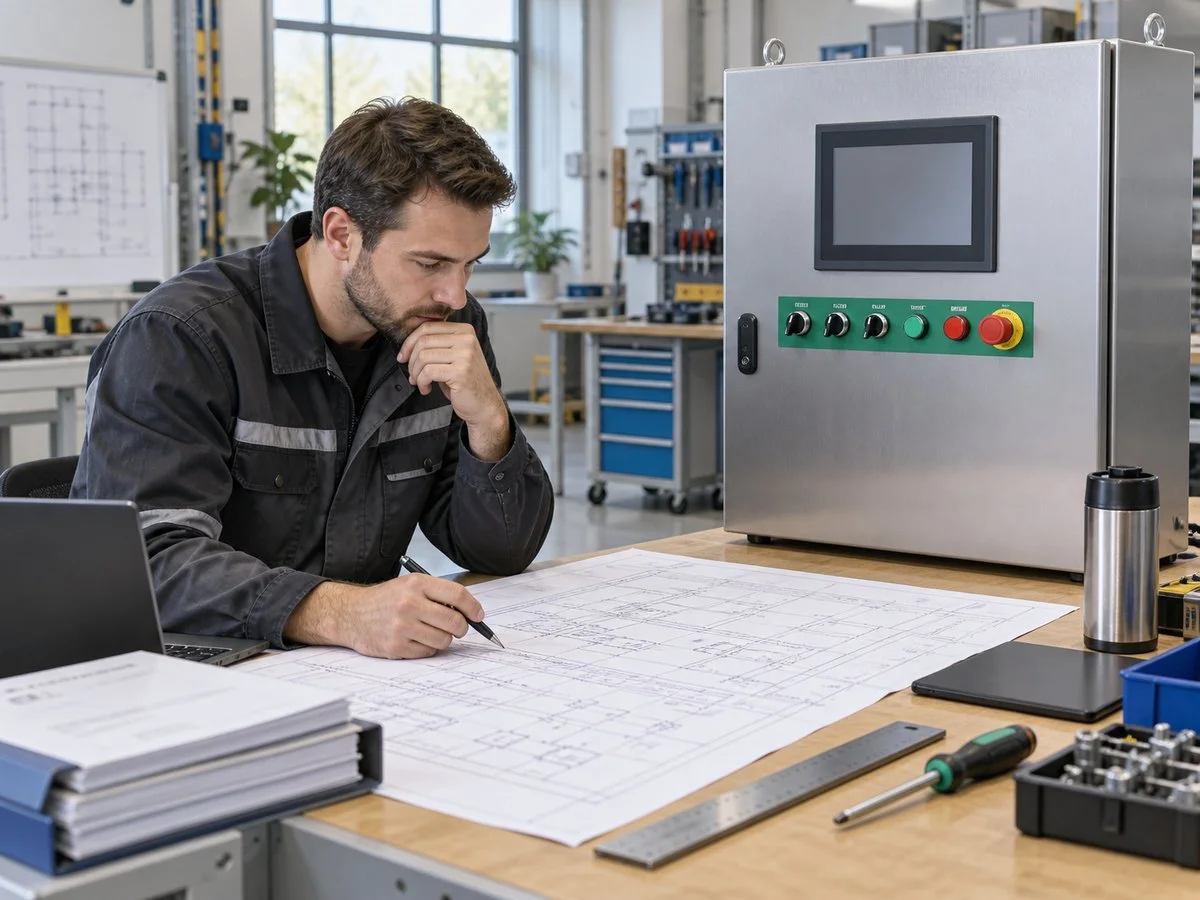
Illustration of an automation engineer reviewing drawings beside a control cabinet
Illustration of the engineering workflow, not a photograph of a documented customer project.

Engineering before assembly

We define the control architecture around the equipment schedule, process requirements and site conditions. A project may require several cabinets, distributed inputs and outputs, local operator stations and connections to existing controllers.

The design brief should identify motor and load data, starting methods, supply conditions, environmental exposure, cable routes, available signals and future expansion. Component selection also considers service access and realistic replacement options.

The agreed documentation can include electrical schematics, a cabinet layout, a bill of materials, terminal and cable schedules, an input/output list and a functional description. These documents should describe the same installation and remain consistent through commissioning.

See Agrovent climate controllers and sensors for agricultural climate control.

Ventilation: a run command is only part of the story

A fan command, actual running status and measured process response are different signals. The available feedback determines whether the operator can distinguish a stopped drive, a motor fault or an airflow problem from normal operation.

For a ventilation system, the operating sequence may include inlet positioning, fan-group selection, speed control and a response to loss of a required signal. The exact strategy depends on the building, load and equipment.

Manual and automatic modes need clearly defined responsibilities. Manual operation should be specified with the necessary protective functions intact; a selector switch is not a substitute for a documented fault response.

These requirements are especially relevant to poultry buildings, livestock facilities and crop storage rooms where conditions change with occupancy, weather and the production stage.

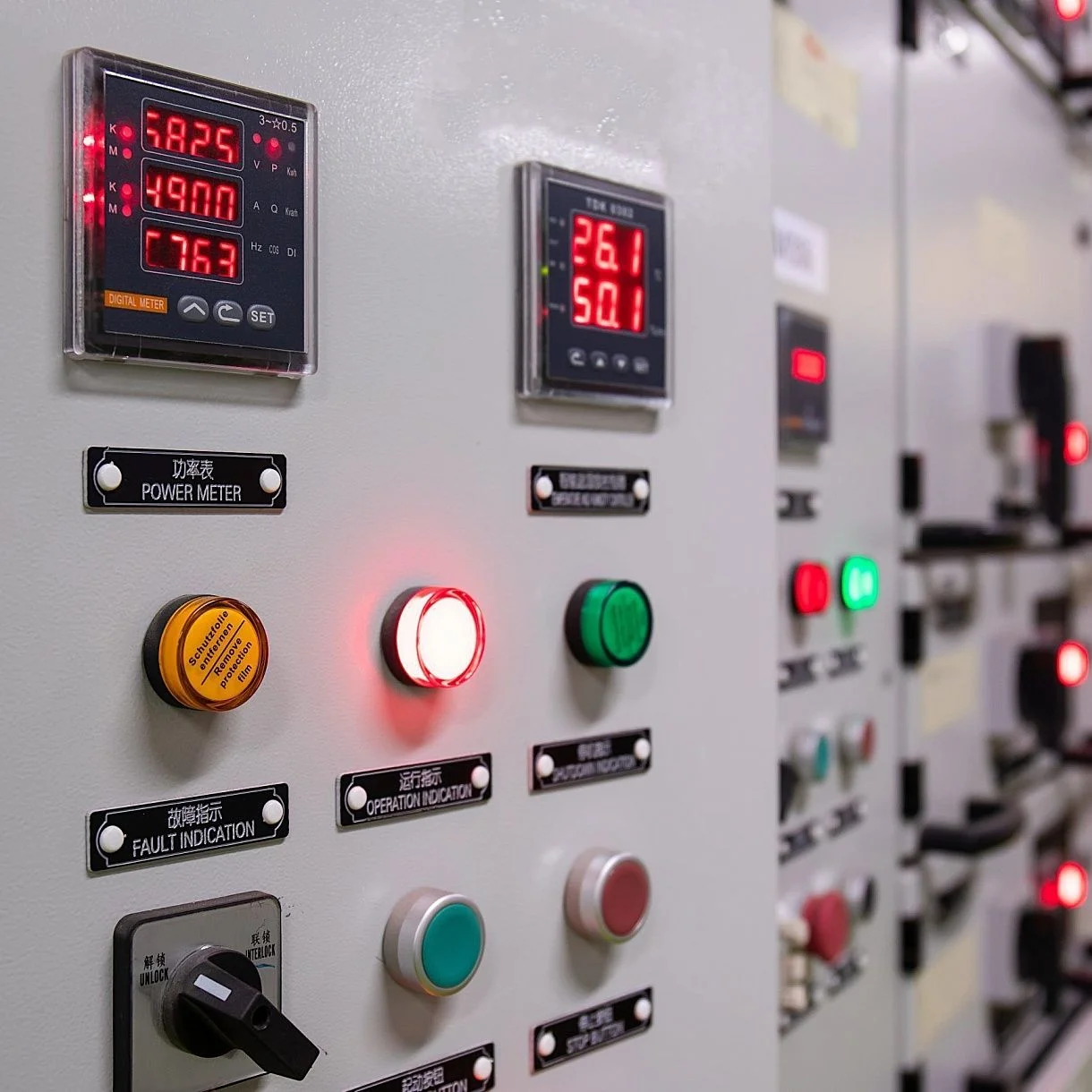
Control-panel instruments, status indicators and manual selector switch
Operator instruments and status indication from the existing page. Final labels, displays and control modes follow the project specification.
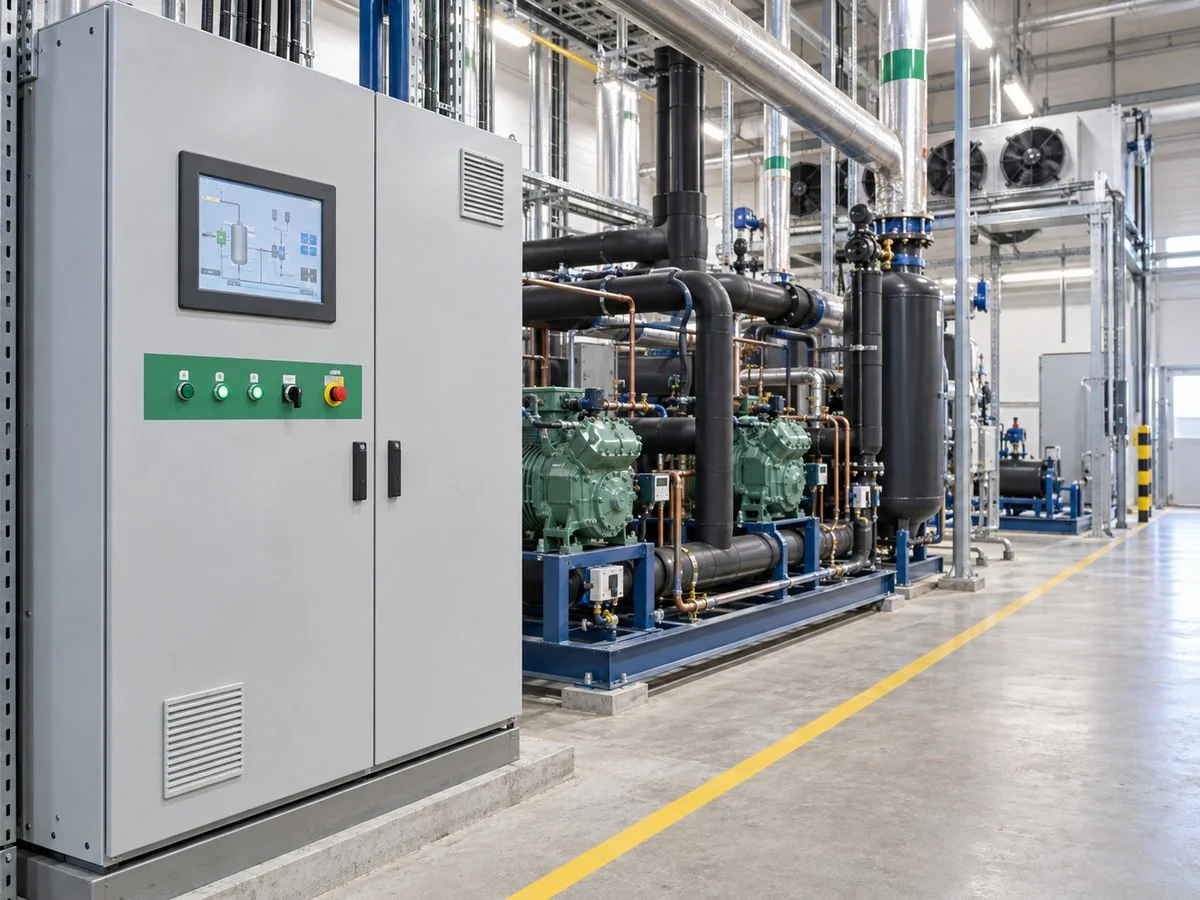
Illustration of a control cabinet serving an industrial refrigeration installation
Illustrative refrigeration-control application. The equipment arrangement is not a construction drawing or a verified installation.

Refrigeration: coordinated sequences and equipment protection

Refrigeration automation extends beyond maintaining a room temperature. It must coordinate the applicable cooling stages, equipment permissives, process feedback and transitions between operating modes.

A project's sequence description may cover capacity staging, fan or pump operation, defrost initiation and termination, return to cooling and restart following an interruption. Relevant equipment-manufacturer requirements and protective devices are incorporated into the design.

Alarms should help staff understand the event: the affected equipment, the condition that triggered it, whether operation is inhibited and the agreed response. A general fault lamp alone rarely provides enough context for a complex installation.

For integrated storage, the relationship between refrigeration and ventilation matters as much as either subsystem alone. Priorities and interlocks must be defined for the actual process rather than assumed from a generic controller setting.

Manufacturing and verification

Cabinet construction

Agrovent assembles the electrical and automation equipment around the approved design. Component layout, wiring identification, terminal access and heat management are part of making the cabinet practical to inspect and service.

Functional checks

The test scope is agreed for the installation. It can include wiring and input/output verification, operating-mode checks, signal simulation, alarm handling and confirmation of the intended sequences before dispatch.

Project requirements

Supply voltage, frequency, enclosure protection, documentation language and applicable conformity requirements are established for the destination and installation. These are project-specific requirements, not universal properties of every panel.

Installation, commissioning and handover

  1. Check the site: confirm equipment, interfaces, installation conditions and the boundaries between the cabinet supply and field works.
  2. Install and connect: carry out the agreed mounting and field integration, with documented cable and signal identification.
  3. Verify the field signals: establish that sensors, equipment states and commands correspond to the correct physical devices.
  4. Commission the process: test operating sequences and transitions under the agreed conditions, including relevant faults and restart behaviour.
  5. Hand over the system: explain operating modes, alarm handling and service procedures, and provide the agreed drawings, settings and records.

Commissioning is where the cabinet, field equipment and process become one working system. Any changes made at the site should be reflected in the final documentation and software version record.

Service throughout the operating life

Agrovent services its control and automation systems. A useful service record connects the observed problem with the relevant equipment, alarm history, measurements and software configuration.

Maintenance planning should address inspection, cabinet environmental conditions, component availability, configuration backups and controlled changes. Expansion or replacement of field equipment may require changes to the electrical design as well as to the programme.

Remote access and diagnostics can be included where specified. Access permissions, connectivity and the scope of remote actions need to be agreed; local protective functions must not depend on a cloud analytics service.

Connect reliable automation to operational insight

Clearly identified signals and events provide a foundation for farm monitoring and climate intelligence. Knowing which equipment was commanded, which feedback was received and what the process did next makes later investigation more useful.

Agilias is the related direction for analytical tools. Data integration and diagnostic functions are scoped separately from the local automation and protection responsible for operating the equipment.

Questions about a control-panel project

Does Agrovent manufacture the cabinets or only supply components?

Agrovent develops and manufactures control cabinets and automation systems, and provides installation, commissioning and service. The project defines the equipment, software and field-work scope.

Can ventilation and refrigeration be coordinated?

Yes. Agrovent develops automation for both. A combined project requires an agreed operating philosophy, equipment interfaces, priorities and protective functions for the specific installation.

Can you modernise existing automation?

We can assess an existing installation for a modernisation project. Drawings, equipment condition, controller details and available software are reviewed before confirming the scope and compatibility.

What information is needed for an initial proposal?

Provide the process description, equipment list with electrical data, supply conditions, site location and any existing drawings. Explain the required operating modes, interfaces, installation responsibilities and service expectations.

Bring us the process and the engineering challenge

Whether the task is a fan-control cabinet, a refrigeration system or coordinated automation across a storage facility, start with the required operation and the equipment already selected. We will use that brief to define the design, manufacturing, installation and service scope.

Discuss your control system
Any questions? We are always in touch!

Leave your contacts and we will get back to you

img: test 123