Technologies and methods for storing onions in a vegetable store

How to Preserve Onion Quality and Freshness: Proper Post-Harvest Preparation and Storage Technology
Do you want your onions to stay fresh, firm and market-ready - and stand out on supermarket shelves or wholesale markets?
Then professional post-harvest handling and proper storage are essential. The shelf life, flavor, color and overall quality of onions depend not only on the right microclimate equipment but also on correct preparation before the crop enters the storage facility.
Below is a complete guide to preparing onions for long-term storage, especially relevant for growers in India, Africa and the Middle East, where high temperatures and humidity make onion storage particularly challenging.
How to Prepare Onions for Storage
1. Cleaning and Sorting After Harvest
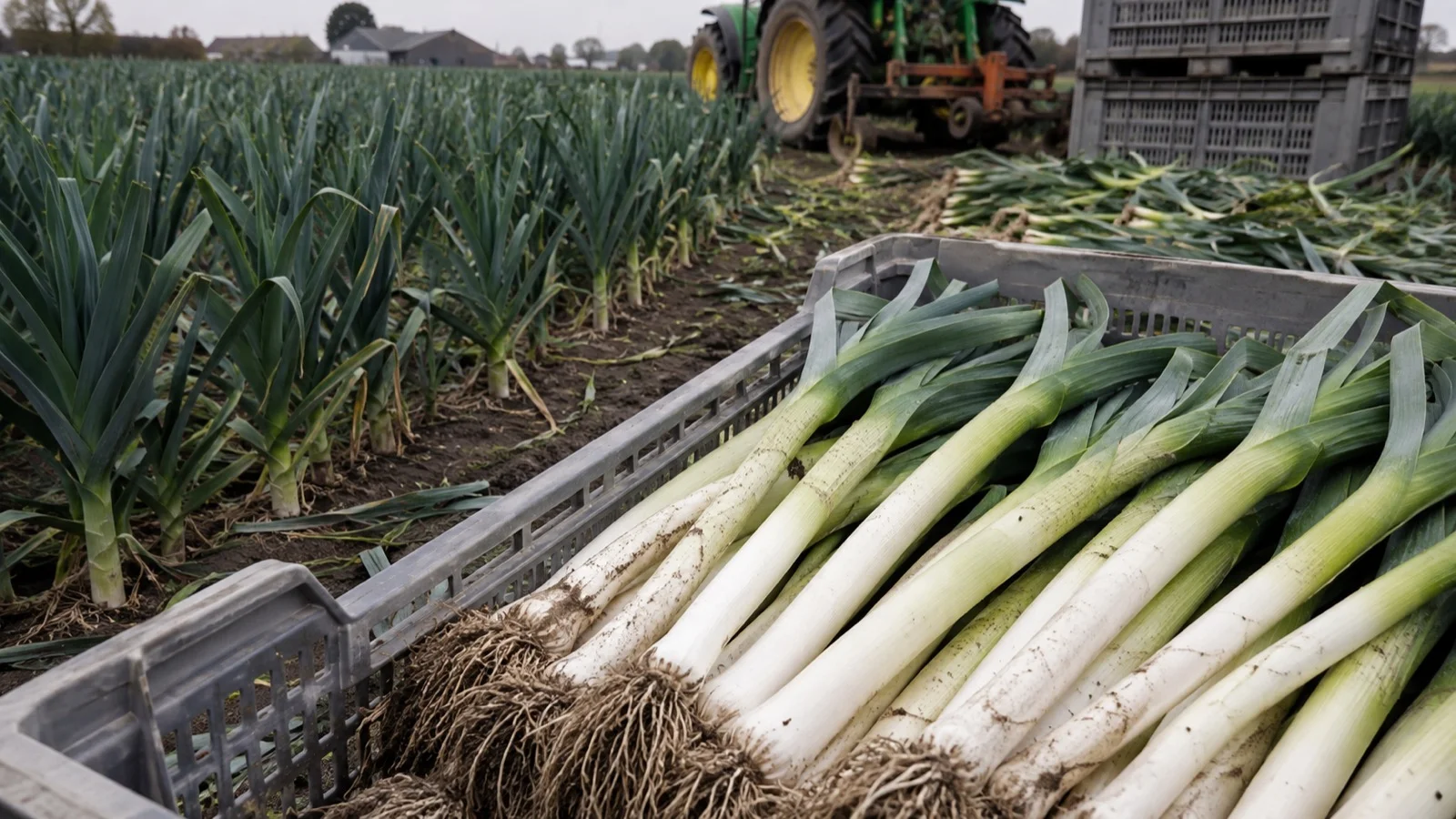
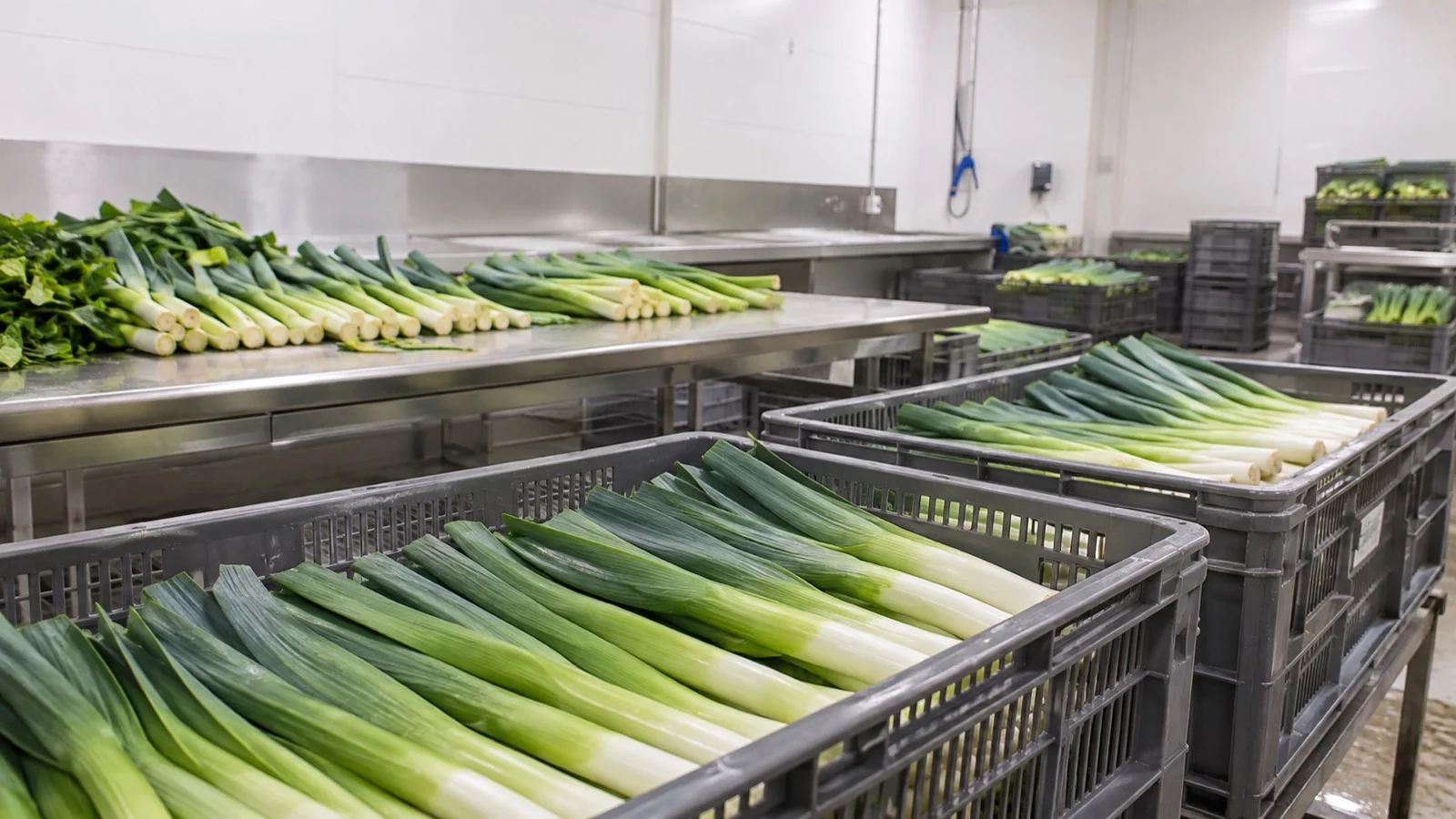
Immediately after harvesting, onions must be cleaned of soil, weeds and debris. This step prevents fungal growth and the spread of microorganisms that cause spoilage.
If you detect partially damaged bulbs, you can sometimes save them by removing the infected outer scales.
2. Drying (Curing)
Only fully mature and well-dried onions should be placed in a vegetable store. Proper curing helps prevent mold, rot and neck breakdown.
Curing requires active ventilation and is adjusted depending on onion variety and local climate.
Process:
-
Freshly harvested onions are ventilated with outside air.
-
The temperature of the pile rises to about +20°C due to warm external airflow entering the storage chamber.
If unripe green onions are mixed into the batch, they cannot be stored under standard conditions. For these, drying temperature should be increased to +30°C to avoid neck rot, which develops quickly at +22…+25°C.
Typical curing duration:
-
6 weeks
-
8–9 hours of ventilation per day
-
Air exchange capacity: 200–250 m³/t per hour
Once curing is completed, maintenance ventilation of 4 hours per day is generally sufficient.
3. Gradual Cooling Phase
After drying, begin lowering the temperature step by step — 0.5°C per day until it reaches +20°C in the storage chamber.
To prevent moisture condensation, ventilate with outside air for 10–15 minutes every 3 hours during the cooling stage.
Storage Options for Onions
Once onions are cleaned, sorted and fully cured, they are ready for storage.
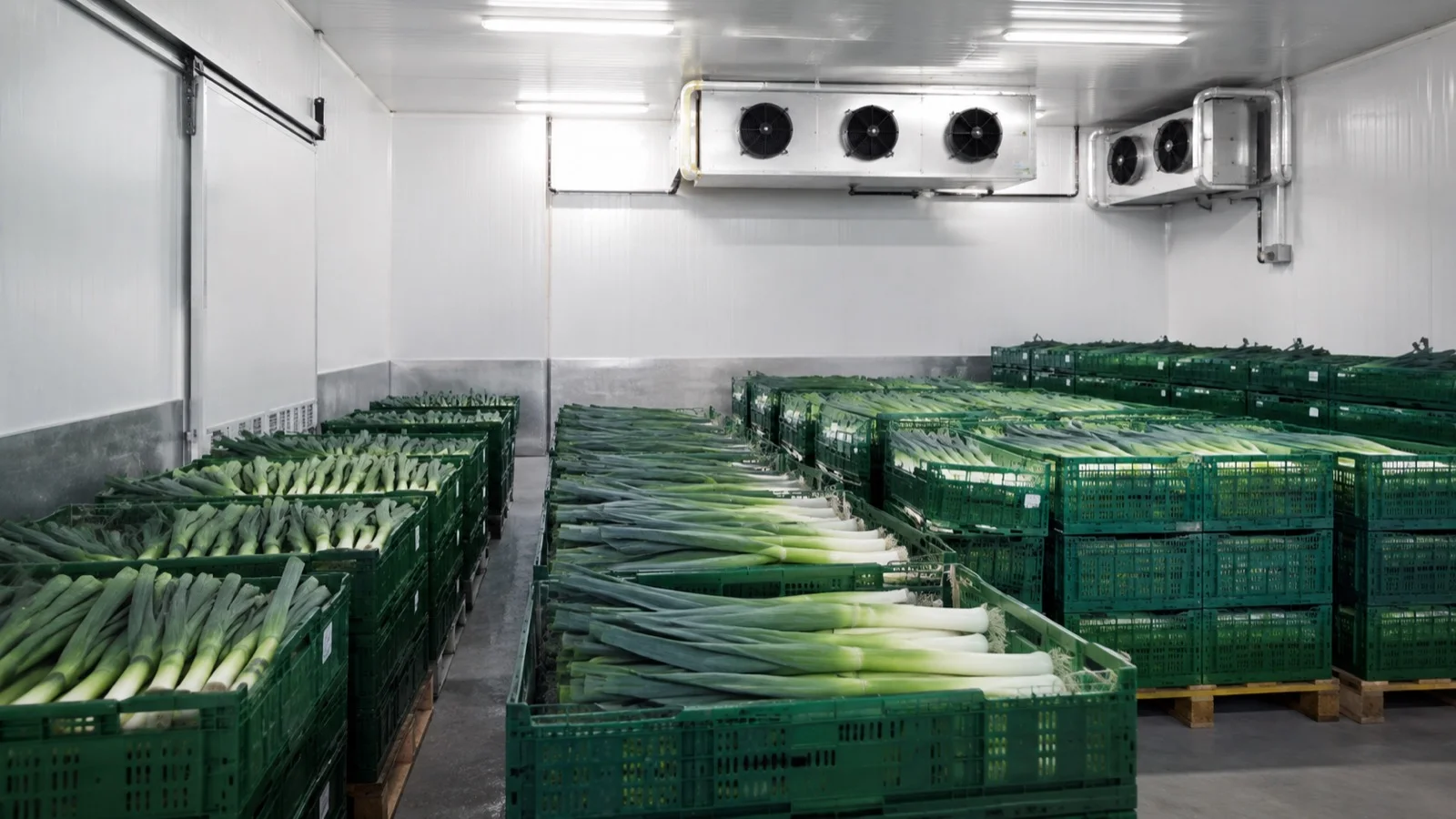
Microclimate systems must maintain both temperature stability and optimal humidity, because onions are extremely sensitive to excess moisture and sudden climate fluctuations.
High humidity leads to mold and rot, which spread quickly from one bulb to another. To avoid this, ventilation should operate 15 minutes every two hours.
Microclimate Technologies We Typically Use in Onion Storage Projects
Agrovent implements several advanced systems designed specifically for long-term onion storage:
-
Combined Ventilation System
-
Aspiration Wall Technology
-
Dragon-M High-Pressure System
Each project is engineered individually, taking into account:
-
onion variety
-
volume of harvest
-
climate zone
-
storage building design
-
operational goals
-
energy efficiency requirements
We fine-tune all parameters at the design stage to ensure maximum shelf life and minimal losses.
Key Storage Parameters You Should Always Follow
Regardless of the storage system, some rules are universal:
-
No temperature differences inside the pile
-
Cooling must start only after drying is fully completed
-
Optimal relative humidity: 75%
-
Storage temperature: 0 to +1.5°C
Following these guidelines helps maintain firmness, prevent sprouting, and significantly extend shelf life — especially important for regions with hot climates.
Need Help Designing a Storage Facility for Onions?
Whether you require expert consultation or a complete turnkey technological solution, our specialists are ready to assist.
📞 Call: +971 50 437 7119
📧 Email: info@agrovent.com



More articles
 Potassium Before Carrot Harvest: The Hidden Key to Long-Term Storage Success
Carrot season doesn’t end at harvest -t continues in storage. The secret to keeping carrots crisp, sweet, and market-ready for months lies in one invisible element: potassium. Here’s why every grower should make it a key part of pre-harvest nutrition.
News
Potassium Before Carrot Harvest: The Hidden Key to Long-Term Storage Success
Carrot season doesn’t end at harvest -t continues in storage. The secret to keeping carrots crisp, sweet, and market-ready for months lies in one invisible element: potassium. Here’s why every grower should make it a key part of pre-harvest nutrition.
News
 The Rise of Urban Farming: How Rooftops Are Becoming the World’s New Agricultural Frontier
Around the world, cities are running out of space - but not out of ideas. Urban farming is turning rooftops, abandoned industrial zones, and unused land into high-yield food production hubs. Here’s how the world’s largest rooftop farm in Paris is redefining agriculture in dense urban environments.
News
The Rise of Urban Farming: How Rooftops Are Becoming the World’s New Agricultural Frontier
Around the world, cities are running out of space - but not out of ideas. Urban farming is turning rooftops, abandoned industrial zones, and unused land into high-yield food production hubs. Here’s how the world’s largest rooftop farm in Paris is redefining agriculture in dense urban environments.
News
 Collection, processing and storage of carrots
How to ensure long-term storage of carrots?
News
Collection, processing and storage of carrots
How to ensure long-term storage of carrots?
News
 Green revolution saves lives
Discover how the Green Revolution increased food production, reduced hunger and lowered infant mortality in developing countries — and why a new Green Revolution is essential for India, Africa and global food security by 2050.
News
Green revolution saves lives
Discover how the Green Revolution increased food production, reduced hunger and lowered infant mortality in developing countries — and why a new Green Revolution is essential for India, Africa and global food security by 2050.
News
 What is vegetable drying and dew point?
Learn how to properly dry onions, potatoes and other vegetables before storage. What affects drying - temperature, humidity, dew point, airflow - and how to prevent crop losses using correct microclimate management
News
What is vegetable drying and dew point?
Learn how to properly dry onions, potatoes and other vegetables before storage. What affects drying - temperature, humidity, dew point, airflow - and how to prevent crop losses using correct microclimate management
News
 Crop rotation: how crop rotation helps to increase yields and maintain soil fertility
Learn why crop rotation improves soil health, breaks pest cycles, prevents nutrient depletion, and boosts yields. Practical tips for building an effective rotation system
Crop rotation: how crop rotation helps to increase yields and maintain soil fertility
Learn why crop rotation improves soil health, breaks pest cycles, prevents nutrient depletion, and boosts yields. Practical tips for building an effective rotation system

Leave your contacts and we will get back to you