Should India Change Its Onion Storage Culture?
Expert perspective: Alexander Samsonov, Agricultural Storage Engineer. View LinkedIn profile.
Should India Change Its Onion Storage Culture?
This is a question I find myself asking again and again. And every time, the answer is the same: yes, we should. Because the way onions are stored today in India is not really a “culture.” It is a survival habit, a forced tradition.
How India Can Transform Onion Storage and Save Millions?
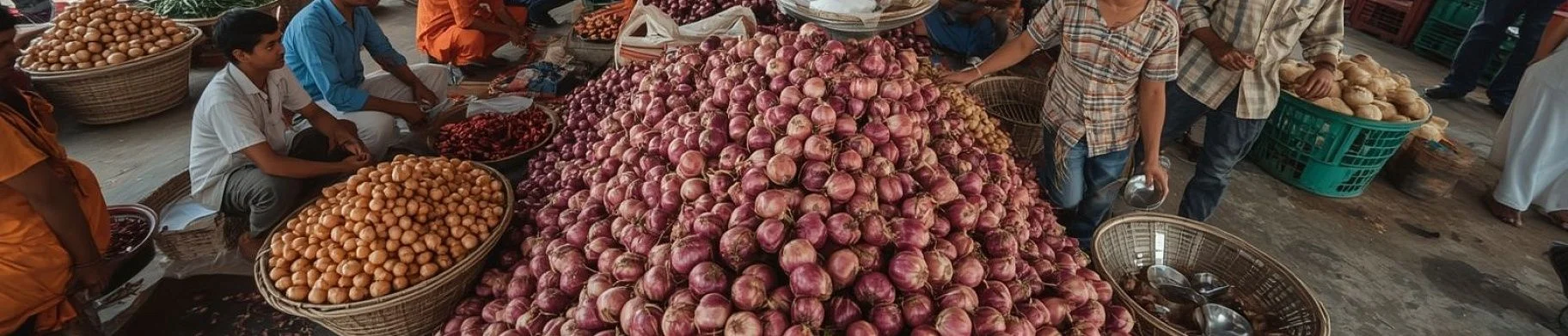
India is one of the world’s largest onion producers, but storage performance varies sharply by structure and operating method. In an ICAR-DOGR comparison over 120 days, total loss was 54.89% in the ventilated structure studied, compared with 7.14% in the controlled DOGR warm-storage design and 5.00% in cold storage at 0 °C.
The Hidden Cost of Tradition
The way onions are stored today in India is not really a “culture.” It is a survival habit, born out of necessity, not efficiency.
Onions kept at +25 to +30 °C with open ventilation are not stored for profit - they are simply “saved” from total loss. But the cost of this system is enormous:
The losses are visible as sprouting, rotting, physiological weight loss, discoloration and reduced marketability. They should be measured for each storage method instead of accepted as an unavoidable cost of doing business.
Losses that farmers and traders have come to accept as “normal.” But these losses are not normal - they are a hidden tax on poverty. They make farmers dependent, markets unstable, and food systems vulnerable.
What Modern Storage Can Achieve?
Now imagine a different system.
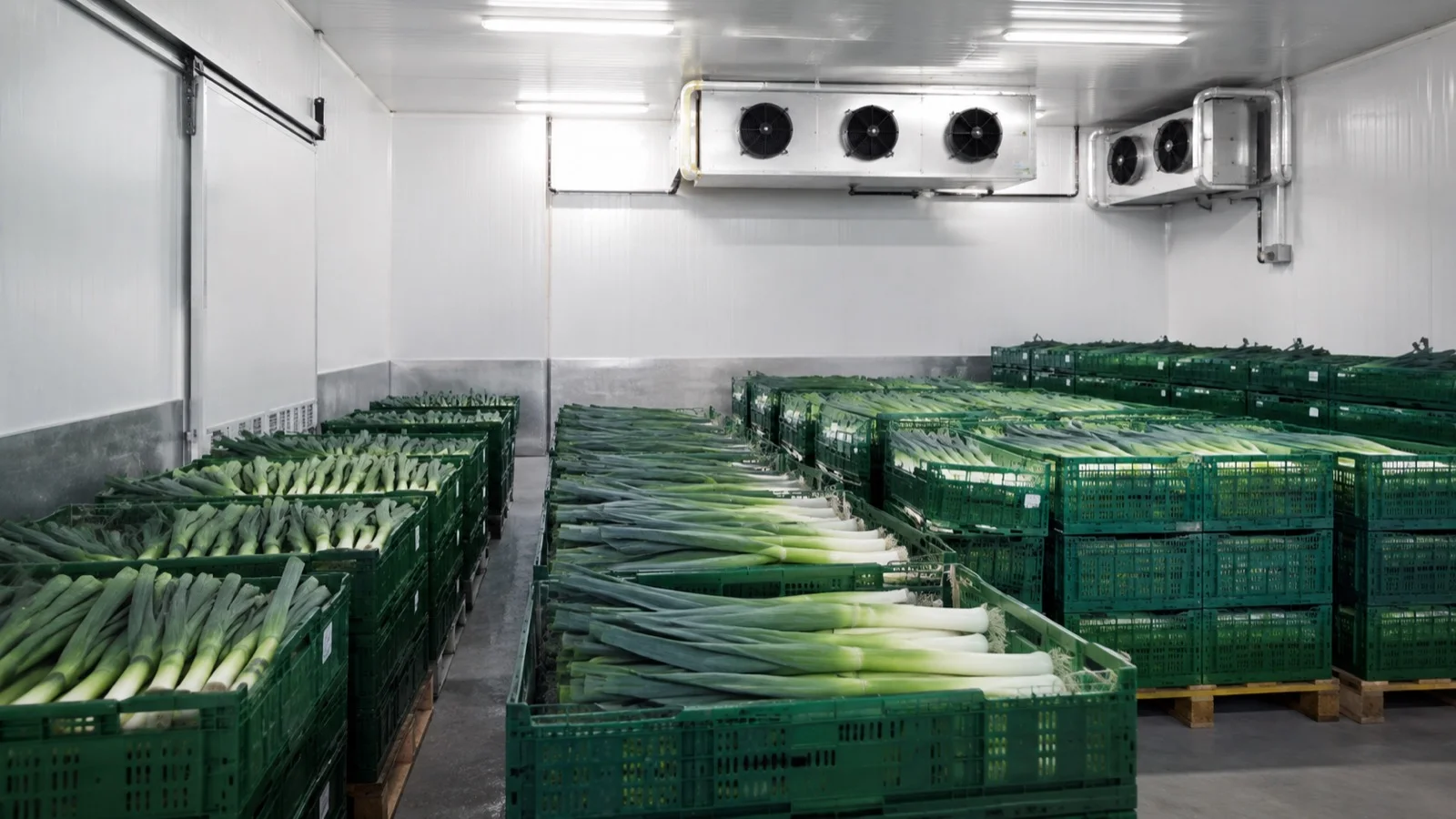
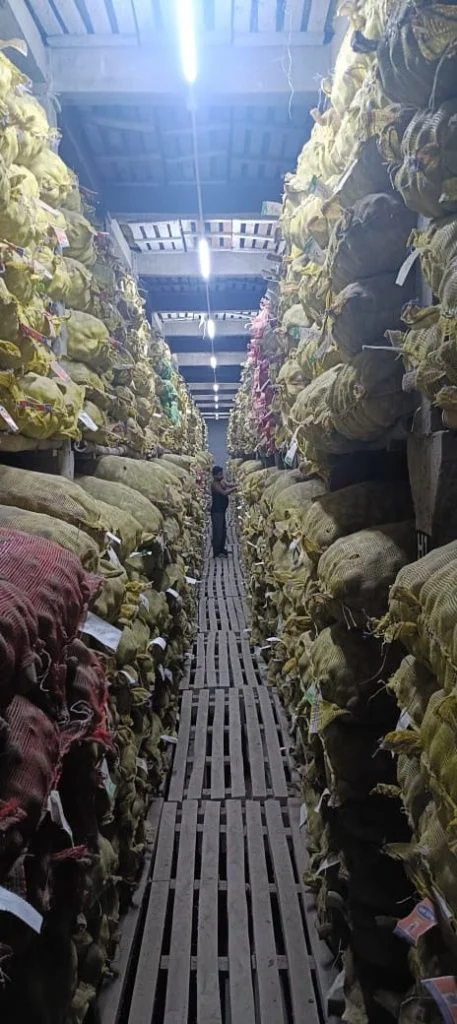
- Cold storage.
- Controlled microclimate.
- Temperature: 0 to +4 °C.
- Stable humidity. Balanced airflow.
- Longer shelf life
- Better quality
- Stable prices


Predictable income. Yes, electricity is required.
Yes, there is a cost. But remember - buyers already pay that cost indirectly through higher prices caused by shortages and spoilage.
💡 Want to Evaluate Your Storage System?
At Agrovent, we help agribusinesses build modern onion storage facilities designed for India’s diverse climate zones.
Our solutions ensure optimal airflow, humidity, and energy efficiency - helping farmers save their harvest and increase profits.
Send your capacity, location and target storage period to Agrovent India for an initial engineering discussion.
More Than Warehouses - A Different Economy
A cold storage facility is not just a building.
It is:
-
A different economy.
-
A higher level of management.
-
A new respect for the farmer’s effort.
It’s not an expense — it’s an investment in food security, stability, and dignity.
“But We Consume Warm Onions…”
Some say: “Why do we need cold storage if Indians are used to warm onions?” The answer is simple: onions can warm up naturally during logistics, at the market, or in the kitchen.
Storage at low temperatures doesn’t change the taste or the culture - it only preserves quality.
Remember the story of the aluminum can. Once considered “strange,” it eventually became the global standard.
The same can happen with onions.
Barriers to Change - and How to Overcome Them
Transformation doesn’t happen overnight.
But India already has the tools to make it possible:
-
Government incentives for post-harvest infrastructure
-
Agro-cooperatives pooling resources for shared cold storage
-
Private investors funding turnkey, energy-efficient facilities
-
Technology providers like Agrovent offering microclimate systems tailored to local conditions
Together, these efforts can transform post-harvest storage into a pillar of sustainable agriculture.
The Real Question
So should we only change the storage culture?
Or also the mindset that accepts massive losses as “normal”?
If India wants to reduce waste, stabilize prices, and honor the work of its farmers - the answer is clear: Yes, the culture must change. And the sooner we begin, the sooner it will pay back - for farmers, consumers, and the entire economy.
Related Agrovent Reading
- Onion Storage Systems for Hot and Humid Climates
- Should India Change Its Onion Storage Culture?
- Microbial Protection for Onions in Maharashtra
Sources and Further Reading



More articles
 Bulk Potato Storage in India: Engineering for Fries and Chips
When bulk potato storage works for Indian fries and chips supply chains—and why variety, intake handling, airflow and processing logistics must be designed together.
News
Bulk Potato Storage in India: Engineering for Fries and Chips
When bulk potato storage works for Indian fries and chips supply chains—and why variety, intake handling, airflow and processing logistics must be designed together.
News
 Vegetable proteins for life
New vegetable protein products are a variety of options that can satisfy the taste of almost any person.
News
Vegetable proteins for life
New vegetable protein products are a variety of options that can satisfy the taste of almost any person.
News
 Growing, Harvesting and Storing Leeks
Professional guide to leek cultivation, harvest handling and storage: field requirements, nutrition, trimming, cooling, humidity control and post-harvest climate engineering.
News
Growing, Harvesting and Storing Leeks
Professional guide to leek cultivation, harvest handling and storage: field requirements, nutrition, trimming, cooling, humidity control and post-harvest climate engineering.
News
 Crop rotation: how crop rotation helps to increase yields and maintain soil fertility
Learn why crop rotation improves soil health, breaks pest cycles, prevents nutrient depletion, and boosts yields. Practical tips for building an effective rotation system
News
Crop rotation: how crop rotation helps to increase yields and maintain soil fertility
Learn why crop rotation improves soil health, breaks pest cycles, prevents nutrient depletion, and boosts yields. Practical tips for building an effective rotation system
News
 How to store carrots in a vegetable store?
Ventilation and cooling of vegetable storage of carrots, as a guarantee of efficient crop storage
Harvest
How to store carrots in a vegetable store?
Ventilation and cooling of vegetable storage of carrots, as a guarantee of efficient crop storage
Harvest
 Why Do Potato Sprouts Sometimes Grow Inward During Storage?
Inward potato sprouting occurs from storage stress - not genetics. Stable temperature, humidity, and ventilation prevent damage and preserve quality.
Why Do Potato Sprouts Sometimes Grow Inward During Storage?
Inward potato sprouting occurs from storage stress - not genetics. Stable temperature, humidity, and ventilation prevent damage and preserve quality.

Leave your contacts and we will get back to you