The Rise of Urban Farming: How Rooftops Are Becoming the World’s New Agricultural Frontier

Urban Farming: Turning Rooftops Into the Next Global Food System
Every year the agricultural world celebrates another record: the largest indoor farm, the largest vertical farm, the largest hydroponic complex. And now, another champion has emerged—the world’s largest urban rooftop farm, opened in Paris in 2020.
Urban agriculture has become a powerful global trend. Unused rooftops, derelict factories, and former industrial zones are being transformed into productive farms that bring fresh food directly into cities. One of the earlier icons of this movement was Brooklyn Grange in New York - 65,000 square feet on the Brooklyn Navy Yard roof.
But the new Paris project by French company Agripolis surpasses even that.
Spanning 150,000 square feet, the site hosts 20 separate farming units and more than 30 crop types - all grown using high-efficiency, pesticide-free methods.
A Rooftop Farm Designed for High Output
Located at the renovated Paris Expo Porte de Versailles, near the historic Marais district, the urban farm is engineered to produce over 900 kg (2,000 lbs) of vegetables and fruits every single day.
Key features:
-
Entirely organic cultivation
-
More than 20 resident gardeners
-
Zero soil use
-
Year-round production
-
Ultra-low water consumption
How is this possible? The answer is aeroponics.
Aeroponics: The Technology Behind Soil-Free Urban Production
Instead of soil, plants grow in vertical towers and are periodically misted with a nutrient-rich water solution.
Aeroponics is ideal for dense cities because it:
-
uses 90–95% less water than field farming,
-
requires no arable land,
-
eliminates pesticide use,
-
maximizes yield per square meter,
-
enables hyper-local food distribution.
This is why aeroponics dominates modern urban farms across Europe, Asia, the Middle East, and the Americas.
A New Vision of Food Production in the Heart of the City
Imagine: rows of strawberries, herbs, and leafy greens rustling in a light breeze-yet you’re not in the countryside but on the roof of a six-story building overlooking Paris.
The project includes:
1. A Rooftop Restaurant
Operated by Le Perchoir, serving fresh seasonal produce harvested meters from the kitchen. Capacity: ~300 guests.
2. Distribution for Local Residents
Fresh vegetables supply nearby neighborhoods through:
-
markets,
-
restaurants,
-
hotels,
-
small retailers,
-
canteens.
This reduces transport costs, emissions, and post-harvest losses.
3. Biodiversity Preservation
No pesticides. No soil contamination.
Urban farms act as micro-ecosystems that attract bees, butterflies, and beneficial insects.
4. Community Engagement
The farm offers:
-
educational programs,
-
team-building workshops,
-
guided tours,
-
small private garden rentals for local families.
Urban residents can grow their own organic produce without leaving the city.
Paris as a Global Pioneer of Urban Agriculture
Urban farming is booming across France. Under the Parisculteurs initiative, the city committed to greening 100 hectares of rooftops and unused surfaces, with one-third dedicated to food production.
Other innovative agricultural sites in Paris include:
-
La Recyclerie, an eco-farm built along an old railway line
-
La Caverne, an underground mushroom farm inside a former parking facility
-
and plans for new rooftop gardens, including potential farms atop the Montparnasse Tower.
The vision is clear:
A city where every flat roof and unused surface becomes part of the food system.
Why Urban Farming Matters for Emerging Regions
Cities across Africa, India, the GCC, Southeast Asia, and Latin America face rising food demand, limited land, and high logistics costs.
Urban farming offers:
-
local production close to consumers,
-
reduced dependence on long supply chains,
-
fresh pesticide-free produce,
-
lower water use,
-
new jobs in horticulture and food tech,
-
better land utilization in dense urban zones.
This model is scalable, climate-resilient, and economically attractive - especially for regions with rising urban populations.



More articles
 Why broiler business is a good business idea?
Factors influencing the commercial attractiveness of a business idea for breeding broilers for meat
News
Why broiler business is a good business idea?
Factors influencing the commercial attractiveness of a business idea for breeding broilers for meat
News
 Technologies and methods for storing Jerusalem artichoke tubers
Learn the best technologies for storing Jerusalem artichoke (sunchoke) in hot climates. Long-term storage methods, cooling solutions, humidity control and expert guidance for India, Africa and Saudi Arabia. Contact Agrovent for professional vegetable storage systems.
News
Technologies and methods for storing Jerusalem artichoke tubers
Learn the best technologies for storing Jerusalem artichoke (sunchoke) in hot climates. Long-term storage methods, cooling solutions, humidity control and expert guidance for India, Africa and Saudi Arabia. Contact Agrovent for professional vegetable storage systems.
News
 How to reduce post-harvest losses most effectively and quickly?
Discover sustainable cold storage and mobile berry cooling solutions that cut food loss, reduce CO₂ emissions, and protect harvests in hot climates.
News
How to reduce post-harvest losses most effectively and quickly?
Discover sustainable cold storage and mobile berry cooling solutions that cut food loss, reduce CO₂ emissions, and protect harvests in hot climates.
News
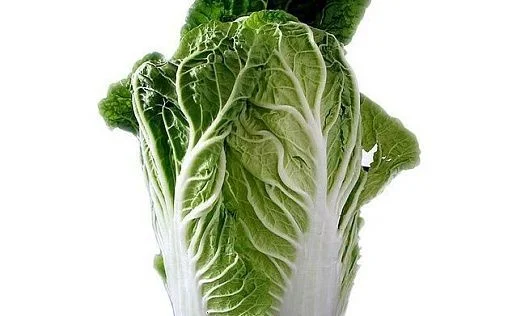 Napa cabbage. Storage parameters
earn optimal conditions for long-term napa cabbage storage: temperature, humidity, and controlled atmosphere. Ideal solutions for India, Africa, and Saudi Arabia
News
Napa cabbage. Storage parameters
earn optimal conditions for long-term napa cabbage storage: temperature, humidity, and controlled atmosphere. Ideal solutions for India, Africa, and Saudi Arabia
News
 9 unusual products of the future
What will the food of the future be like?
News
9 unusual products of the future
What will the food of the future be like?
News
 Apple Storage: How Controlled-Atmosphere (CA) Technology Extends Shelf Life and Profitability
Harvesting apples is only half the job - keeping them fresh is where the real challenge begins. Learn how modern cooling and Controlled-Atmosphere (CA) storage can protect your apples from spoilage, preserve nutrients, and keep your profits growing all year long.
Apple Storage: How Controlled-Atmosphere (CA) Technology Extends Shelf Life and Profitability
Harvesting apples is only half the job - keeping them fresh is where the real challenge begins. Learn how modern cooling and Controlled-Atmosphere (CA) storage can protect your apples from spoilage, preserve nutrients, and keep your profits growing all year long.

Leave your contacts and we will get back to you