Protein XXI: plant-based meat analogues

In the past we discussed the relevance of replacing animal protein with vegetable protein, albeit not completely, but at least partially. It is obvious that modern approaches to protein production cannot be effective in the current situation. They cannot feed a growing population and ensure food security for them. Meat production is unsustainable in terms of land use, water consumption and other raw materials. In addition, more and more people are beginning to take care of animals and are looking for alternative ways of obtaining the protein they need.
Vegetable analogues
In terms of nutrition, plants such as peas or soybeans would be an excellent substitute for animal protein. But many people still prefer meat, it is probably difficult to give up the taste that is released by the gradual opening of the components. This is due to the fibres of the product. Therefore, for lovers of this feature is a lot of research to identify some of the analogues of meat and meat products on a plant basis. For example, Wageningen University and the Technical University of Delft have developed a new technology for the production of plant-based fibrous materials. In terms of their properties, they resemble the structure of the meat we are accustomed to, much more than the options already proposed. Therefore, this fibrous material can form the basis of meat analogues of the next generation.
Vegetable analogues are the main way to reduce animal protein consumption. Pulses and oilseeds are mainly used, e.g. beans, peas, nuts, etc. New, more sustainable sources of protein are now available: insects, algae, recycled waste and surplus food and biofuel production.
Seaweed
Algae have long been eaten, especially in coastal towns. By the way, did you know that you eat algae almost every day and do not even know about it? Many products (ice cream, marmalade, marshmallows, etc.) contain elements that are extracted from algae, such as alginic acids.
Not so long ago it became clear that they can compete fully with other plant sources of protein, such as soya, and are used to develop affordable and nutritious food. In addition to protein, algae contain an almost infinite list of useful elements, due to the peculiarities of the chemical composition.
Insects
There is an assumption that insects will become the main source of protein in the near future. There is no reason to doubt this, because there are already many insect breeding and nutrient production facilities using them.
Of course, many of us find it repulsive to use insects as they exist. But representatives of some manufacturing companies are sure that this is not necessary. Thus, insects are added to different dishes or made into flour.
Bioprocessing
Food & Biobased Research explores ways to purify protein-rich fractions to full ingredients. They can then be used to make protein foods. The technology involves the careful separation and isolation of components. The potential of this method is very wide, as the ingredients have a diverse structure (emulsifying, gel-forming and foaming properties).
Already nowadays, confectionery products, baby food, diet food, canned food, concentrates and many other products are produced by means of extrusion processes. Extruders are actively used to process feed for animals, birds and fish.



More articles
 Apple Storage: How Controlled-Atmosphere (CA) Technology Extends Shelf Life and Profitability
Harvesting apples is only half the job - keeping them fresh is where the real challenge begins. Learn how modern cooling and Controlled-Atmosphere (CA) storage can protect your apples from spoilage, preserve nutrients, and keep your profits growing all year long.
News
Apple Storage: How Controlled-Atmosphere (CA) Technology Extends Shelf Life and Profitability
Harvesting apples is only half the job - keeping them fresh is where the real challenge begins. Learn how modern cooling and Controlled-Atmosphere (CA) storage can protect your apples from spoilage, preserve nutrients, and keep your profits growing all year long.
News
 Aquaculture development: challenges and optimization of sustainable industry
Industry and agriculture are keys to achieving sustainable development goals, and many of them are direct in fisheries and aquaculture.
News
Aquaculture development: challenges and optimization of sustainable industry
Industry and agriculture are keys to achieving sustainable development goals, and many of them are direct in fisheries and aquaculture.
News
 Weight loss when storing potatoes
Minimization of weight loss of potatoes during storage. Relative humidity in the vegetable storage
News
Weight loss when storing potatoes
Minimization of weight loss of potatoes during storage. Relative humidity in the vegetable storage
News
 Vegetable storage technology
Learn how to choose the right vegetable storage technology. Explore bulk and container systems, airflow methods, and microclimate control for long-term crop preservation.
Harvest
Vegetable storage technology
Learn how to choose the right vegetable storage technology. Explore bulk and container systems, airflow methods, and microclimate control for long-term crop preservation.
Harvest
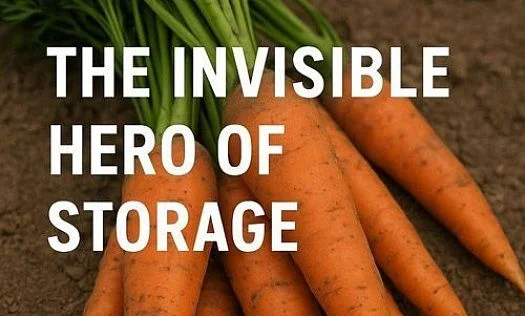 Potassium Before Carrot Harvest: The Hidden Key to Long-Term Storage Success
Carrot season doesn’t end at harvest -t continues in storage. The secret to keeping carrots crisp, sweet, and market-ready for months lies in one invisible element: potassium. Here’s why every grower should make it a key part of pre-harvest nutrition.
News
Potassium Before Carrot Harvest: The Hidden Key to Long-Term Storage Success
Carrot season doesn’t end at harvest -t continues in storage. The secret to keeping carrots crisp, sweet, and market-ready for months lies in one invisible element: potassium. Here’s why every grower should make it a key part of pre-harvest nutrition.
News
 The Rise of Urban Farming: How Rooftops Are Becoming the World’s New Agricultural Frontier
Around the world, cities are running out of space - but not out of ideas. Urban farming is turning rooftops, abandoned industrial zones, and unused land into high-yield food production hubs. Here’s how the world’s largest rooftop farm in Paris is redefining agriculture in dense urban environments.
The Rise of Urban Farming: How Rooftops Are Becoming the World’s New Agricultural Frontier
Around the world, cities are running out of space - but not out of ideas. Urban farming is turning rooftops, abandoned industrial zones, and unused land into high-yield food production hubs. Here’s how the world’s largest rooftop farm in Paris is redefining agriculture in dense urban environments.

Leave your contacts and we will get back to you