Modern Vegetable Storage Facilities: How to Choose the Right Solution

Why Vegetable Storage Matters as Much as Production
Producing a good crop is only half the job. Between harvest and the supermarket shelf, vegetables must be stored, handled, and delivered in a way that preserves their quality and nutritional value.
In many countries the area under vegetables and root crops is growing quickly, but not all of that produce can be sold straight from the field. Without proper storage:
-
a significant share of the harvest is lost to rot, sprouting, or dehydration,
-
supply becomes unstable,
-
producers are forced to sell at low prices during peak season.
Modern vegetable storage facilities are designed to solve exactly this problem — extending shelf life and turning seasonal harvests into a stable year-round business.
What Does a Modern Vegetable Store Look Like?
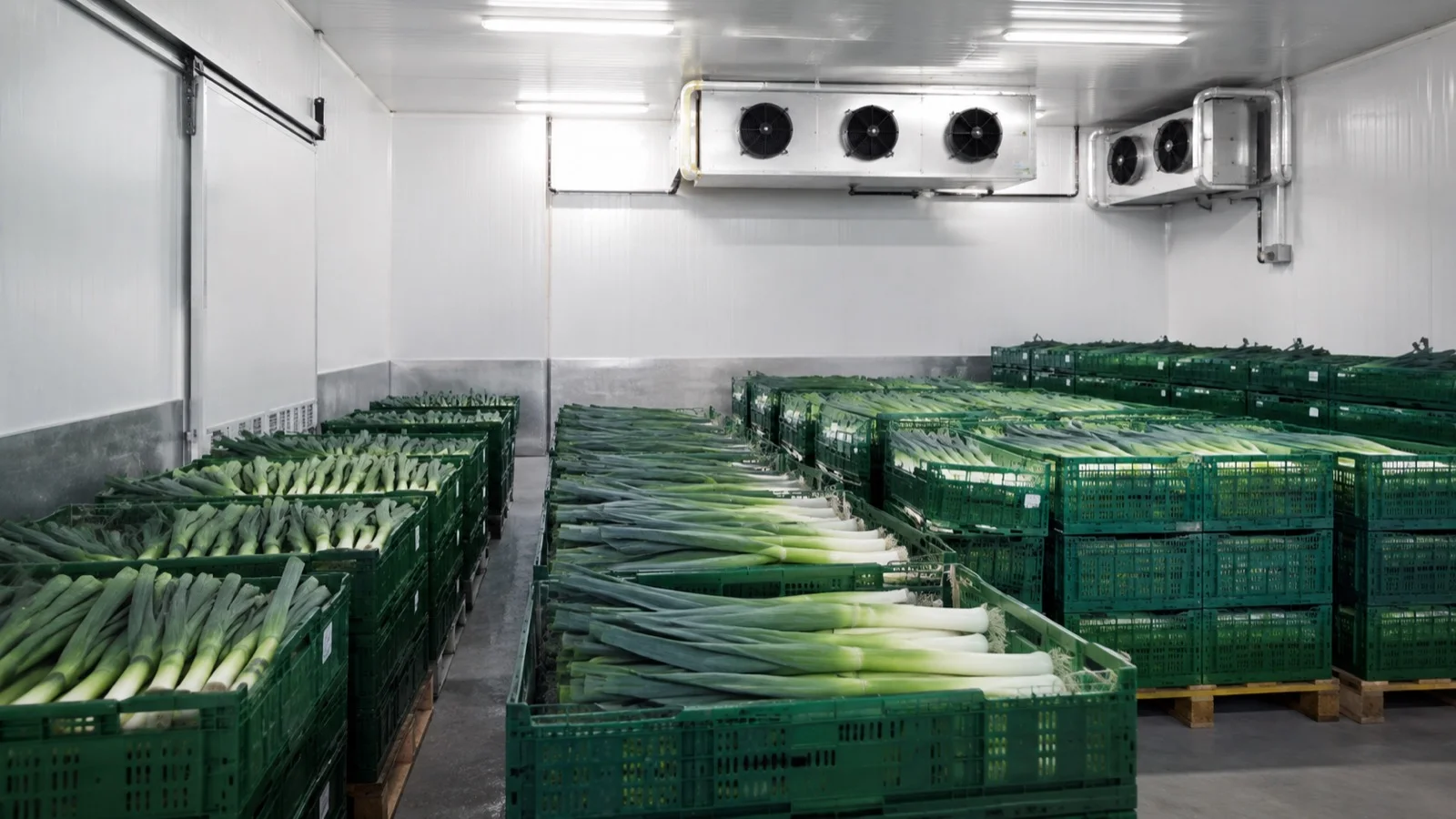
A modern facility is more than just a shed with a roof. It is a climate-controlled building engineered to keep vegetables in a state of physiological rest for as long as possible.
Key tasks of a vegetable store:
-
maintain the right temperature and humidity for each crop,
-
reduce moisture loss and nutrient degradation,
-
slow down respiration and metabolic processes,
-
suppress rot, mold, and harmful microflora.
To achieve this, the building, insulation, ventilation, and control systems must work as a single integrated system.
Main Types of Vegetable Storage Buildings
1. Arch-Type (Hangar) Storage
Arch-type hangars are usually used for bulk storage of potatoes, onions, beets, and similar crops.
Pros:
-
fast and relatively low-cost construction,
-
suitable for large volumes in bulk,
-
simple layout and easy access for loaders.
Insulation is often applied as sprayed polyurethane or similar materials. However, due to limited thermal performance and air tightness, installing advanced microclimate systems can be challenging. As a result, such buildings are generally better suited for short- or medium-term storage, not for long high-precision holding.
2. Framed (Steel or Concrete) Storage
Framed vegetable stores offer far more flexibility in design and equipment. They allow:
-
division into separate chambers with individual climate parameters for each product (potatoes, onions, carrots, beets, etc.),
-
installation of specialized machinery: conveyors, washing lines, grading and packing equipment, automation systems,
-
better control over insulation and airtightness.
The main drawback of basic framed structures is sensitivity to heavy rainfall, snow, and wind if they are not properly insulated and reinforced. This is solved by using sandwich panels with thickness selected for the local climate. Once insulated correctly, these buildings can operate reliably in almost any weather conditions.
The Core Goal: Extending the Dormancy Period
Regardless of the building type, the primary function of a vegetable store is to extend the natural dormancy period of the crop.
This requires:
-
precisely controlled temperature,
-
stable relative humidity,
-
correct airflow and gas composition,
-
clean, hygienic conditions.
Even small deviations can increase respiration, cause condensation, and trigger rot or sprouting.
Storage Methods: Bulk vs Container
1. Bulk Storage
Bulk storage is the least expensive method and is highly effective for:
-
sugar beet,
-
potatoes,
-
onions.
Here, the microclimate is maintained via an air preparation chamber. Fresh air is brought in and adjusted to the desired temperature and humidity using:
-
heaters,
-
coolers,
-
recirculation dampers,
-
humidifiers.
Prepared air is then delivered into the bulk pile. Depending on how it is supplied, we distinguish two main subtypes:
-
bulk storage with underfloor (subfloor) ducts,
-
bulk storage with perforated air ducts placed in or on the pile.
2. Container Storage
Container storage requires higher initial investment, but offers important advantages:
-
significantly longer storage life,
-
better quality control - damaged produce can be removed quickly,
-
easier loading and unloading through mechanization,
-
ability to store different crops or varieties in the same chamber without compromising temperature for the rest.
This approach is ideal for high-value products, export-oriented operations, and mixed portfolios.
Agrovent Container Storage Technologies
Agrovent offers several engineering concepts for container-based vegetable storage. Each is designed to ensure effective air distribution through the product:
1. Aspiration System
A ventilation system pulls air through the produce in stacked containers, covered with an airtight tarp. Used air is then removed from the chamber.
Key feature: airflow is created primarily by suction, rather than blowing, which can provide very uniform air distribution.
2. Slotted Wall
A slotted wall creates forced air circulation through the containers by building positive pressure at the wall side.
Containers are placed tightly against the wall, with fork-lift slots facing outward. Air is pushed into these slots and moves through the product.
3. Pressure Wall
Containers are arranged to form a corridor. Prepared air of the required temperature and humidity is blown into this corridor through openings in the wall.
To force the air through the containers, self-inflating air bags (“airbags”) are installed in the upper and opposite end sections of the corridor. This ensures that air passes through the product rather than escaping around it.
4. EveryAir System
EveryAir is an advanced version of the pressure wall.
This technology creates intensified air circulation through the product thanks to fan pressure applied to a specially organized container stack, sealed with inflatable sleeves. The result is highly uniform cooling and drying, even in dense stacks.
5. Dragon-M
Dragon-M is designed for smaller rooms with limited or no dedicated air channels.
Ventilation here is passive, and air is distributed more chaotically over the container surfaces. No mixing chamber is required; only inlet and outlet valves are installed.
Fresh air enters via the inlet valve, is mixed in the chamber, passes through simple air ducts, spreads across the room, and exits through exhaust valves. This is a cost-effective upgrade for existing buildings.
For a detailed comparison of technologies and selection criteria, Agrovent uses a dedicated decision table and project-specific design tools.
Our Approach: Not Only Equipment, But a Complete Microclimate Concept
At Agrovent we focus not just on supplying modern equipment, but on creating integrated, crop-specific microclimate solutions for each facility.
Our engineering team has decades of experience in vegetable storage and has developed a range of solutions suitable for:
-
potatoes,
-
carrots,
-
onions,
-
beets,
-
cabbage,
-
and other field vegetables.
We design the concept, develop the project, and can deliver a complete turnkey facility — from building structure to ventilation, refrigeration, and control systems.
Everything is tailored to your crops, climate, and business goals.
Need a Vegetable Storage Facility?
Whether you’re planning a new build or modernizing an old store, Agrovent can help you:
-
reduce post-harvest losses,
-
stabilize product quality,
-
improve storage efficiency,
-
and protect your profit.
📞 Call: +971 50 437 7119
📧 Email: info@agrovent.com
Or contact our specialist via the messenger form in the right corner of the screen.
We’ll help you choose the optimal storage technology for your vegetables - and your market.



More articles
 Cabbage Storage Tips and Microclimate Technology | Agrovent Blog
Learn how to store cabbage properly and prevent post-harvest losses. Agrovent microclimate systems help farmers in India, Africa, and the Middle East extend storage up
News
Cabbage Storage Tips and Microclimate Technology | Agrovent Blog
Learn how to store cabbage properly and prevent post-harvest losses. Agrovent microclimate systems help farmers in India, Africa, and the Middle East extend storage up
News
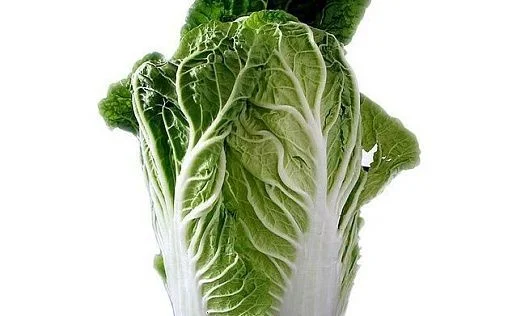 Napa cabbage. Storage parameters
earn optimal conditions for long-term napa cabbage storage: temperature, humidity, and controlled atmosphere. Ideal solutions for India, Africa, and Saudi Arabia
News
Napa cabbage. Storage parameters
earn optimal conditions for long-term napa cabbage storage: temperature, humidity, and controlled atmosphere. Ideal solutions for India, Africa, and Saudi Arabia
News
 Why do food systems need innovation in intensive refrigeration?
How is food stored in developing countries?
News
Why do food systems need innovation in intensive refrigeration?
How is food stored in developing countries?
News
 Alex Samsonov interview
Alex Samsonov, a seasoned expert in vegetable and potato storage, shares insights from his years of experience designing and implementing innovative solutions. With a global perspective and a focus on both technical efficiency and economic viability, Alex offers practical advice for addressing the challenges of modern storage practices.
News
Alex Samsonov interview
Alex Samsonov, a seasoned expert in vegetable and potato storage, shares insights from his years of experience designing and implementing innovative solutions. With a global perspective and a focus on both technical efficiency and economic viability, Alex offers practical advice for addressing the challenges of modern storage practices.
News
 How to reduce post-harvest losses most effectively and quickly?
Discover sustainable cold storage and mobile berry cooling solutions that cut food loss, reduce CO₂ emissions, and protect harvests in hot climates.
Harvest
How to reduce post-harvest losses most effectively and quickly?
Discover sustainable cold storage and mobile berry cooling solutions that cut food loss, reduce CO₂ emissions, and protect harvests in hot climates.
Harvest
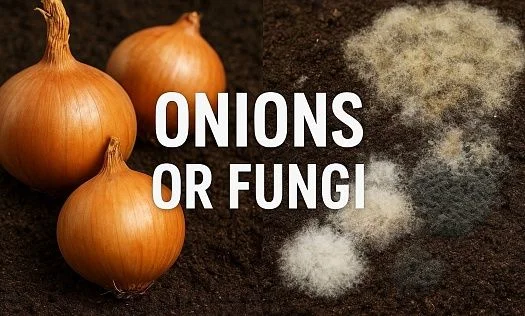 Onion Storage: How Temperature and Humidity Decide Whether Your Crop Survives
Onion storage is more than keeping bulbs in a room - it’s a constant battle against fungi. Every temperature range activates different pathogens, and without precise climate control, even a perfect harvest can deteriorate in weeks. Agrovent explains how to win this battle and keep your onions market-ready all season.
Onion Storage: How Temperature and Humidity Decide Whether Your Crop Survives
Onion storage is more than keeping bulbs in a room - it’s a constant battle against fungi. Every temperature range activates different pathogens, and without precise climate control, even a perfect harvest can deteriorate in weeks. Agrovent explains how to win this battle and keep your onions market-ready all season.

Leave your contacts and we will get back to you