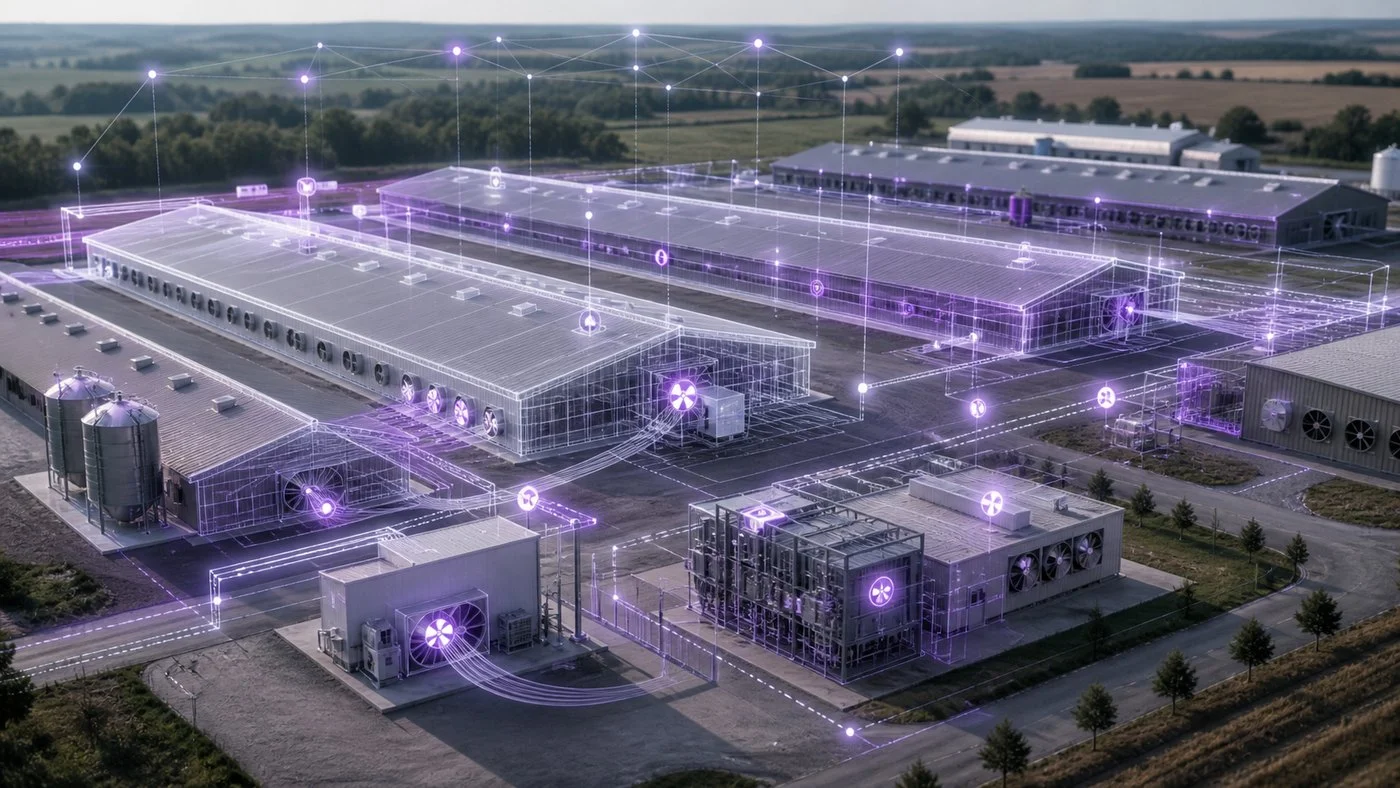
Smart Farming: How Big Data impact Agriculture

Smart Farming is reshaping global agriculture. From IoT sensors to real-time analytics, Big Data now drives decisions in the field, improves productivity, and enables fully autonomous farm operations. Here’s how the transformation works - and what challenges still remain.
Smart Farming: How IoT and Big Data Are Transforming Global Agriculture
The rapid spread of digital tools, intelligent machines, and sensor-based equipment has triggered a new era in agriculture. As farms adopt IoT devices, cloud computing, and machine learning, a new concept has emerged: Smart Farming.
Unlike traditional precision agriculture—which focuses mainly on field variability—Smart Farming covers the entire agricultural ecosystem. Decisions are made based not only on location, but also on real-time context, allowing farmers to react instantly to weather shifts, disease risks, equipment performance, and market conditions.
The Role of Data in Smart Farming
Big Data has enormous potential to unlock new efficiencies in agriculture. Modern systems allow even farmers with no previous digital experience to access powerful analytical tools. Once the goals are set, the system becomes the assistant:
-
Sensors detect weather changes, soil moisture, or disease risks.
-
IoT devices transmit real-time data to a central platform.
-
Cloud-based analytics recommend actions or execute them automatically.
Data becomes the engine of decision-making, improving accuracy and reducing human error.
How Smart Farming Works
At the core of Smart Farming are intelligent, internet-connected devices that monitor and manage operations autonomously. These devices extend traditional tools and give farmers a real-time view of their fields.
Smart farming operates on three levels:
1. Field-level data collection
Machinery equipped with sensors tracks:
-
Routes
-
Fuel consumption
-
Seed usage
-
Soil compaction
-
Crop growth parameters
2. Monitoring & analytics
Digital platforms combine multiple datasets:
-
Soil moisture & nutrient levels
-
Weather monitoring and forecasting
-
Field imaging via drones or satellites
-
Vegetation index (NDVI) maps
-
Crop health diagnostics
3. Integrated farm management
Data flows into advanced software systems that:
-
Process information
-
Generate insights
-
Automate operations
-
Support marketing and sales decisions
This creates a complete digital chain: data → analysis → action → market strategy.
Challenges Slowing Down Adoption
Despite the enormous potential, Smart Farming still faces several barriers that must be addressed.
1. Security & Privacy
Concerns about unauthorized data access remain high. Data must be protected—but overly restrictive controls can slow adoption.
2. Data Quality
Inaccurate, incomplete, or inconsistent data reduces the reliability of analytical models.
3. Complex Analysis
Big Data is often unstructured and heterogeneous, requiring experts to interpret it effectively.
4. Integration Across Platforms
Smart Farming requires seamless connectivity between machinery, sensors, software platforms, and analytics services. Integration is still a challenge in many regions.
5. Need for Transparency
Open platforms accelerate innovation. Closed systems slow down ecosystem growth.
The Future: What Big Data Will Bring to Agriculture
The rise of Big Data will fundamentally transform the traditional agricultural model. Key changes include:
-
Faster and more accurate analytics
-
New business models based on predictive insights
-
Real-time decision-making
-
Automation of routine farm operations
-
Stronger resilience to climate risks
-
Optimized resource use (water, fertilizers, machinery)
Farm management will shift from reactive to predictive - powered by intelligent systems capable of analyzing thousands of data points per second.
Smart Farming is not just a trend. It is the future foundation of global agriculture.



More articles
 Why do food systems need innovation in intensive refrigeration?
How is food stored in developing countries?
News
Why do food systems need innovation in intensive refrigeration?
How is food stored in developing countries?
News
 Is rabbit breeding as a business profitable or not?
Learn how to start a profitable rabbit farming business. Breeds, housing, feeding, disease prevention, and market strategies for India, Africa, and KSA
News
Is rabbit breeding as a business profitable or not?
Learn how to start a profitable rabbit farming business. Breeds, housing, feeding, disease prevention, and market strategies for India, Africa, and KSA
News
 How to Store Potatoes Properly: 7 Proven Rules for Long-Term Preservation
Discover how to store potatoes for months without loss. Learn how to sort, dry, cool, and manage humidity to keep your harvest healthy and fresh with Agrovent’s climate control systems.
News
How to Store Potatoes Properly: 7 Proven Rules for Long-Term Preservation
Discover how to store potatoes for months without loss. Learn how to sort, dry, cool, and manage humidity to keep your harvest healthy and fresh with Agrovent’s climate control systems.
News
 Green revolution saves lives
Discover how the Green Revolution increased food production, reduced hunger and lowered infant mortality in developing countries — and why a new Green Revolution is essential for India, Africa and global food security by 2050.
News
Green revolution saves lives
Discover how the Green Revolution increased food production, reduced hunger and lowered infant mortality in developing countries — and why a new Green Revolution is essential for India, Africa and global food security by 2050.
News
 How to prepare the vegetable storehouse for the potato storage season?
Learn how to prepare storage facilities, manage curing, prevent diseases, and handle potatoes correctly to ensure long-term quality and minimal losses
News
How to prepare the vegetable storehouse for the potato storage season?
Learn how to prepare storage facilities, manage curing, prevent diseases, and handle potatoes correctly to ensure long-term quality and minimal losses
News
 Framed Agricultural Storage Buildings - Custom Warehouses by Agrovent
Discover high-performance framed buildings for agricultural storage. Agrovent designs modular, insulated warehouses with climate control and automation for vegetables, fruits, and root crops. Energy efficient. Scalable. Built to last.
Framed Agricultural Storage Buildings - Custom Warehouses by Agrovent
Discover high-performance framed buildings for agricultural storage. Agrovent designs modular, insulated warehouses with climate control and automation for vegetables, fruits, and root crops. Energy efficient. Scalable. Built to last.

Leave your contacts and we will get back to you