How to store carrots in a vegetable store?

How to Store Carrots Properly: Technologies That Protect Quality, Flavor and Profitability
Perhaps this article comes out a little later than planned… but like a good wine, it has only improved with age.
Here’s the background. When the world went into lockdown and offline events collapsed overnight, webinars suddenly became our main way to stay connected. At one of these online discussions, we debated the challenges of the Russian greenhouse industry — and one recurring problem emerged: large retail chains are reluctant to work with farmers and small producers who cannot supply fruits and vegetables year-round.
This creates a chain reaction. Hypermarkets increasingly receive produce of substandard quality. Why? Because suppliers are forced to compete on price rather than quality, pushing margins down and encouraging cost-cutting at every stage of production. It becomes a vicious cycle.
But there is always demand for high-quality produce. In today’s market, quality is the baseline requirement, and the sooner relationships between retailers and producers evolve, the sooner consumers will see consistently fresh, flavorful products on store shelves.
And that brings us to storage — one of the most important steps in preserving quality.
How to Store Carrots in a Vegetable Cold Store
Carrots are harvested at the end of August or September. During the final month before harvest, the root accumulates sugars, carotenoids and dry matter - compounds that significantly extend storage life.
However, the integrity of each root crop must be maintained during harvest. Damage accelerates spoilage, reduces storage life and increases the likelihood of fungal infection.
Pre-Storage Preparation
Before carrots enter the vegetable store, they must undergo proper processing.
1. Removal of Green Tops
The green mass must be completely removed.
If left attached, it continues to draw moisture from the root, causing rapid wilting and loss of marketability.
The better the preparation, the better the storage outcome.
2. Drying (If Weather Is Wet)
If harvest conditions are damp, the crop needs drying. Excess moisture is one of the main causes of rot.
Carrots are highly vulnerable to fungal diseases that may develop after storage begins, damaging up to 70% of the entire harvest.
Why Fungal Diseases Develop
Fungal infections in carrot storage are triggered by:
-
damaged roots entering storage
-
harvesting in rainy or frosty conditions
-
poor soil nutrition
-
moisture stagnation in warm soil
-
incorrect temperature and humidity inside the store
To prevent disease, carrots must be cooled to 0–+1°C before storage, and this temperature should be maintained consistently throughout the entire period.
Humidity should remain at 90–95%.
Rapid cooling reduces storage losses dramatically. Only intact, non-withered and non-frostbitten roots should be stored.
Carrot Storage Technology
The optimal storage method depends on:
-
storage volume
-
storage type and size
-
climate zone
-
infrastructure characteristics
-
customer’s budget
-
filling speed (from harvest to storage should be no more than 24 hours)
Carrots with dry soil residues generally store better, so they should not be aggressively cleaned. Damaged or defective roots must be removed immediately.
Storage Methods
1. Mound Storage
The mound height depends on carrot variety and the strength of the ventilation system.
Typical height: 2–3 meters.
2. Bag Storage
When stored in bags, stack height should not exceed 3 meters to avoid compression and damage.
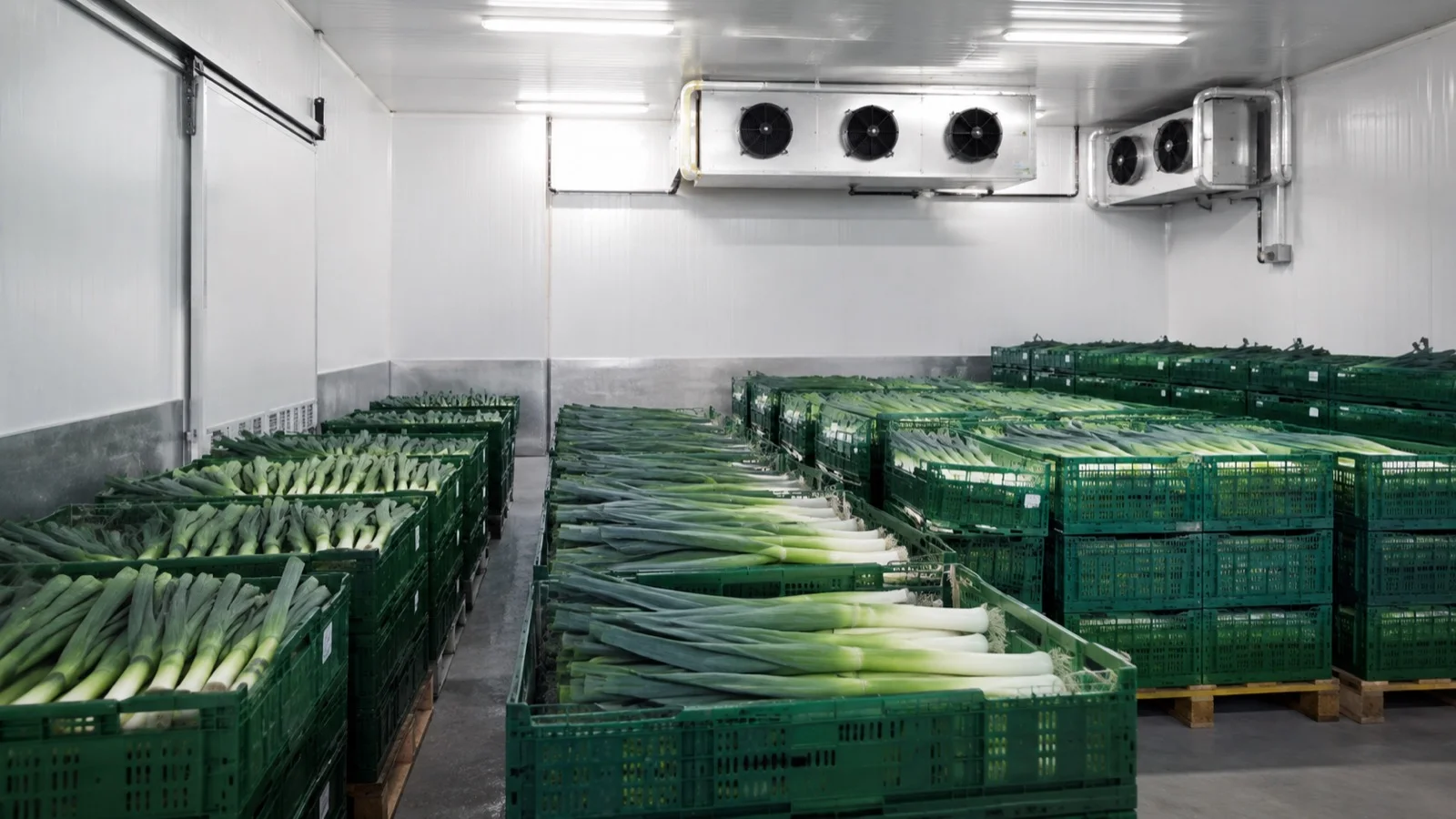
3. Container Storage (Recommended)
Containers offer the best airflow and minimal mechanical damage.
Container stacks can reach up to 5.5 meters — ideal for large-scale storage facilities.
Cooling System Requirements
Carrot storage chambers must be equipped with a high-capacity cooling system.
-
Carrots must be cooled to 0°C within 24 hours after harvest.
-
After cooling, chamber temperature must remain between 0 and +1°C.
-
Relative humidity must stay between 95–98%.
Following these conditions allows carrots to be stored for up to 12 months.
4 Golden Rules for Ideal Carrot Storage
-
Cool the harvest to 0°C immediately after collection.
-
Maintain constant climate conditions: 0 to +1°C temperature and 95–98% humidity.
-
Disinfect storage rooms and continuously remove low-quality roots.
-
Use professional microclimate systems and tailored technological solutions.
Need Equipment for Long-Term Fruit and Vegetable Storage?
Our specialists design advanced climate-controlled storage systems for any scale and climate zone — from India to Africa and the Middle East.
📞 Call: +971504377119📧 Email: info@agrovent.com



More articles
 5 Proven Ways to Improve Soil Health for Sustainable Farming and Higher Yields
Healthy soil is the foundation of every successful farm. It feeds the plants, sustains the animals, and protects the farmer’s future. In this article, Agrovent shares five practical steps to restore and maintain soil health - improving yields, water retention, and long-term sustainability.
News
5 Proven Ways to Improve Soil Health for Sustainable Farming and Higher Yields
Healthy soil is the foundation of every successful farm. It feeds the plants, sustains the animals, and protects the farmer’s future. In this article, Agrovent shares five practical steps to restore and maintain soil health - improving yields, water retention, and long-term sustainability.
News
 Apple Storage: How Controlled-Atmosphere (CA) Technology Extends Shelf Life and Profitability
Harvesting apples is only half the job - keeping them fresh is where the real challenge begins. Learn how modern cooling and Controlled-Atmosphere (CA) storage can protect your apples from spoilage, preserve nutrients, and keep your profits growing all year long.
News
Apple Storage: How Controlled-Atmosphere (CA) Technology Extends Shelf Life and Profitability
Harvesting apples is only half the job - keeping them fresh is where the real challenge begins. Learn how modern cooling and Controlled-Atmosphere (CA) storage can protect your apples from spoilage, preserve nutrients, and keep your profits growing all year long.
News
 Post-harvest processing and cooling of berries
How to extend the shelf life of a berry crop?
News
Post-harvest processing and cooling of berries
How to extend the shelf life of a berry crop?
News
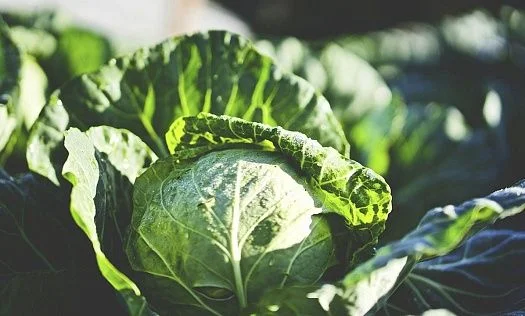 Cabbage. Storage parameters
Discover optimal conditions for long-term cabbage storage: temperature, humidity, and CO₂ standards. Engineered solutions for India, Africa, and Saudi Arabia.
News
Cabbage. Storage parameters
Discover optimal conditions for long-term cabbage storage: temperature, humidity, and CO₂ standards. Engineered solutions for India, Africa, and Saudi Arabia.
News
 Efficient Beet Storage and Ventilation Systems by Agrovent
Required equipment, features and benefits.
Efficient Beet Storage and Ventilation Systems by Agrovent
Required equipment, features and benefits.
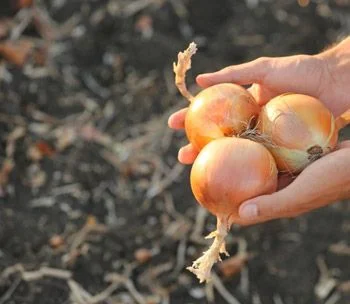 Storing Onions the Smart Way: Proven Methods That Actually Work
Onion storage isn’t guesswork - it’s a science. From choosing the right variety to managing temperature and humidity, small decisions determine whether your crop lasts weeks or months. Here’s a clear, practical guide to what truly works.
Storing Onions the Smart Way: Proven Methods That Actually Work
Onion storage isn’t guesswork - it’s a science. From choosing the right variety to managing temperature and humidity, small decisions determine whether your crop lasts weeks or months. Here’s a clear, practical guide to what truly works.

Leave your contacts and we will get back to you