HRMN-99: The Heat-Tolerant Apple Variety Transforming Farming in India’s Plains

An apple variety that grows in 45°C heat? HRMN-99, developed by a farmer from Himachal Pradesh, is rewriting the rules of apple farming in India. This breakthrough is helping growers from Rajasthan to Telangana shift to profitable apple cultivation.
HRMN-99: The Apple Variety That Thrives in India’s Heat
Across India, climate change and rising temperatures are forcing growers to rethink what can and cannot be cultivated. Apples, traditionally grown only in cool temperate zones like Himachal Pradesh, Kashmir, and Uttarakhand, were long considered impossible to produce in the plains or tropical regions.
But the story changed with the emergence of HRMN-99, an innovative self-pollinating, heat-tolerant apple variety that does not require long-term refrigeration and can withstand summer temperatures of 40–45°C.
This groundbreaking variety was developed not by a research institute — but by a visionary farmer.
The Innovator Behind HRMN-99: Sri Hariman Sharma
Sri Hariman Sharma, a progressive farmer from Paniala village in Bilaspur district, Himachal Pradesh, became a national inspiration after successfully developing HRMN-99.
His discovery proved that apples could be grown far beyond the Himalayan foothills:
-
in the plains,
-
in tropical belts,
-
in subtropical regions,
-
even in zones previously considered too hot for apple cultivation.
HRMN-99 quickly spread across Himachal Pradesh, where lowland farmers — once unable to dream of growing apples — began producing high-quality fruit.
From Himachal to the Rest of India: A New Apple Revolution
The impact of HRMN-99 soon expanded nationwide.
Manipur: A Turning Point for Small Farmers
In Shingkap village in Manipur, rice and vegetable cultivation could no longer support families. After learning about HRMN-99 from NIF (National Innovation Foundation), local farmers decided to experiment with the new apple variety.
-
In 2019, 4,200 seedlings were planted.
-
By the first year, several trees had already begun to bear fruit.
-
The success motivated more than 40 farmers to join the initiative.
Rajasthan, Telangana, and Beyond
Encouraged by these results, farmers across India began adopting the heat-tolerant variety:
-
The dusty plains of Rajasthan,
-
The hot plateau of Telangana,
-
Low-chill regions across central and southern India.
What was once unimaginable — apples flourishing in scorching climates — became reality.
Why HRMN-99 Matters for the Future of Agriculture
HRMN-99 represents more than a single variety’s success. It signals a new frontier:
growing temperate fruits in non-traditional, high-temperature environments.
Its advantages include:
-
Self-pollination — no need for specific cross-pollinators.
-
Heat tolerance — performs well at 40–45°C.
-
Low-chill requirement — suitable for plains, foothills, and tropical climates.
-
Early fruiting — many trees bear in the very first year.
-
Minimal cold storage needs — ideal for regions with limited infrastructure.
As global temperatures rise, HRMN-99 shows how innovation can mitigate climate risk and open new income streams for farmers across India.
A Breakthrough with Global Implications
The success of HRMN-99 opens doors to further research:
-
new low-chill varieties of apples,
-
adapting other temperate crops to warm climates,
-
breeding future fruit varieties resilient to global warming.
It is a powerful example of how grassroots innovation can reshape agriculture, strengthen rural economies, and give farmers access to high-value crops once limited to colder regions.



More articles
 Carrot Harvest & Storage Guide: Field Practices, Cooling, and Long-Term Shelf Life
Learn how to harvest, handle, cool, and store carrots for maximum shelf life. From field management to microclimate control, discover best practices to reduce losses and preserve quality for up to 6 months
Microclimate
Carrot Harvest & Storage Guide: Field Practices, Cooling, and Long-Term Shelf Life
Learn how to harvest, handle, cool, and store carrots for maximum shelf life. From field management to microclimate control, discover best practices to reduce losses and preserve quality for up to 6 months
Microclimate
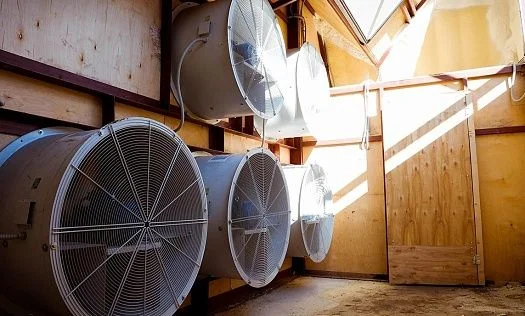 How to Select Fans for Potato Storage: Airflow, Static Pressure and Uniformity
A practical guide to selecting potato storage fans from the system curve, crop resistance, duct layout, operating modes, energy use and airflow uniformity.
News
How to Select Fans for Potato Storage: Airflow, Static Pressure and Uniformity
A practical guide to selecting potato storage fans from the system curve, crop resistance, duct layout, operating modes, energy use and airflow uniformity.
News
 How to reduce post-harvest losses most effectively and quickly?
Discover sustainable cold storage and mobile berry cooling solutions that cut food loss, reduce CO₂ emissions, and protect harvests in hot climates.
News
How to reduce post-harvest losses most effectively and quickly?
Discover sustainable cold storage and mobile berry cooling solutions that cut food loss, reduce CO₂ emissions, and protect harvests in hot climates.
News
 Tomato storage and growing technology
Learn how to store tomatoes for maximum shelf life and quality. Ripeness stages, temperatures, humidity, controlled atmosphere, ethylene treatment, sorbilene, and best practices for long-term tomato storage
News
Tomato storage and growing technology
Learn how to store tomatoes for maximum shelf life and quality. Ripeness stages, temperatures, humidity, controlled atmosphere, ethylene treatment, sorbilene, and best practices for long-term tomato storage
News
 Technologies and methods for storing Jerusalem artichoke tubers
Learn the best technologies for storing Jerusalem artichoke (sunchoke) in hot climates. Long-term storage methods, cooling solutions, humidity control and expert guidance for India, Africa and Saudi Arabia. Contact Agrovent for professional vegetable storage systems.
News
Technologies and methods for storing Jerusalem artichoke tubers
Learn the best technologies for storing Jerusalem artichoke (sunchoke) in hot climates. Long-term storage methods, cooling solutions, humidity control and expert guidance for India, Africa and Saudi Arabia. Contact Agrovent for professional vegetable storage systems.
News
 Container storage
Discover the advantages of container vegetable storage: low spoilage, fast logistics, and stable climate control. Ideal for carrots, cabbage, potatoes and onions
Container storage
Discover the advantages of container vegetable storage: low spoilage, fast logistics, and stable climate control. Ideal for carrots, cabbage, potatoes and onions

Leave your contacts and we will get back to you