Container storage of products

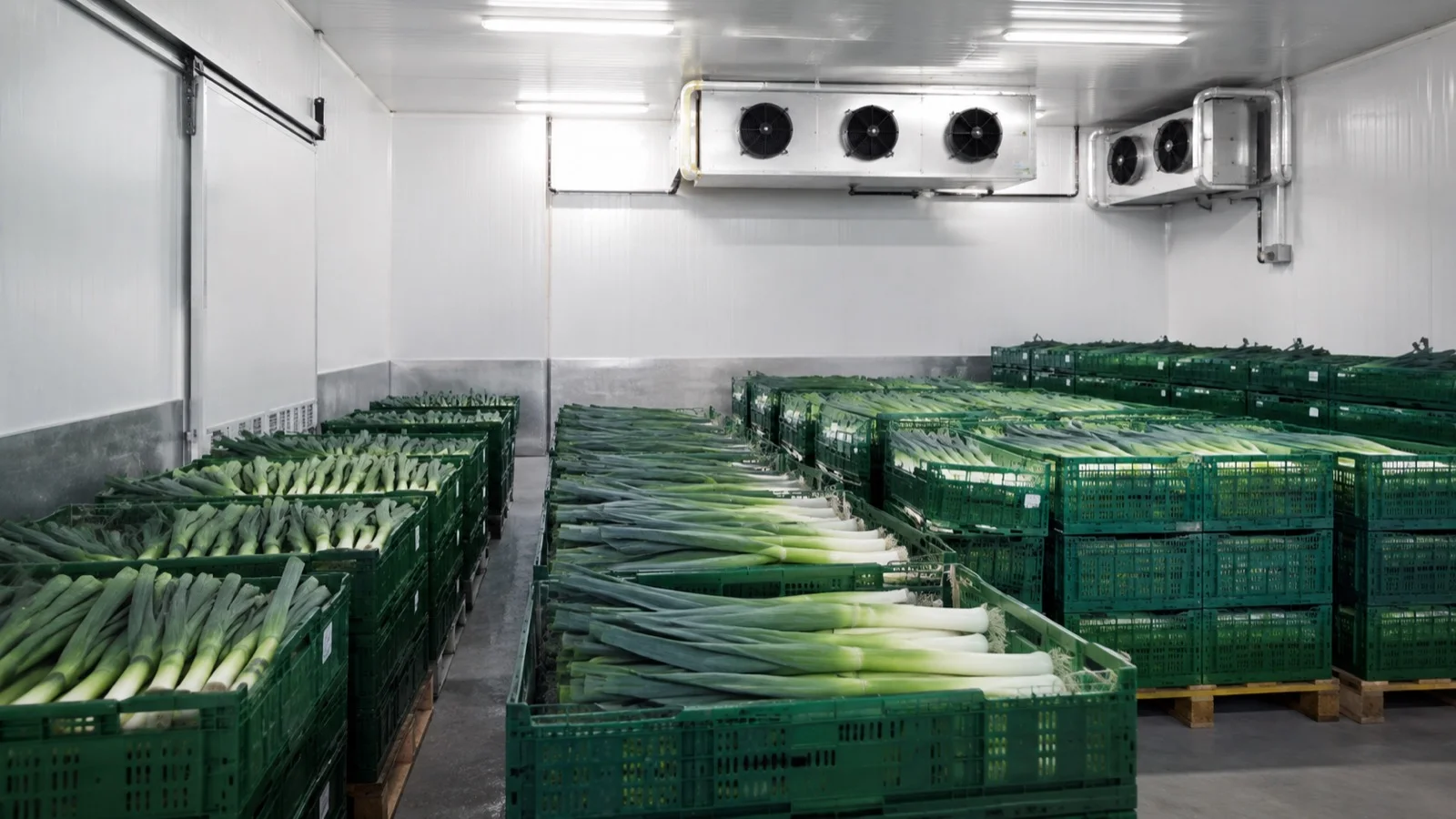
To use the container type of storage of products, it is necessary to prepare a vegetable store in a special way, since a vegetable store with increased strength of floors and ceilings, as well as height (to accommodate tiers from containers), is better suited for storing vegetables in containers.
One of the key conditions for efficient storage of crops in containers is general exchange forced ventilation of the storage, which will create and maintain a stable microclimate in the storage.
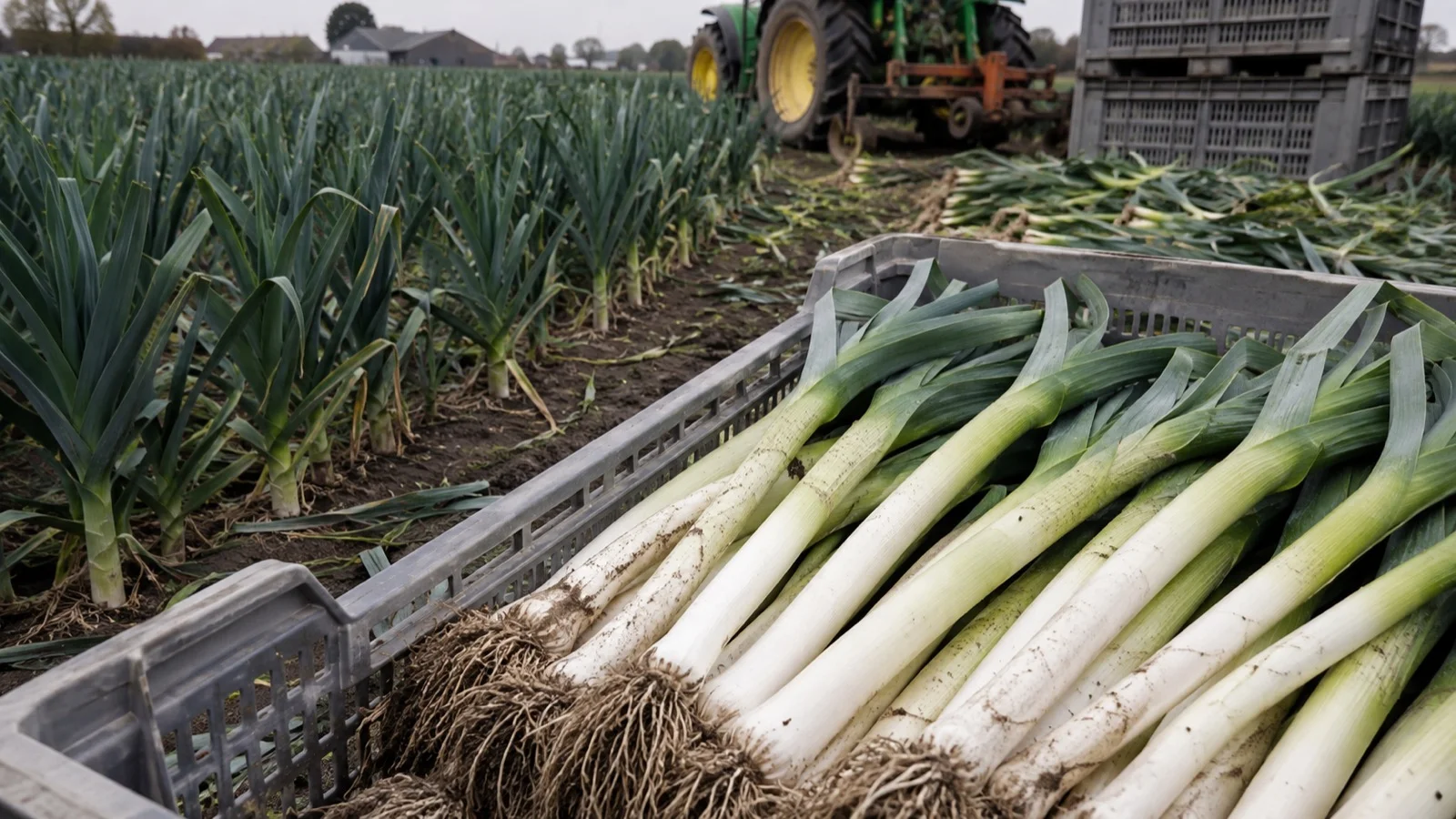
The loading of products is carried out according to two schemes: the crop is immediately collected on the field in containers, which are then delivered to the storage, or, if vegetables are brought in nets or bags, they are poured into containers manually or using sorting machines, and then transported to the vegetable store using an electric forklift. The most efficient way is to submerge the crop in containers immediately after harvest to minimize transfer time and reduce the risk of damage. In addition, this method will help reduce labor costs.
Containers are stored in about 5 tiers, and it is better to install consignments in separate piles, between which you need to make side aisles (at least half a meter wide) for inspection and a central cargo passage (at least two meters wide) for the free movement of an electric forklift.
From the ceiling of the storage, 80cm or more should be left to the upper edge of the container, and from the wall to the pile - 60cm or more. Maximum stacking length = 12 containers and maximum width = 8 containers.
If stacking is used, each consignment must have a passport with information about the sender, arrival date, invoice number, product grade, etc.
Advantages of container storage of products
The container method of transporting and storing products has proven itself not only in a theoretical sense, but also in a practical sense: many companies use this model in practice.
A study was carried out in which 70 thousand tons were placed in storage. potatoes in bulk, and 30 thousand tons. - in containers. In the first case, the loss of production was over 10%, in the second - 2%. These data indicate that container storage is very economical, since product losses are minimal. Losses are also influenced by the way and height of product placement in containers.
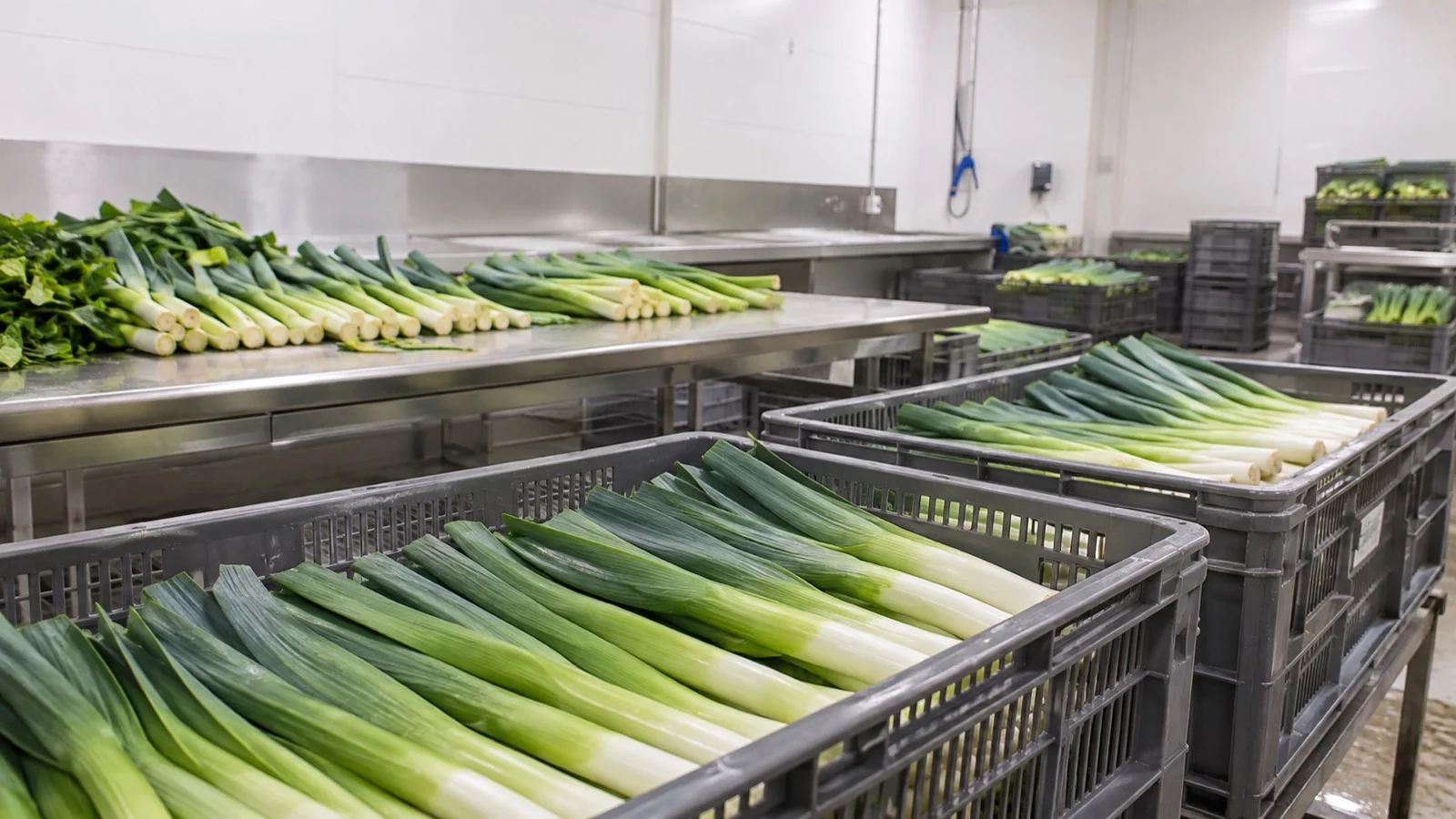
It is important to pay attention not only to the type of storage, but also to the state of the vegetables when storing them in storage. It is very important that the products are dry, without mechanical damage, healthy, preferably cleaned of soil - this will avoid losses and natural loss of weight. All harvested products must be sorted according to established quality standards before being placed in containers.
Another important criterion for good keeping quality of products is the creation of optimal storage conditions - for this, a microclimate system is designed in vegetable stores for forced cooling of products, reducing the efficiency of "breathing" and slowing down metabolic processes in vegetables.
Temperature and humidity conditions should be set individually for each product, taking into account its specifics. For example, special studies helped to establish that the loss of potatoes in the uncooled section was 11% higher than in the chilled section, and the shelf life was less than 4 months.
We tell more about the technologies for storing vegetables and fruits, as well as life hacks and secrets in our blog take a look at it!
Another way to reduce waste is to use polyethylene liners or bags that fit into containers. This life hack is only suitable for cabbage, carrots and potatoes. The whole essence of the method is to create a modified gas environment in polyethylene packaging with high relative air humidity, carbon dioxide concentration and a low oxygen concentration. This will help reduce the loss of even damaged products.
When using a general exchange forced ventilation system, it is important to prevent a gross violation - the temperature difference (gradient) along the height of the containers. In this case, a lower temperature will be observed on the lower “floors”, and higher on the “upper” ones, because the air rises when heated. This will entail different shelf life of products.
When storing different types of products, the following features should be taken into account: under conditions of a temperature gradient in the cabbage storage, the lower rows of products will suffer less, in the potato storage - the upper ones. But the temperature gradient will almost certainly increase the decay rates.
For an ideal microclimate in your vegetable store, contact Agrovent. Call +971504377119 or write info@agrovent.com . Our experts will answer all your questions.



More articles
 Carrot Harvest & Storage Guide: Field Practices, Cooling, and Long-Term Shelf Life
Learn how to harvest, handle, cool, and store carrots for maximum shelf life. From field management to microclimate control, discover best practices to reduce losses and preserve quality for up to 6 months
Microclimate
Carrot Harvest & Storage Guide: Field Practices, Cooling, and Long-Term Shelf Life
Learn how to harvest, handle, cool, and store carrots for maximum shelf life. From field management to microclimate control, discover best practices to reduce losses and preserve quality for up to 6 months
Microclimate
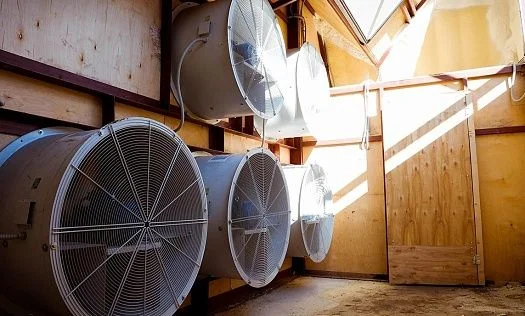 How to Select Fans for Potato Storage: Airflow, Static Pressure and Uniformity
A practical guide to selecting potato storage fans from the system curve, crop resistance, duct layout, operating modes, energy use and airflow uniformity.
News
How to Select Fans for Potato Storage: Airflow, Static Pressure and Uniformity
A practical guide to selecting potato storage fans from the system curve, crop resistance, duct layout, operating modes, energy use and airflow uniformity.
News
 Why Onion Drying Determines Storage Success: Best Practices for Tropical & Temperate Climates
Proper onion drying is the most critical step before storage. Learn why inadequate drying leads to bacterial rot, neck rot, and 20–80% storage losses, and discover the best drying methods for temperate and tropical climates.
News
Why Onion Drying Determines Storage Success: Best Practices for Tropical & Temperate Climates
Proper onion drying is the most critical step before storage. Learn why inadequate drying leads to bacterial rot, neck rot, and 20–80% storage losses, and discover the best drying methods for temperate and tropical climates.
News
 3 factors to maximize sugar beet yield
How to properly grow sugar beets?
News
3 factors to maximize sugar beet yield
How to properly grow sugar beets?
News
 11 new technologies that will soon appear in the kitchen
What will the kitchen of the future look like?
News
11 new technologies that will soon appear in the kitchen
What will the kitchen of the future look like?
News
 How to reduce post-harvest losses most effectively and quickly?
Discover sustainable cold storage and mobile berry cooling solutions that cut food loss, reduce CO₂ emissions, and protect harvests in hot climates.
How to reduce post-harvest losses most effectively and quickly?
Discover sustainable cold storage and mobile berry cooling solutions that cut food loss, reduce CO₂ emissions, and protect harvests in hot climates.

Leave your contacts and we will get back to you