CA, ULO and DCA are not three names for the same cold room. They represent different levels of atmosphere control, investment and operating discipline. The right choice depends on the fruit variety, intended storage period, sales window, chamber size and the operator's ability to maintain a gas-tight system.
CA vs ULO vs DCA: the practical difference
| Storage method | Atmosphere strategy | Relative investment | Operating complexity | Best fit |
|---|---|---|---|---|
| Regular cold storage | Temperature and humidity control; normal air composition | Low | Low | Shorter storage programs and fast turnover |
| CA | Reduced oxygen and controlled CO2 in gas-tight chambers | Medium | Medium | Longer storage where stable quality is required |
| ULO | Ultra-low oxygen with tighter gas control and monitoring | Medium-high | High | Long-term storage of suitable apple and pear varieties |
| DCA | Atmosphere setpoints adjusted to the physiological response of the fruit | High | High | Premium long-term programs where firmness and market timing justify the added control |
Actual setpoints and achievable storage periods must be established for the crop, variety, maturity and local operating protocol. Relative investment levels are not quotations.
A working 5,000-ton reference
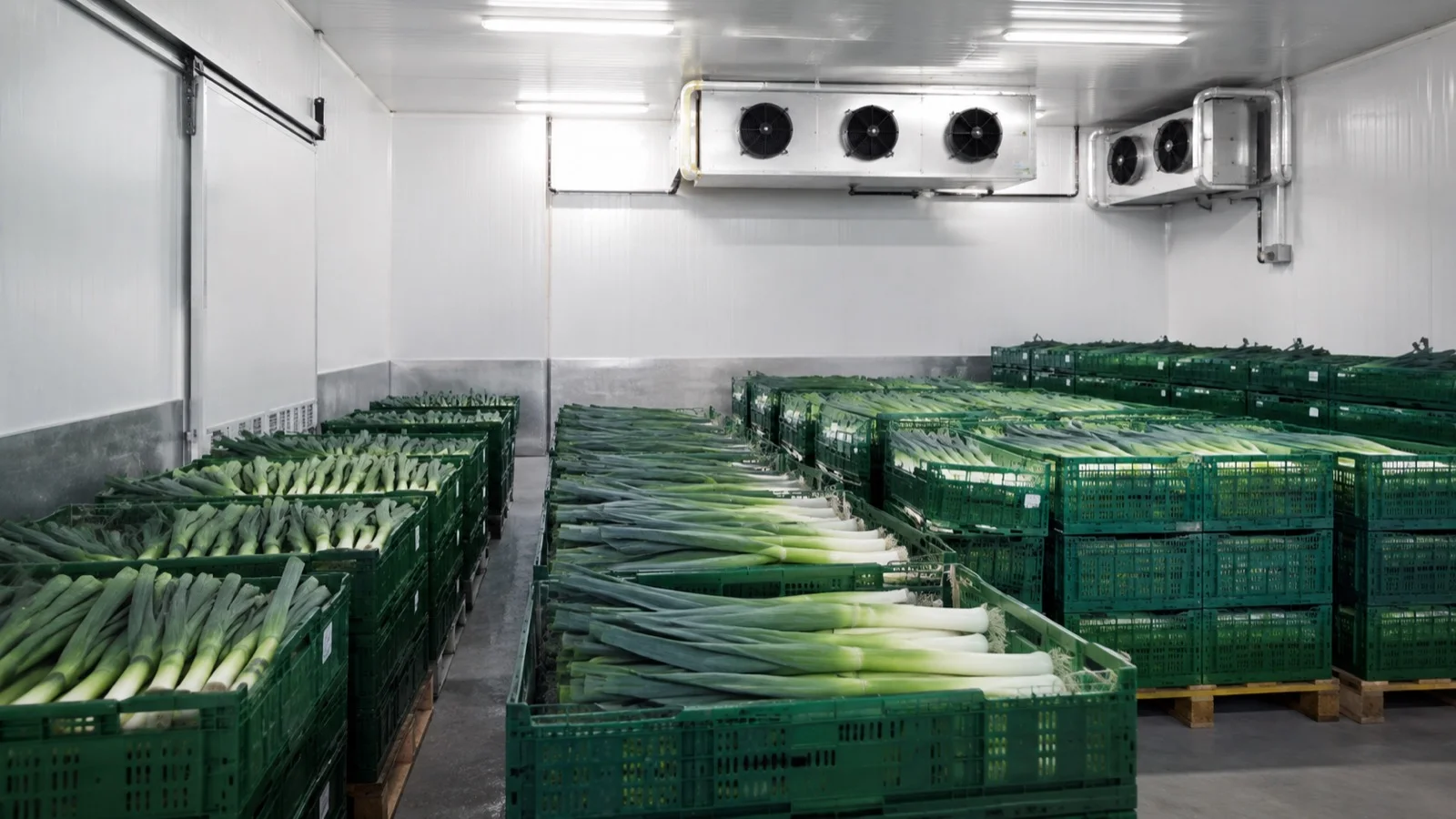
Agrovent delivered a turnkey apple storage facility divided into twenty 250-ton chambers. Smaller independent chambers allow the operator to separate varieties and lots, open only the volume required for sale and preserve the atmosphere in the remaining rooms.
The client investment was slightly below US$2 million for this specific project. That figure is useful as a scale reference, not as a price list: site conditions, local construction costs, chamber envelope, refrigeration duty, automation scope and atmosphere technology materially change the budget.

What the storage system actually includes
A controlled-atmosphere project is a coordinated engineering system. Selecting individual machines without considering chamber leakage, product load, refrigeration dynamics and control logic creates a facility that may reach a nominal setpoint but cannot hold it reliably.
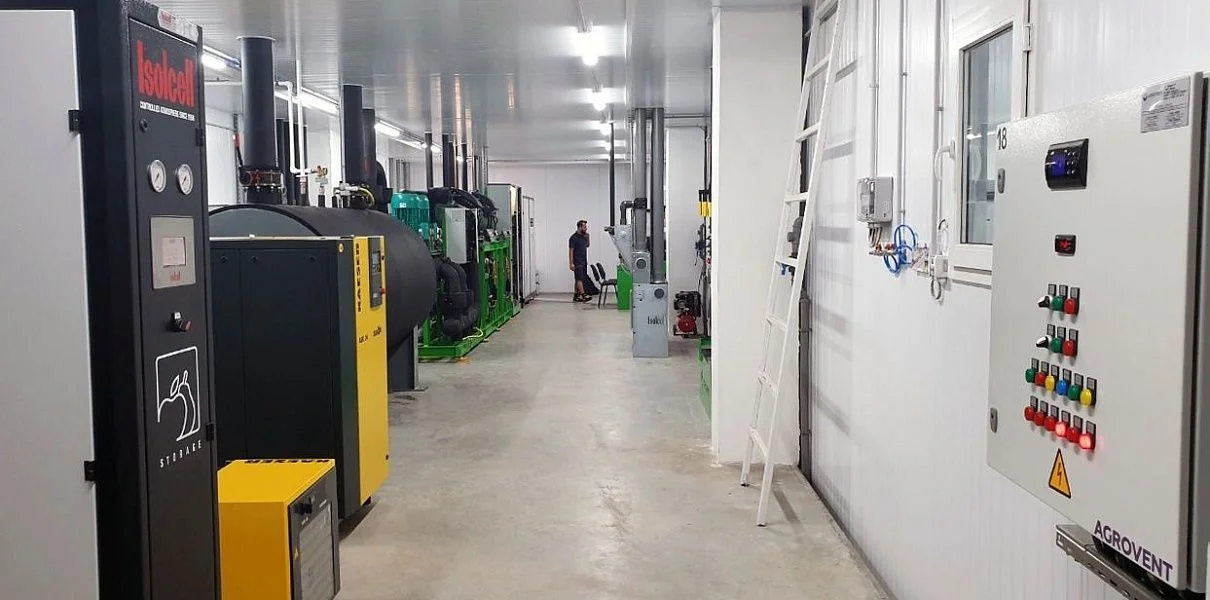
Atmosphere generation
Nitrogen generation, air preparation, receivers, valves and distribution lines reduce oxygen and serve the selected chambers.

CO2 removal and analysis
Adsorbers, gas analyzers and sampling lines keep carbon dioxide within the crop-specific operating range.

Refrigeration
Refrigeration duty, evaporator selection, defrost strategy and hydraulic distribution are calculated for harvest intake and holding modes.

Gas-tight chambers
Panels, doors, penetrations, pressure relief and leakage testing form the physical basis of CA, ULO and DCA operation.
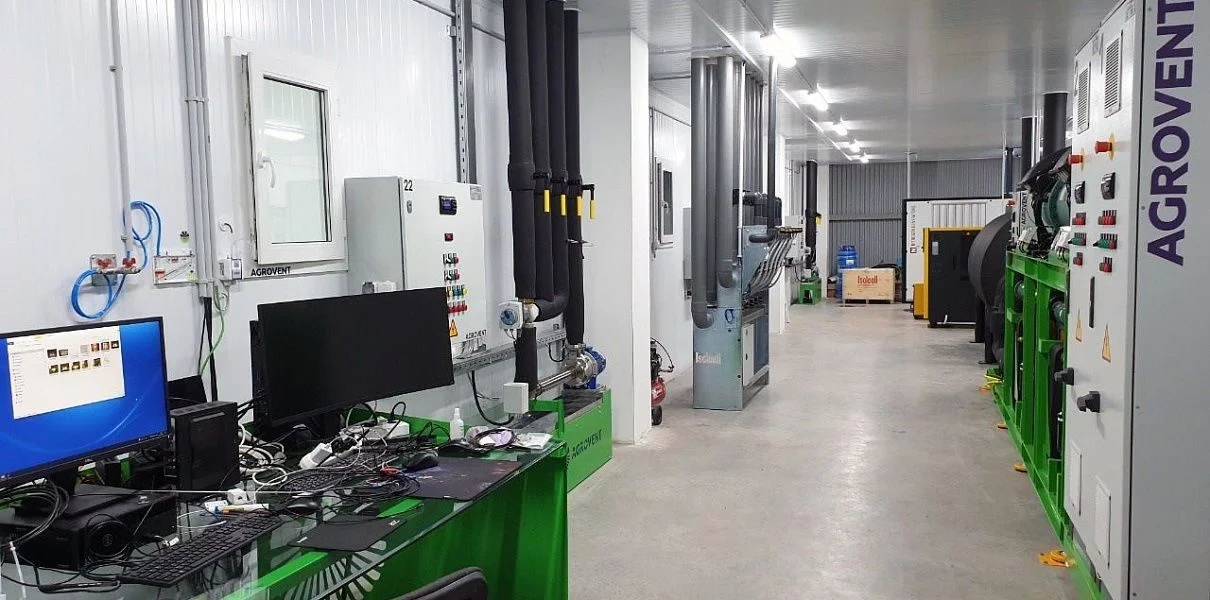
Power and automation
Agrovent designs and builds control cabinets, chamber algorithms, alarms, event logging and remote supervision.
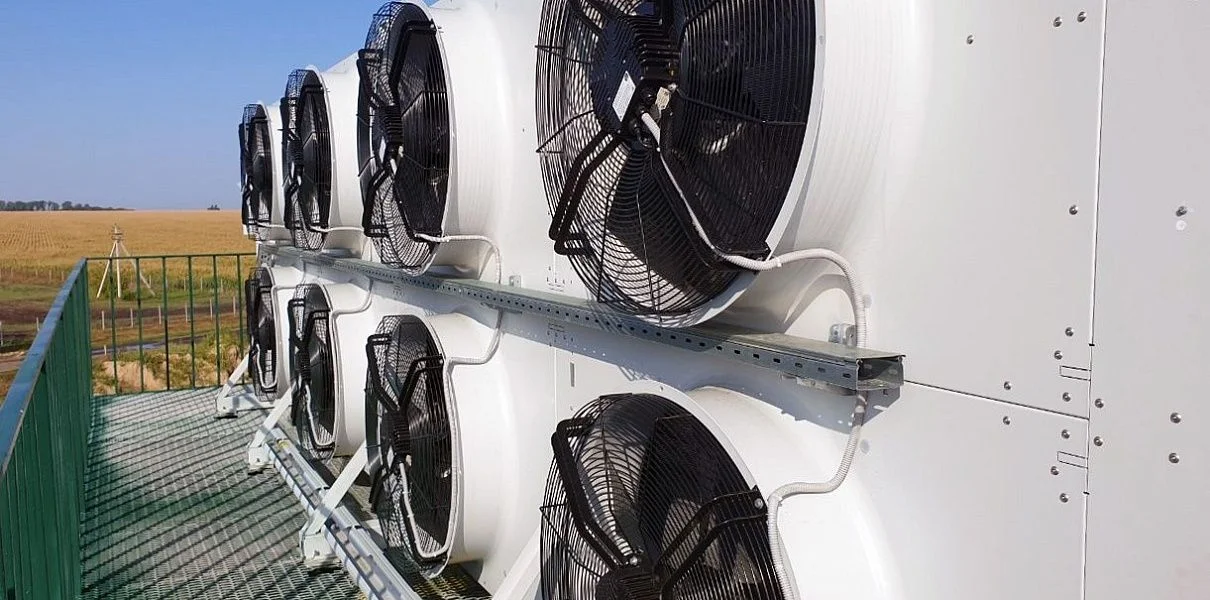
Heat rejection
Condensers and ambient design conditions determine stable refrigeration performance during the critical loading season.
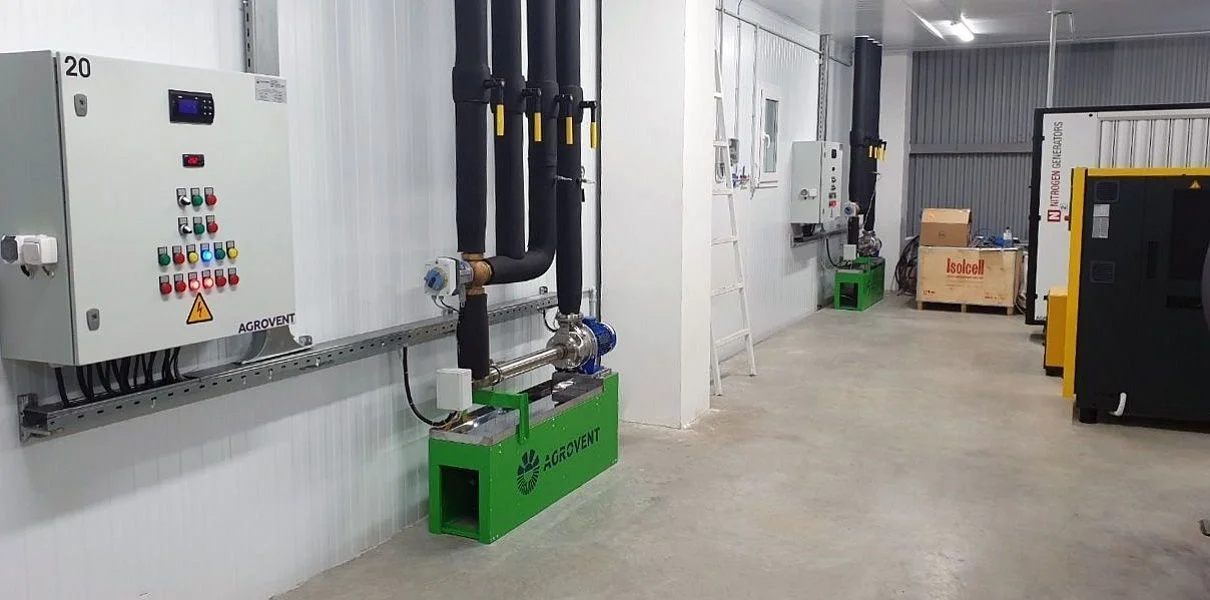
Technology follows the commercial storage plan
The starting point is not a request for a DCA machine. It is the product plan: varieties, harvest calendar, intake rate, target release dates, expected selling window and quality criteria.
Agrovent then models chamber allocation, refrigeration load, pull-down time, gas-tightness, atmosphere recovery and equipment redundancy. This determines whether regular cold storage, CA, ULO or DCA creates the best business result.
- Use regular cold storage where turnover is fast and atmosphere control cannot repay its complexity.
- Use CA where longer storage and stable quality justify gas-tight construction.
- Use ULO where approved varieties and operating discipline support lower oxygen.
- Use DCA where crop response, premium quality and market timing justify dynamic control.
What determines project cost?
Twenty chambers, 250 tons each, total capacity 5,000 tons.
The number is not a universal cost per ton. A preliminary budget requires the country and site, new-build or retrofit status, crop and varieties, daily intake, chamber count, storage period, design temperatures, atmosphere level, utility constraints and required redundancy.
Comparing offers only by equipment price can conceal major differences in chamber envelope, installed cooling capacity, controls, commissioning and service scope.
From initial data to a bankable concept
Request a preliminary storage concept
Send us the project country, crop and varieties, total capacity, preferred chamber size, daily intake and target storage period. Agrovent engineers will recommend an appropriate CA, ULO or DCA architecture and identify the information required for a preliminary budget.
The 5,000-ton project figure is a historical reference for that specific scope and is not a current commercial offer.



 9 unusual products of the future
What will the food of the future be like?
9 unusual products of the future
What will the food of the future be like?  How to reduce your food waste
Almost 1.3 billion tons of food produced per year is lost or discarded. How does this affect us and the environment?
How to reduce your food waste
Almost 1.3 billion tons of food produced per year is lost or discarded. How does this affect us and the environment?  Advanced Potato Storage Technology: Bulk Ventilation, Climate Control & Engineering Specs
Learn how modern bulk potato storage systems maintain optimal temperature, humidity, CO₂ levels, and airflow to protect crop quality. Full engineering parameters, ventilation design, cooling capacity, and monitoring solutions.
Advanced Potato Storage Technology: Bulk Ventilation, Climate Control & Engineering Specs
Learn how modern bulk potato storage systems maintain optimal temperature, humidity, CO₂ levels, and airflow to protect crop quality. Full engineering parameters, ventilation design, cooling capacity, and monitoring solutions.  Collection, processing and storage of carrots
How to ensure long-term storage of carrots?
Collection, processing and storage of carrots
How to ensure long-term storage of carrots?  How to Select Fans for Potato Storage: Airflow, Static Pressure and Uniformity
A practical guide to selecting potato storage fans from the system curve, crop resistance, duct layout, operating modes, energy use and airflow uniformity.
How to Select Fans for Potato Storage: Airflow, Static Pressure and Uniformity
A practical guide to selecting potato storage fans from the system curve, crop resistance, duct layout, operating modes, energy use and airflow uniformity.  Methods and ways of storing beet
Features of long-term storage of beets in a vegetable store
Methods and ways of storing beet
Features of long-term storage of beets in a vegetable store