Storing Onions the Smart Way: Proven Methods That Actually Work

Storing Onions the Smart Way: What Really Works
Onions may seem simple, but keeping them fresh after harvest demands precision. Everything matters — the variety you plant, the condition of the bulbs at harvest, and how you manage temperature and humidity inside storage. When done right, onions can hold quality for many months. Done wrong, losses accumulate in days.
Let’s break it down.
1. Choose the Right Storage Variety
Not all onions are built for long-term storage.
Some are meant to be eaten quickly; others are naturally designed to stay firm and flavorful for months.
For storage, select varieties with:
-
tight, well-closed necks
-
dense bulbs
-
strong, dry outer skins
-
low internal moisture
These traits make onions far more resistant to rot, sprouting, and dehydration.
2. Harvest at the Right Moment
Harvesting too early is a common mistake.
Onions need time to build the papery, protective skin that acts as their natural shield.
Mature bulbs with fully dried tops and firm density always perform better in storage than green or underdeveloped onions.
3. Prepare Bulbs Properly Before Storage
Before filling your cold room — or your warm storage — check that your onions meet these criteria:
✔ Bulbs feel firm, never spongy
✔ Skins are fully dry and well-formed
✔ No internal moisture or wet layers
✔ Nitrogen was stopped 5–6 weeks before harvest
✔ Soil had adequate lime for balanced pH
✔ Fields were kept clean to reduce disease pressure
Without proper drying and curing, even the best storage system will struggle.
4. Get the Temperature Strategy Right
After harvest, onions continue to “breathe,” losing weight and quality over time.
Your job is to slow this process down — and two strategies consistently work worldwide:
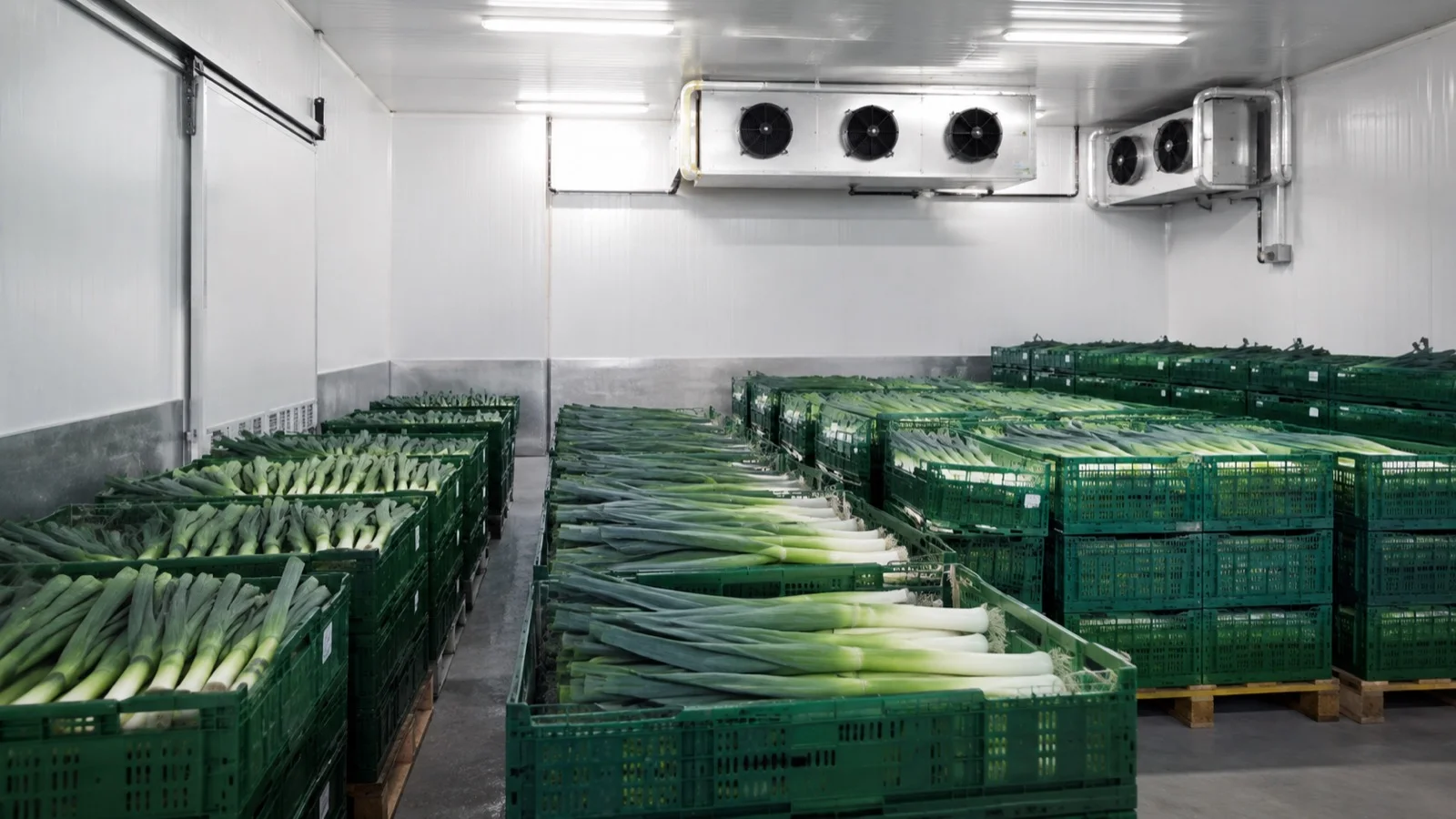
Cold Storage (0–4 °C)
Ideal for cooler regions or export-grade produce.
Slows respiration and microbial activity.
Warm Storage (25–31 °C)
A strong option for hot climates like India, the Middle East, and parts of Africa.
Maintains bulb dormancy while avoiding the microbial “danger zone.”
5. Avoid the Danger Zone at All Costs
The worst temperature for onions is 20–25 °C.
This range is perfect for fungi and bacteria — decay accelerates rapidly.
If your onions spend time in this band, losses can spike dramatically.
Always move them quickly either colder or hotter.
6. Match the Storage System to Your Climate
Cooler climates
Where outdoor temperatures fall below 15 °C, cold storage is:
-
energy-efficient
-
easy to maintain
-
ideal for long-term holding
Hot climates
Where outdoor temperatures hit 28–30 °C, warm storage is often cheaper.
Heating to 25–31 °C costs far less than full refrigeration.
7. Additional Rules for High-Quality Storage
Regardless of the method:
-
Keep humidity at 55–65%
-
Avoid sudden temperature swings
-
Store onions in total darkness to minimize sprouting
-
Ensure adequate airflow around bulbs
-
Separate batches by variety and harvest date
Even small improvements here protect thousands of kilograms of produce.
Final Thought
Onion storage isn’t luck.
It’s about understanding biology, climate, and the specific needs of the crop - then choosing the right storage strategy and sticking to it.
Do this well, and instead of losing a large share of the harvest to rot, sprouting, or dehydration, you’ll maintain a stable, market-ready supply all year long.
Ready to Build or Upgrade Your Onion Storage?
Agrovent designs and builds professional onion storage systems for hot, cool, and mixed climates — from warm-air ventilated hangars to fully automated cold rooms with climate control, sensors, and airflow engineering.
📞 Call us: +971 50 437 7119
📧 Email: info@agrovent.com



More articles
 Farming in space
Why are companies looking for viable farmland off Earth?
Harvest
Farming in space
Why are companies looking for viable farmland off Earth?
Harvest
 Cold Sweetening in Stored Potatoes: Reducing Sugars, Fry Colour and Acrylamide
How storage temperature, variety, maturity and reconditioning affect reducing sugars, fry colour and acrylamide risk in potatoes for chips and French fries.
News
Cold Sweetening in Stored Potatoes: Reducing Sugars, Fry Colour and Acrylamide
How storage temperature, variety, maturity and reconditioning affect reducing sugars, fry colour and acrylamide risk in potatoes for chips and French fries.
News
 Agrovoltaics: The Future of Farming Powered by the Sun
Learn how solar energy and agriculture are merging through agrovoltaic technology. Discover the Insolight “Insolagrin” project - a groundbreaking solar farm that could transform global food and energy production.
News
Agrovoltaics: The Future of Farming Powered by the Sun
Learn how solar energy and agriculture are merging through agrovoltaic technology. Discover the Insolight “Insolagrin” project - a groundbreaking solar farm that could transform global food and energy production.
News
 Potatoes. Storage parameters
Learn optimal potato storage conditions: temperature, humidity, CO₂ control, and bulk height. Engineered solutions for India, Africa, and Saudi Arabia.
News
Potatoes. Storage parameters
Learn optimal potato storage conditions: temperature, humidity, CO₂ control, and bulk height. Engineered solutions for India, Africa, and Saudi Arabia.
News
 Key Factors for Investing in Agriculture
Learn why agriculture is a stable long-term investment. Key benefits, risks, and strategies for choosing profitable agri projects in India, Africa, and the Middle East
News
Key Factors for Investing in Agriculture
Learn why agriculture is a stable long-term investment. Key benefits, risks, and strategies for choosing profitable agri projects in India, Africa, and the Middle East
News
 Napa cabbage. Storage parameters
earn optimal conditions for long-term napa cabbage storage: temperature, humidity, and controlled atmosphere. Ideal solutions for India, Africa, and Saudi Arabia
Napa cabbage. Storage parameters
earn optimal conditions for long-term napa cabbage storage: temperature, humidity, and controlled atmosphere. Ideal solutions for India, Africa, and Saudi Arabia

Leave your contacts and we will get back to you