6 Key Challenges Facing Potato Growers - And How to Solve Them

Six Major Challenges for Potato Growers - and How to Solve Them
Today’s potato growers face a complex landscape. Below are six of the key problems, followed by practical ways to address them.
1. Soil-borne nematodes
One of the biggest threats in the potato sector is the soil-borne pest known as the potato nematode (for example, Globodera pallida). Decades of sub-optimal decision-making - planting susceptible varieties, short crop rotations — have allowed nematode populations to become endemic in many potato-growing regions. The solution demands a fully integrated approach. Growers are chasing the “holy grail”: high-yielding potato varieties that are nematode-resistant and meet the stringent requirements of packers, processors and consumers. Many large growers are now supplementing their nematode-infested land with clean leased fields in order to lengthen rotations - but those clean leases are becoming harder to secure. Since short leases discourage heavy investment in parasite-control infrastructure, longer leases and secure supply contracts are essential for long-term nematode management. In addition, more rigorous soil-testing is crucial to identify hot spots and plan accordingly.
2. Soil health
Soil is farmers’ most valuable resource - and it demands strategic, long-term management. Intensive potato production is especially hard on the ground, involving deep and frequent tillage, which increases the risk of structural damage, organic matter decline and nutrient imbalance. When land is leased short-term, neither tenant nor landlord tends to invest in soil improvement: organic matter is depleted, nutrient status falls, structure degrades. Moreover, the problem isn’t confined to the potato field - sugar beet and corn rotations may also degrade soil health and carry negative legacy effects.
Two recent research programmes are focusing on soil health and structure, how to make it more resilient to damage. The key takeaway: there’s no quick fix for organic-matter decline. Improvements may take years, or generations. But preserving existing soil condition is achievable. Actions to support soil health include adding manure, compost or cover crops, and re-evaluating tillage practices to avoid excessive structural stress.
3. Water availability
Securing reliable irrigation is another major challenge for potato producers. Urbanisation, environmental regulation and climate change are placing increasing pressure on water supplies. Industry experts say: investment in reservoirs and water-storage infrastructure will be critical if growers are to maintain - let alone increase - potato yields. Without long-term water strategies, potato crops remain vulnerable to supply shocks.
4. Labour and skills shortage
One of the less-talked-about issues is the shortage of skilled labour and seasonal workforce in potato farming - a problem exacerbated by the post-pandemic labour landscape.
On the bright side, many agricultural colleges are producing young graduates. The issue: most graduates expect trainee or assistant-manager roles, not basic field or machine-operator jobs. Meanwhile, modern farm machinery and precision-farming systems require high technical aptitude, IT skills and initiative. The result: how do you attract and retain young people at the lower rungs of the career ladder? And how do you communicate that tractor-based work is now a skilled, technology-driven career path? Adding complexity: new minimum wage regulations have increased labour cost significantly over just a few years.
5. Pesticide regulation and resistance
Regulation is increasingly tightening around certain chemical inputs - the risk of crucial pesticides being abolished or heavily restricted is real. Potato production is vulnerable to this, especially for nematicides and other targeted interventions. What can growers do? First: reduce dependency on chemicals via integrated pest-management (IPM) schemes. Second: use soil-testing and monitoring to ensure that expensive and sensitive controls are applied only when needed. Third: maintain transparency and compliance to stay ahead of regulation.
6. Rising cost of production
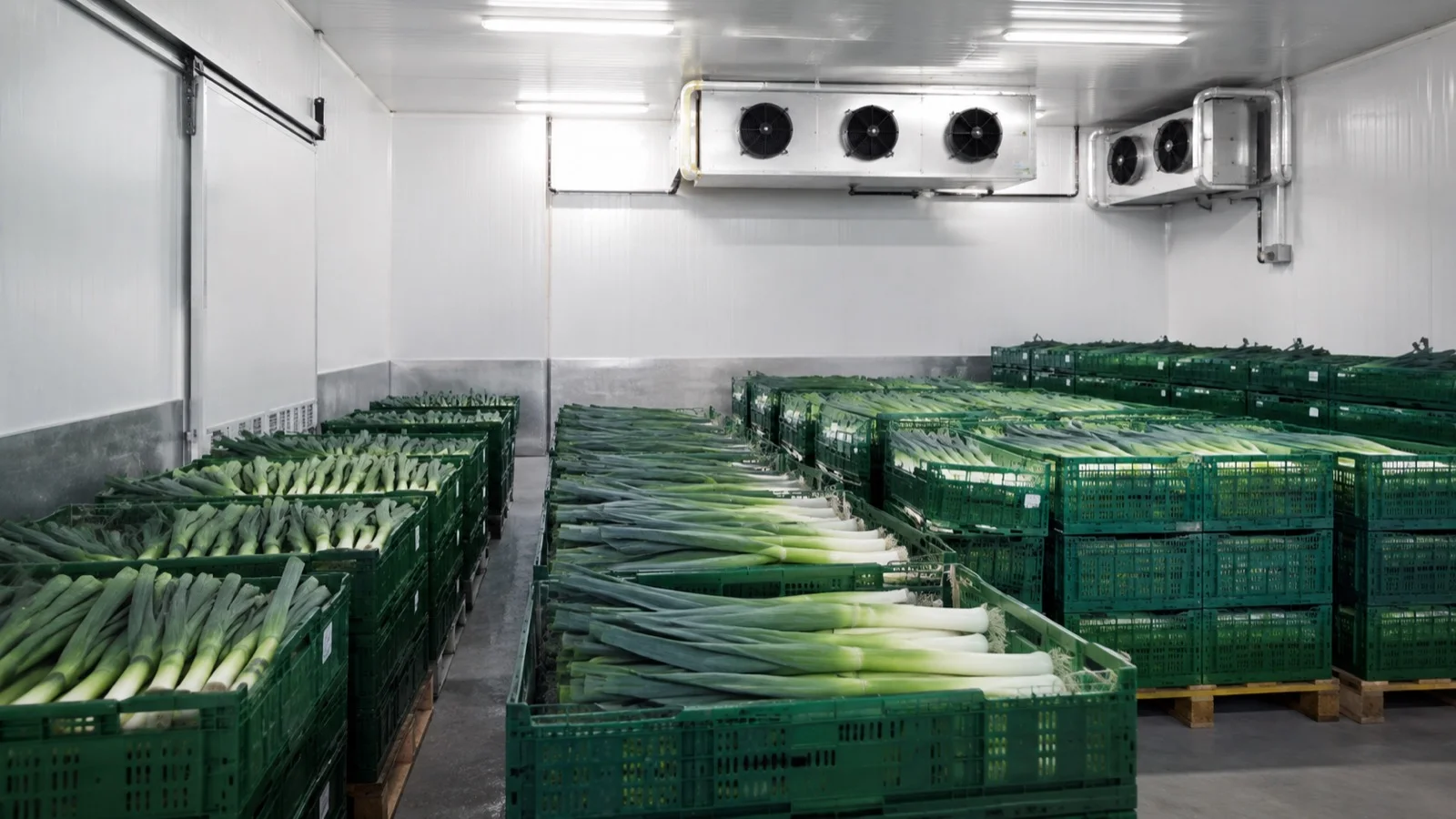
Finally, potatoes operate on narrow margins - and input inflation, labour cost rises, regulatory compliance and capital investment are squeezing profitability. When the difference between business success and failure can be a single penny per ton, cost control is mission-critical. Possible solutions: aligning supply-contracts with real production costs and seasonal variability; optimizing every input; benchmarking against peer operations; improving yield (particularly marketable yield) by focusing on cultivation, seed-management and storage practices. One specific area where the company can support growers: storage facilities. At Agrovent we design and build custom storage solutions of any complexity - helping you protect your crop, reduce loss, prolong shelf life and ultimately improve margin.
Ready to talk? Call +971 50 437 7119 or write to info@agrovent.com. Or contact our specialist via the messenger form.



More articles
 Methods and ways of storing beet
Features of long-term storage of beets in a vegetable store
News
Methods and ways of storing beet
Features of long-term storage of beets in a vegetable store
News
 Agrovent opening a front office in the Republic of Kazakhstan
Explore new opportunities with our presence in Kokshetau, Kazakhstan.
News
Agrovent opening a front office in the Republic of Kazakhstan
Explore new opportunities with our presence in Kokshetau, Kazakhstan.
News
 Carrot Harvest & Storage Guide: Field Practices, Cooling, and Long-Term Shelf Life
Learn how to harvest, handle, cool, and store carrots for maximum shelf life. From field management to microclimate control, discover best practices to reduce losses and preserve quality for up to 6 months
News
Carrot Harvest & Storage Guide: Field Practices, Cooling, and Long-Term Shelf Life
Learn how to harvest, handle, cool, and store carrots for maximum shelf life. From field management to microclimate control, discover best practices to reduce losses and preserve quality for up to 6 months
News
 African Agriculture in a New Context
Africa holds enormous agricultural potential, but progress requires investment in smallholder farmers, water infrastructure, innovation, and climate-resilient policies. Explore the key challenges and solutions shaping the future of African food systems.
News
African Agriculture in a New Context
Africa holds enormous agricultural potential, but progress requires investment in smallholder farmers, water infrastructure, innovation, and climate-resilient policies. Explore the key challenges and solutions shaping the future of African food systems.
News
 Why do food systems need innovation in intensive refrigeration?
How is food stored in developing countries?
News
Why do food systems need innovation in intensive refrigeration?
How is food stored in developing countries?
News
 Collection, processing and storage of carrots
How to ensure long-term storage of carrots?
Collection, processing and storage of carrots
How to ensure long-term storage of carrots?

Leave your contacts and we will get back to you