

Growing, Harvesting and Storing Leeks
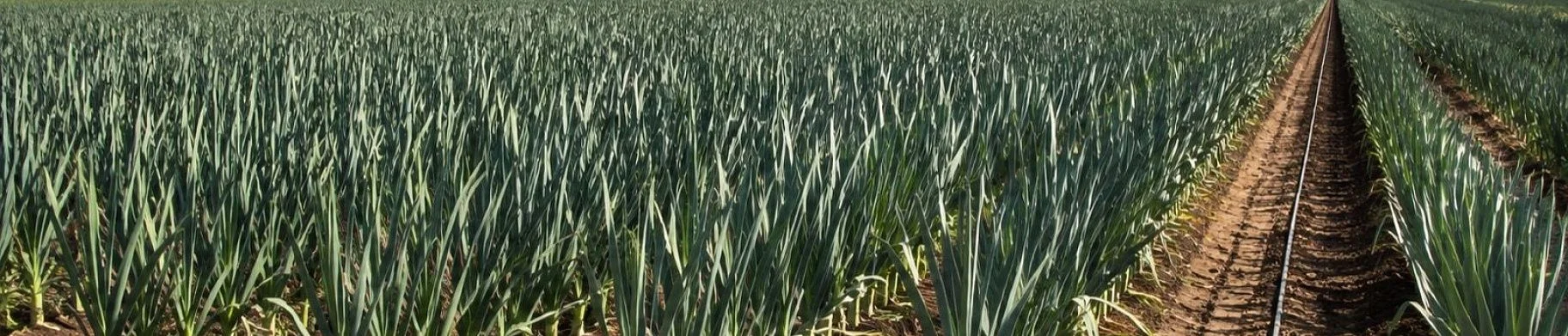
Leeks are a slow crop, but they can give stable quality and good storage life when field production, harvesting and post-harvest handling are treated as one process. For commercial growers, the key is not only to produce long white stems, but also to keep them clean, firm and marketable after harvest.
This guide covers the main agronomic and storage factors for leek production: soil preparation, planting density, nutrition, pest control, harvesting, trimming, cooling and controlled storage conditions.
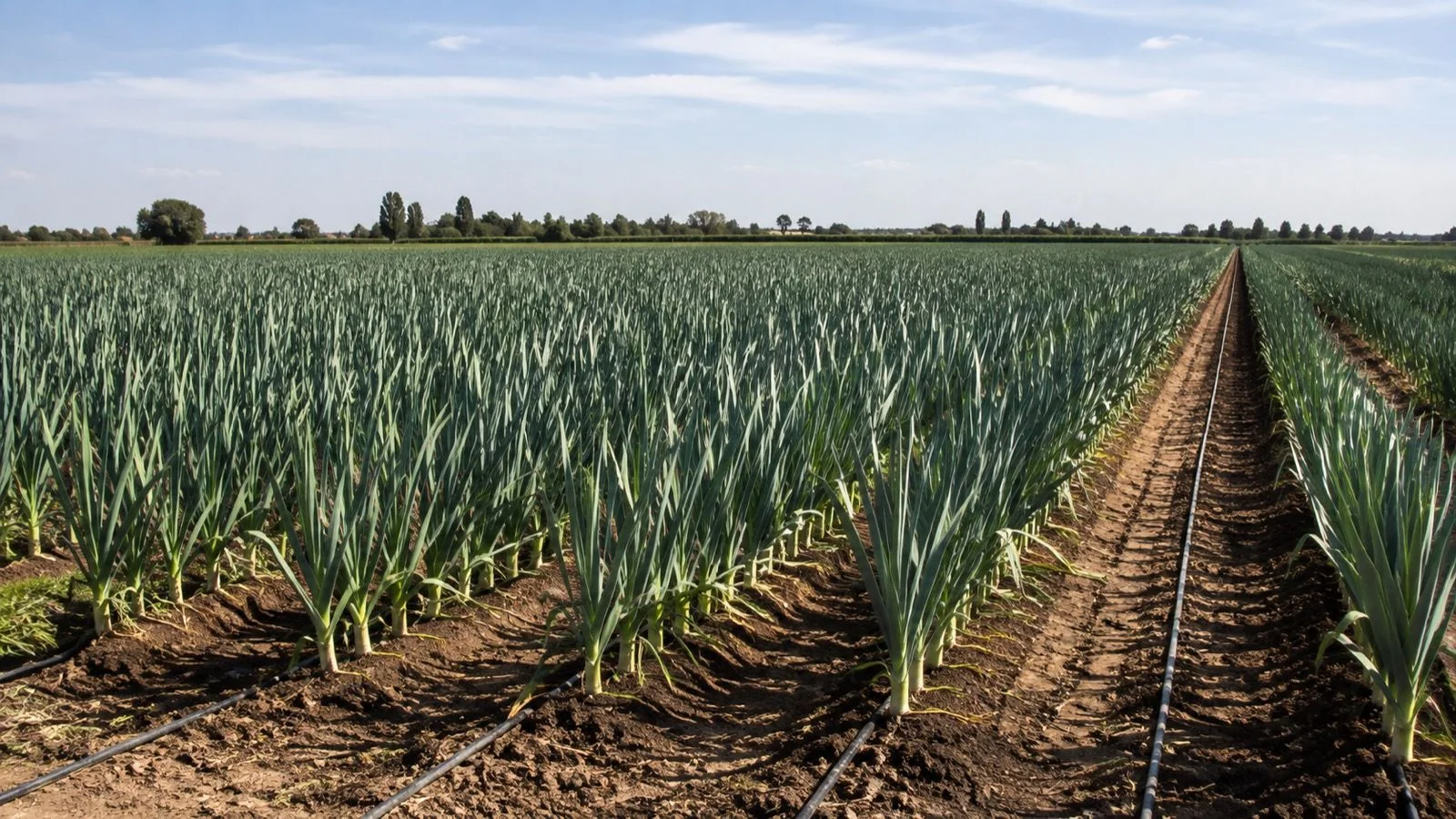
Leek Cultivation and Storage: Best Practices for High-Quality Yields
Leeks have been cultivated in the Mediterranean region for thousands of years and remain an important vegetable crop for fresh markets, food service and processing. The crop usually requires a long growing period of 21 to 30 weeks, so mistakes made at planting or during field development can affect the result for many months.
A professional production system should be designed around the final market specification. Stem length, stem diameter, leaf colour, cleanliness and storability are all influenced by variety, planting depth, soil structure, irrigation stability and harvest timing.
Growing Requirements
Leeks grow best at 15-25°C. They tolerate frost better than many vegetable crops, but prolonged heat stress reduces quality and can make the crop less uniform. The best results are usually achieved on well-drained neutral or slightly alkaline soils where waterlogging is avoided.
Planting
- Seedling transplanting is preferred for uniform spacing, predictable density and more consistent stem development.
- Raised beds improve drainage and help reduce root-zone stress after heavy rainfall or irrigation errors.
- A common field layout is a 1.5 m bed with four rows and approximately 40 cm between rows.
- Transplanting depth of 10-15 cm helps form longer white stems; deeper planting normally gives longer blanching, but must be balanced with soil type and root oxygen availability.
Modern leek varieties are selected for long white stems, darker upright leaves, smaller bulbs and uniformity at harvest. Variety choice should be matched with local climate, target harvest window and intended storage duration.
Fertilisation and Irrigation
Before planting, the soil should be prepared with organic matter and corrected according to soil and water analysis. Compost can improve structure and water retention, while magnesium, manganese, boron, copper, zinc and other trace elements support stable crop development.
A typical nutrition programme may include phosphate before planting, regular nitrogen and potassium during vegetative growth, and magnesium correction several weeks after transplanting. Foliar zinc or iron treatments should be used only where deficiency is confirmed or clearly visible.
Over-fertilisation is a common production risk. Excess nitrogen can increase susceptibility to soft tissue problems and reduce post-harvest performance. Irrigation should be regular, but not excessive: leek quality depends on a stable root zone, not on forcing growth with water.
Pests and Diseases
Leeks are relatively robust, but commercial production still requires monitoring. Onion fly, caterpillars, thrips and snails can damage leaves and reduce market quality. Fusarium wilt and bacterial soft rot become more likely where crop rotation is poor, soil remains wet, or plants are mechanically damaged.
Prevention is more reliable than late treatment. Crop rotation, clean planting material, controlled irrigation and careful handling before storage reduce the probability of losses after harvest.
Harvesting and Field Handling
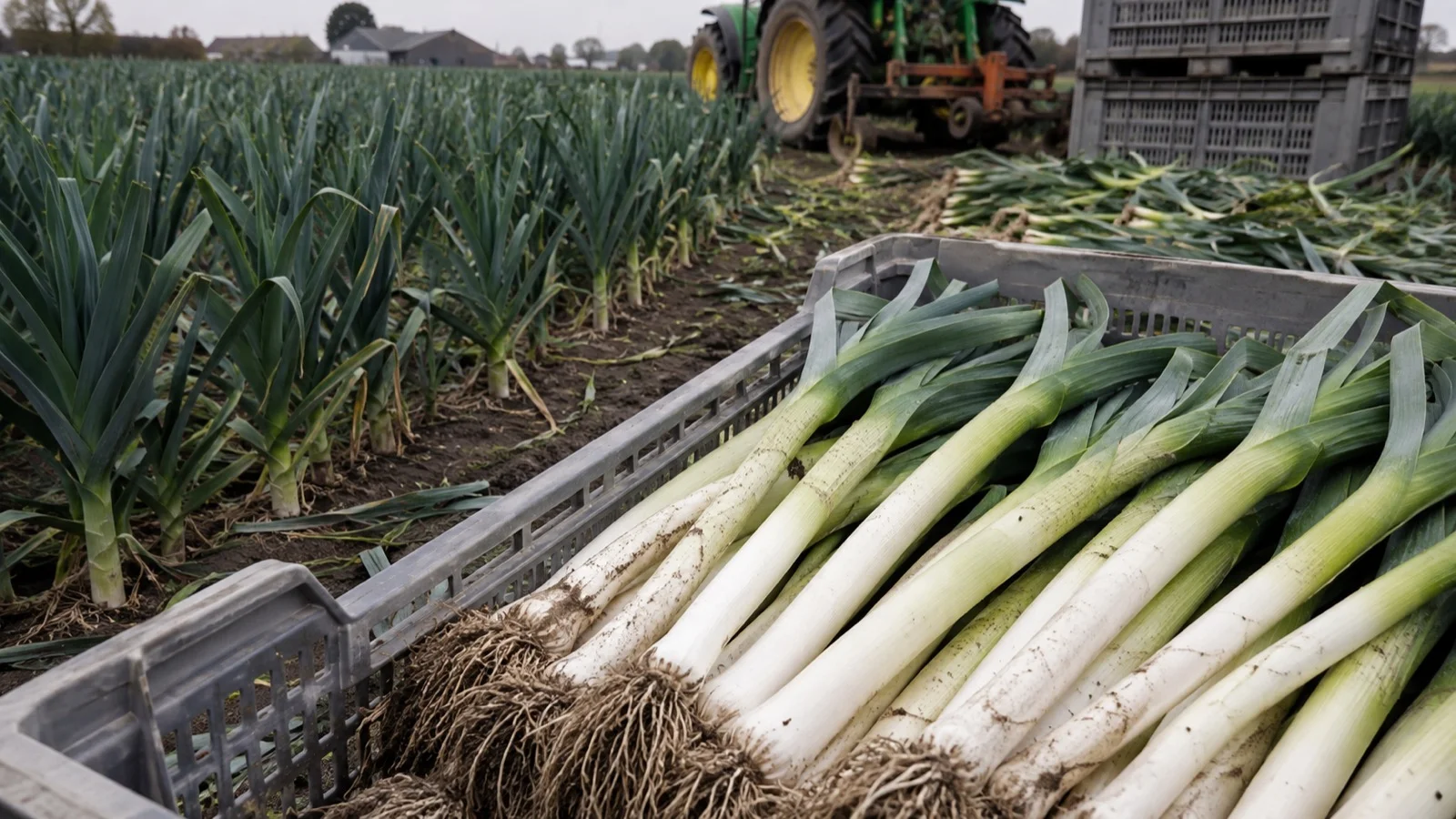
For long-term storage, leeks should be harvested as gently as possible. Mechanical injuries, crushed stems and torn leaf tissue create entry points for decay and shorten storage life. If mechanical assistance is used, the handling chain must be adjusted so that product impact is kept low.
Post-harvest preparation
- Remove excess soil without damaging the stem.
- Trim roots cleanly.
- Trim leaf tops according to market specification, often leaving 10-15 cm.
- Sort out damaged, diseased or overheated product before storage.
- Move harvested leeks to cooling as quickly as the logistics allow.
High-quality leek characteristics
- White stem length: 10-20 cm.
- Bulb diameter: 2-5 cm.
- Typical product weight: 200-300 g.
- Dark green leaves with no severe tearing, yellowing or decay.
- Clean stems with minimal soil and no crushing.
Storage Parameters for Leeks
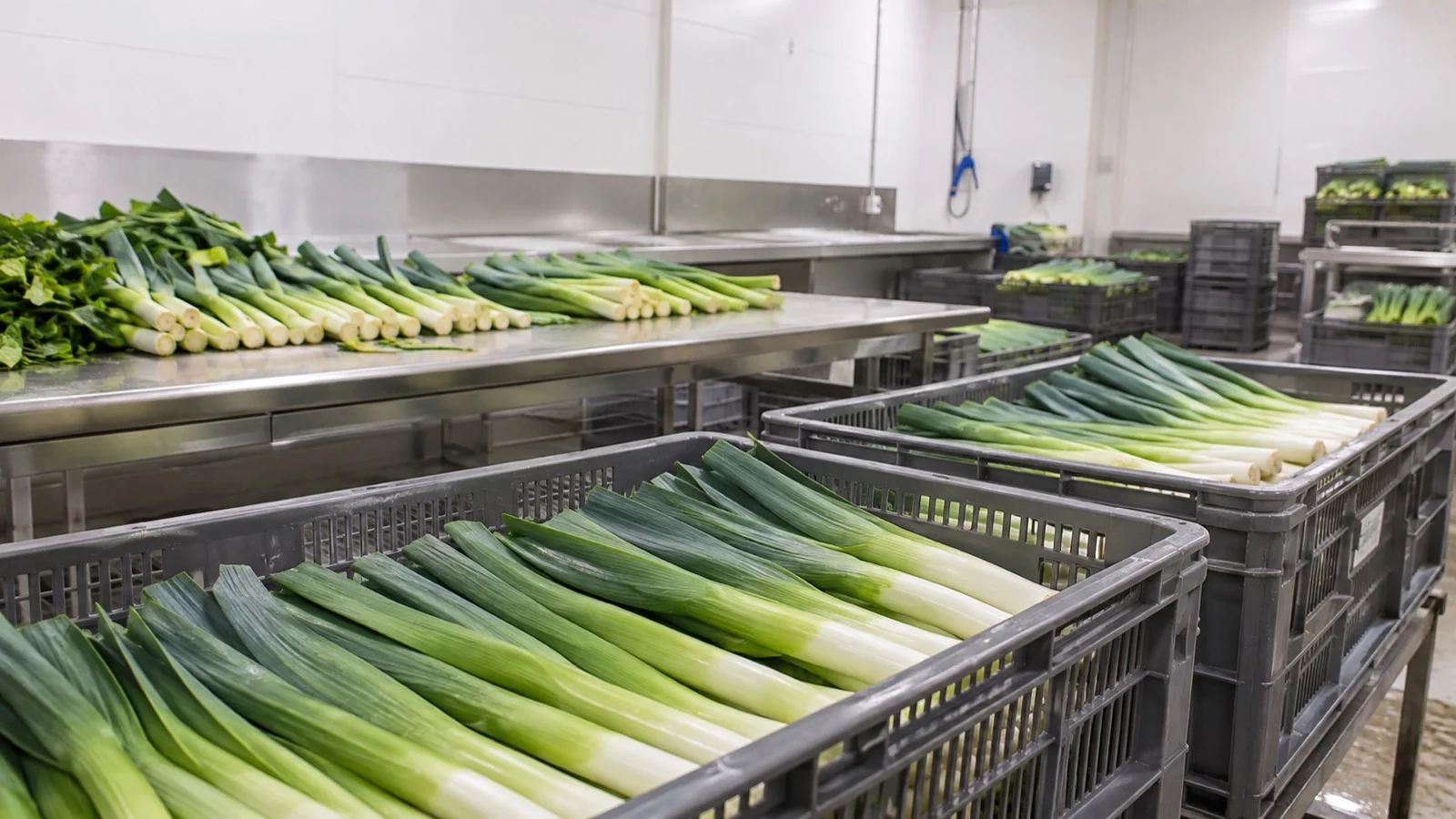
Leeks are normally stored at low temperature and high relative humidity. The aim is to slow respiration and moisture loss while avoiding condensation and microbial development. Storage cannot correct poor field quality, but it can preserve a well-grown product for a longer sales window.
- Recommended storage temperature: 0-2°C.
- Recommended relative humidity: 90-95%.
- Typical storage potential: up to 90 days or more under correct conditions.
- Airflow should be uniform through the stored product, with no dead zones or direct freezing risk.
- Product should enter storage clean, sorted and cooled, not warm from the field.
The practical challenge is balance. Too little air movement allows temperature and humidity pockets to form. Too much direct airflow can dry outer leaves and reduce saleable weight. A storage room must therefore be designed around product volume, crate layout, cooling capacity, air distribution and control logic.
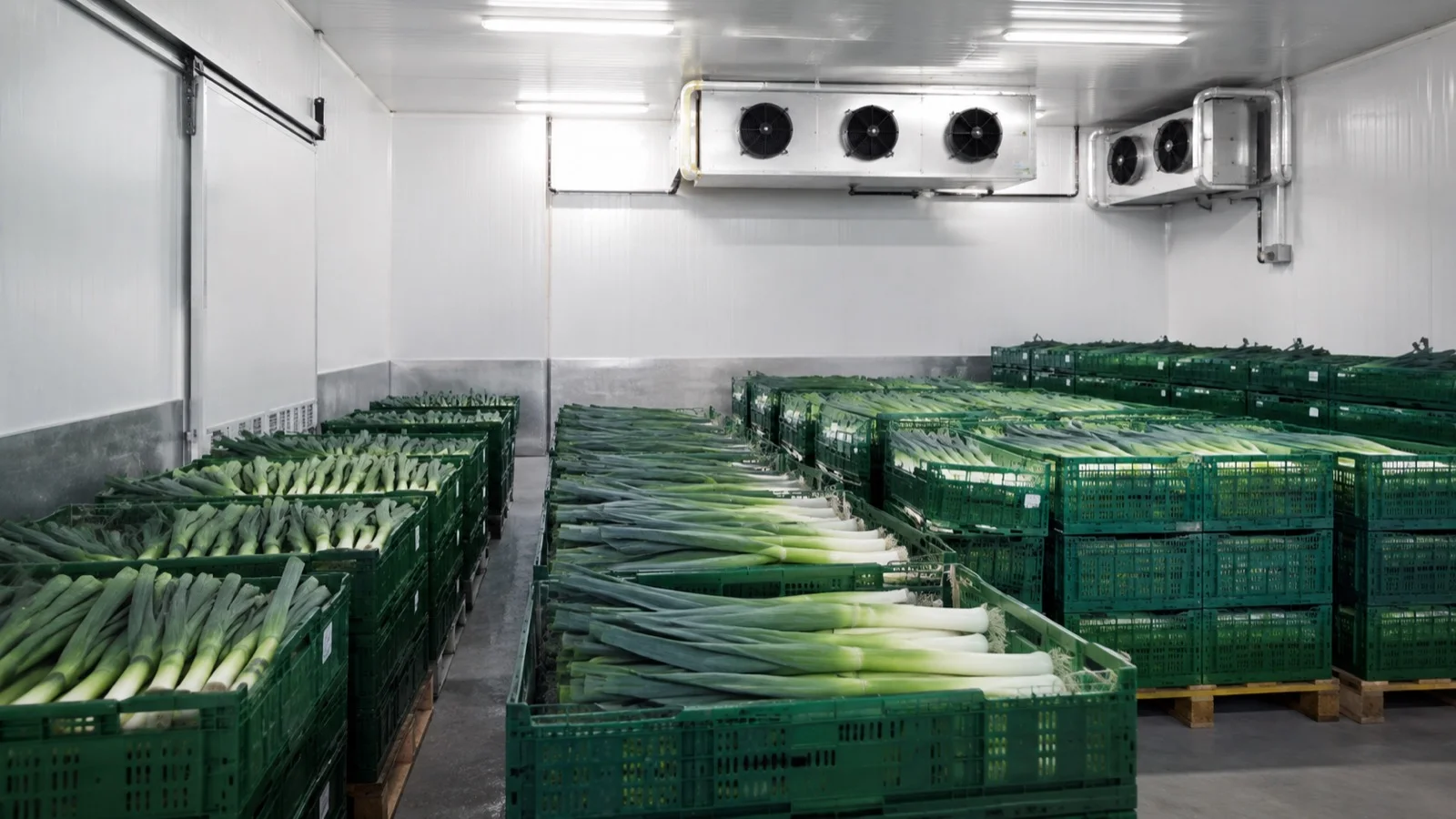
Where Engineering Matters
For leek storage, the building and equipment should work as one system: insulated envelope, cooling, humidification strategy, air distribution, drainage, sensors and control automation. The same crop can behave very differently in two chambers if airflow uniformity, temperature control and condensation management are not engineered properly.
Agrovent designs agricultural climate systems for crop storage facilities where product quality depends on stable post-harvest conditions. For related engineering approaches, review our vegetable storage solutions, ventilation equipment and cooling equipment.
Need a Storage System for Leeks or Similar Crops?
If you are planning a leek, onion, potato, carrot or cabbage storage project, the most useful first step is to define the crop volume, harvest window, expected storage duration, packaging format and local climate constraints. Agrovent can help turn these parameters into a practical storage concept.
For consultations: +971504377119 or info@agrovent.com.



More articles
 Container storage of products
What is container storage and its benefits
News
Container storage of products
What is container storage and its benefits
News
 Agrovoltaics: The Future of Farming Powered by the Sun
Learn how solar energy and agriculture are merging through agrovoltaic technology. Discover the Insolight “Insolagrin” project - a groundbreaking solar farm that could transform global food and energy production.
News
Agrovoltaics: The Future of Farming Powered by the Sun
Learn how solar energy and agriculture are merging through agrovoltaic technology. Discover the Insolight “Insolagrin” project - a groundbreaking solar farm that could transform global food and energy production.
News
 7 Major Causes of Fruit & Vegetable Spoilage in Storage — And How to Prevent Them
Up to 40% of fruits and vegetables are lost after harvest due to avoidable storage problems. This guide breaks down the 7 biggest causes of spoilage - and the practical steps every farm or storage operator must take to prevent them
News
7 Major Causes of Fruit & Vegetable Spoilage in Storage — And How to Prevent Them
Up to 40% of fruits and vegetables are lost after harvest due to avoidable storage problems. This guide breaks down the 7 biggest causes of spoilage - and the practical steps every farm or storage operator must take to prevent them
News
 Advanced Potato Storage Technology: Bulk Ventilation, Climate Control & Engineering Specs
Learn how modern bulk potato storage systems maintain optimal temperature, humidity, CO₂ levels, and airflow to protect crop quality. Full engineering parameters, ventilation design, cooling capacity, and monitoring solutions.
Advanced Potato Storage Technology: Bulk Ventilation, Climate Control & Engineering Specs
Learn how modern bulk potato storage systems maintain optimal temperature, humidity, CO₂ levels, and airflow to protect crop quality. Full engineering parameters, ventilation design, cooling capacity, and monitoring solutions.
 Storing Onions the Smart Way: Proven Methods That Actually Work
Onion storage isn’t guesswork - it’s a science. From choosing the right variety to managing temperature and humidity, small decisions determine whether your crop lasts weeks or months. Here’s a clear, practical guide to what truly works.
News
Storing Onions the Smart Way: Proven Methods That Actually Work
Onion storage isn’t guesswork - it’s a science. From choosing the right variety to managing temperature and humidity, small decisions determine whether your crop lasts weeks or months. Here’s a clear, practical guide to what truly works.
News
 Is rabbit breeding as a business profitable or not?
Learn how to start a profitable rabbit farming business. Breeds, housing, feeding, disease prevention, and market strategies for India, Africa, and KSA
Is rabbit breeding as a business profitable or not?
Learn how to start a profitable rabbit farming business. Breeds, housing, feeding, disease prevention, and market strategies for India, Africa, and KSA

Leave your contacts and we will get back to you
