Cold Sweetening in Stored Potatoes: Reducing Sugars, Fry Colour and Acrylamide
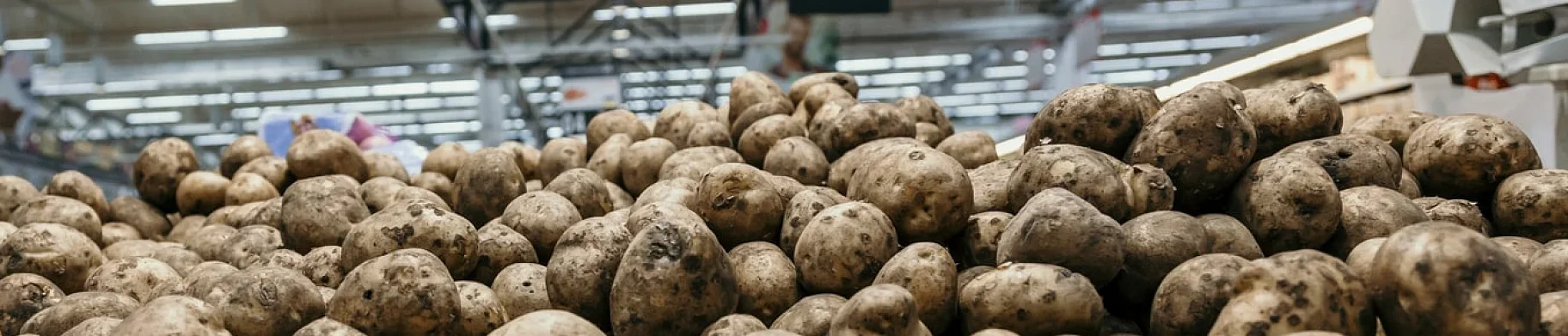
Expert perspective: Alexander Samsonov, Agricultural Storage Engineer. Read the original LinkedIn perspective.
Potatoes intended for chips and French fries are judged after frying as well as before storage. When reducing sugars rise, the Maillard reaction can produce darker colour, bitter notes and more acrylamide during high-temperature processing.
Alexander Samsonov has highlighted the need to manage storage as a quality process—not merely to keep tubers cold. The correct strategy combines variety, maturity, temperature, sprout control, sampling and processor feedback.

What Cold Sweetening Means
At unsuitable low temperatures, some potato varieties convert more starch and sucrose into the reducing sugars glucose and fructose. The response is variety-dependent and also influenced by crop maturity, growing conditions, stress, time in storage and sprout-control programme.
Those sugars react with amino acids during frying. FDA guidance identifies reducing-sugar management, variety selection, growing and harvesting practice, maturity, handling and storage conditions as relevant to acrylamide reduction in potato products.
Why One Universal Temperature Is Unsafe
A lower storage temperature can suppress sprouting and disease development, yet it may increase cold sweetening in a susceptible processing variety. A warmer regime may protect fry colour but accelerate respiration, dehydration and sprouting. The operating point must balance these risks for the actual variety and processing specification.
Build a Quality-Control Loop
- Set the buyer specification: define fry colour, glucose or reducing-sugar limits, dry matter and defect tolerances.
- Sample at intake: establish the initial sugar and fry-colour baseline for every lot.
- Control pull-down: avoid uncontrolled cold shocks and large temperature gradients.
- Trend the crop: compare temperature history, ventilation, sprouting and laboratory or strip-test results.
- Plan dispatch: match lots to processing dates before quality moves outside specification.
Reconditioning Is a Process, Not a Rescue Button
Some varieties can reduce accumulated sugars when held at a suitable warmer temperature before processing. The response and time required vary. Reconditioning should therefore be tested with representative samples and coordinated with sprouting, disease and dispatch risks.
Raising room temperature without uniform airflow can create condensation and inconsistent tuber response. The whole lot must move through a controlled temperature trajectory, and the processor should verify fry colour before release.
What Automation Can—and Cannot—Do
Automation can maintain set points, limit gradients, schedule ventilation and refrigeration, trend sensor data and alert the operator when the storage trajectory departs from plan. Predictive analytics may help identify risk earlier when it is trained on real crop and quality data.
It cannot measure sugar from temperature alone with laboratory certainty, guarantee zero acrylamide, or overcome an unsuitable variety and damaged intake. Product sampling remains part of responsible control.
A Practical Monitoring Record
- Lot, variety, field and harvest maturity.
- Incoming temperature, damage and dry matter.
- Daily crop-temperature range and cooling rate.
- Reducing-sugar or glucose results and fry-colour score.
- Sprouting, weight loss and disease observations.
- Reconditioning dates and processor acceptance results.
Learn about Agrovent Oxample and Agrovent's potato storage engineering. Discuss the variety, storage period and processing specification with Agrovent India.
Sources and Further Reading



More articles
 Apple Storage: How Controlled-Atmosphere (CA) Technology Extends Shelf Life and Profitability
Harvesting apples is only half the job - keeping them fresh is where the real challenge begins. Learn how modern cooling and Controlled-Atmosphere (CA) storage can protect your apples from spoilage, preserve nutrients, and keep your profits growing all year long.
News
Apple Storage: How Controlled-Atmosphere (CA) Technology Extends Shelf Life and Profitability
Harvesting apples is only half the job - keeping them fresh is where the real challenge begins. Learn how modern cooling and Controlled-Atmosphere (CA) storage can protect your apples from spoilage, preserve nutrients, and keep your profits growing all year long.
News
 Careers in agriculture
Explore the fast-growing careers in modern agriculture-agricultural engineering, soil science, precision farming, AI, robotics, sustainability and environmental science. Agriculture today is global, high-tech and full of opportunity
News
Careers in agriculture
Explore the fast-growing careers in modern agriculture-agricultural engineering, soil science, precision farming, AI, robotics, sustainability and environmental science. Agriculture today is global, high-tech and full of opportunity
News
 Is rabbit breeding as a business profitable or not?
Learn how to start a profitable rabbit farming business. Breeds, housing, feeding, disease prevention, and market strategies for India, Africa, and KSA
News
Is rabbit breeding as a business profitable or not?
Learn how to start a profitable rabbit farming business. Breeds, housing, feeding, disease prevention, and market strategies for India, Africa, and KSA
News
 Carrot Harvest & Storage Guide: Field Practices, Cooling, and Long-Term Shelf Life
Learn how to harvest, handle, cool, and store carrots for maximum shelf life. From field management to microclimate control, discover best practices to reduce losses and preserve quality for up to 6 months
News
Carrot Harvest & Storage Guide: Field Practices, Cooling, and Long-Term Shelf Life
Learn how to harvest, handle, cool, and store carrots for maximum shelf life. From field management to microclimate control, discover best practices to reduce losses and preserve quality for up to 6 months
News
 Crop rotation: how crop rotation helps to increase yields and maintain soil fertility
Learn why crop rotation improves soil health, breaks pest cycles, prevents nutrient depletion, and boosts yields. Practical tips for building an effective rotation system
News
Crop rotation: how crop rotation helps to increase yields and maintain soil fertility
Learn why crop rotation improves soil health, breaks pest cycles, prevents nutrient depletion, and boosts yields. Practical tips for building an effective rotation system
News
 How will the ban on chlorprofam affect the potato market?
Analysts predict that a ban on chlorprofam will pose additional challenges for European potato producers.
How will the ban on chlorprofam affect the potato market?
Analysts predict that a ban on chlorprofam will pose additional challenges for European potato producers.

Leave your contacts and we will get back to you