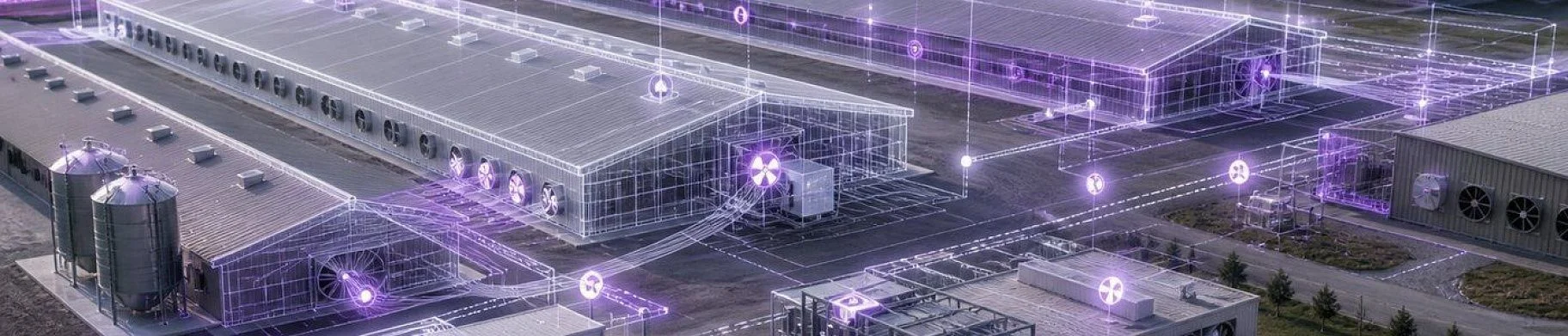
Agilias was not born as a software experiment looking for a market.
It grew from Agrovent’s engineering work with real production sites — where climate systems, equipment, people, biological processes and business economics meet every day.
For years, Agrovent has designed and delivered microclimate systems for vegetable storages, greenhouses, poultry houses and livestock facilities. This work has shown a recurring gap that is not solved by a controller screen alone.
A controller may show that the system is working. A daily report may say that everything is normal. But the site may still be losing money, product quality, energy efficiency or production stability.
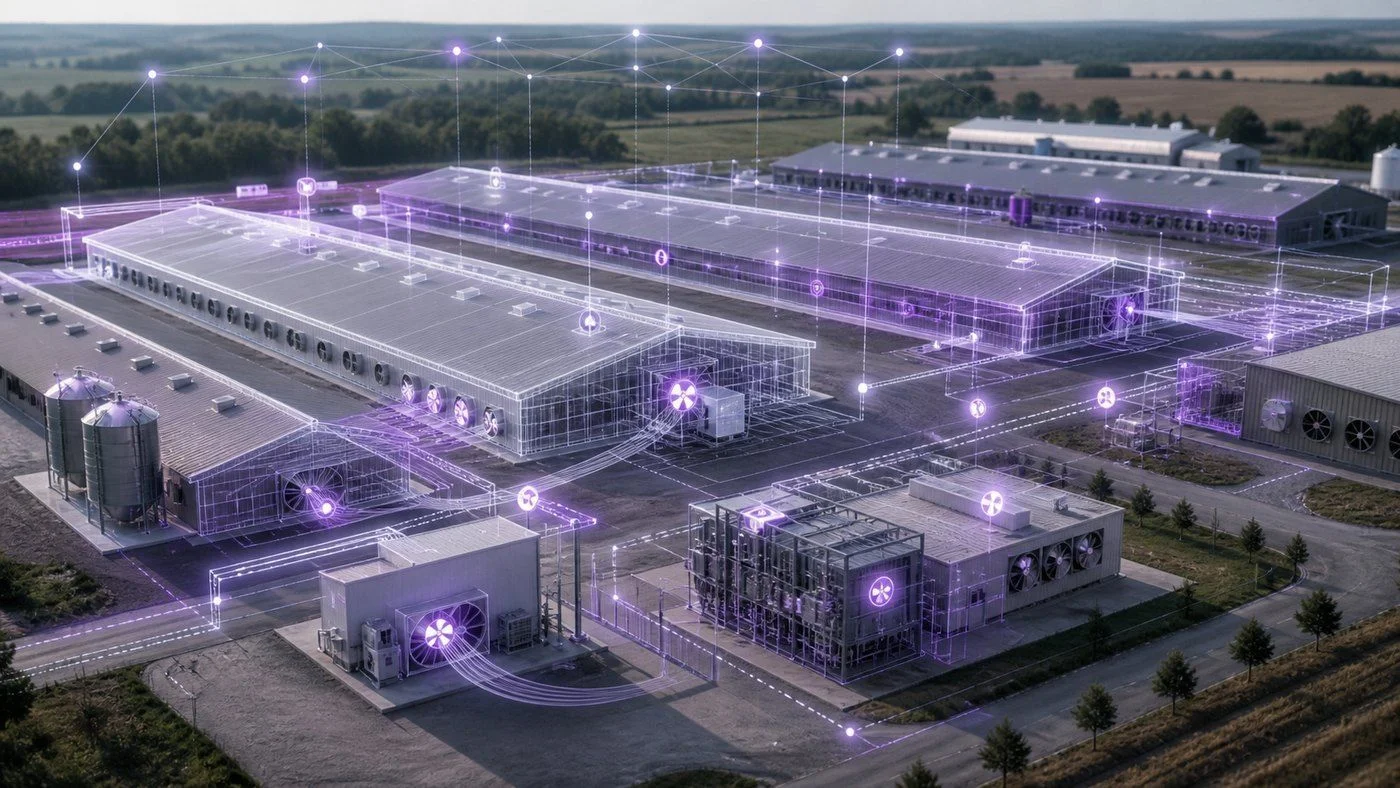
Why Agrovent is opening a separate technology direction
The real operational questions are usually deeper than a simple alarm:
- Why does one building perform worse than another building with similar equipment?
- When did the site begin drifting away from the optimal operating mode?
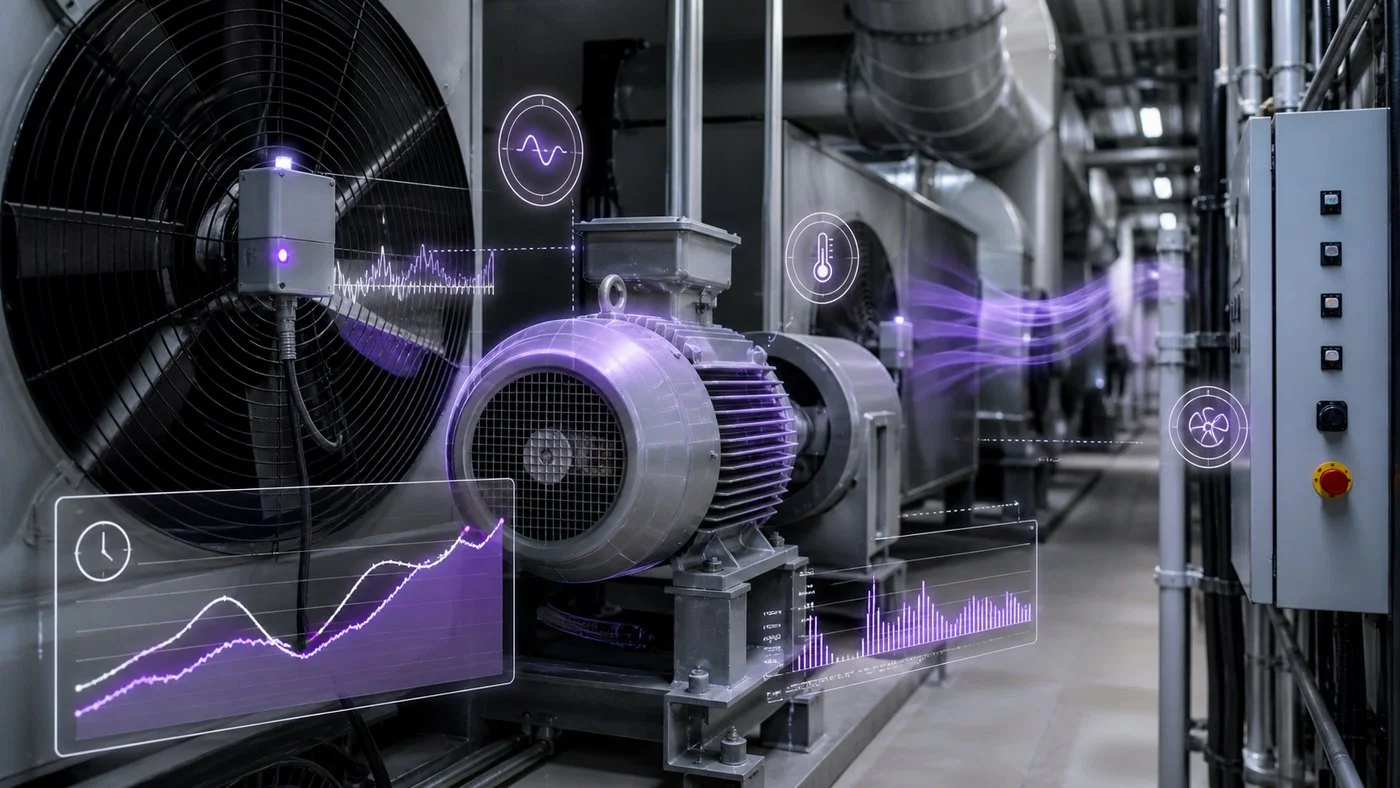
- Which equipment is overloaded, underused or close to failure?
- Where do hidden losses appear before they become visible in reports?
- How are climate, equipment, video, events and human decisions connected?
These questions require a different layer: one that can connect field engineering, operational context, historical data and modern analytics.
Agilias: domain-first Industrial AI
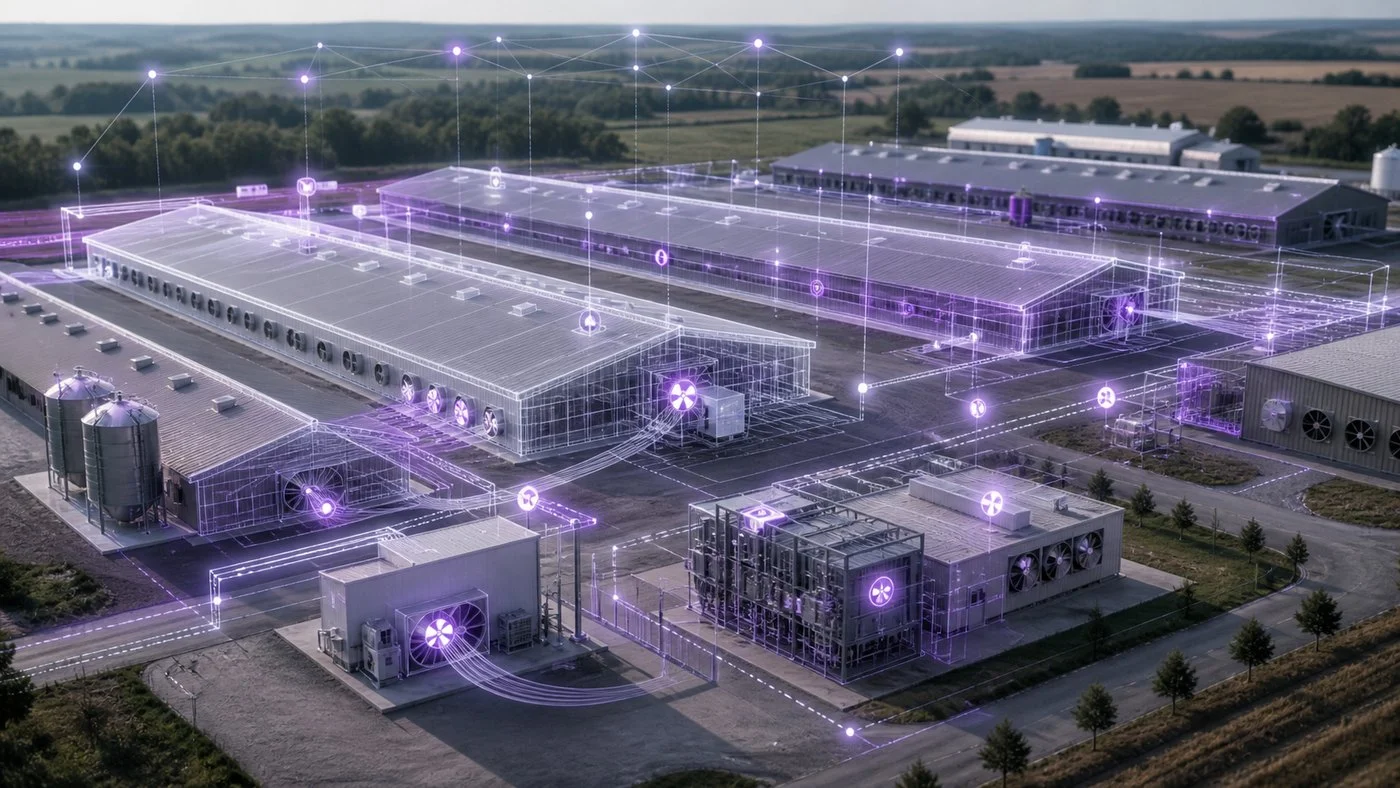
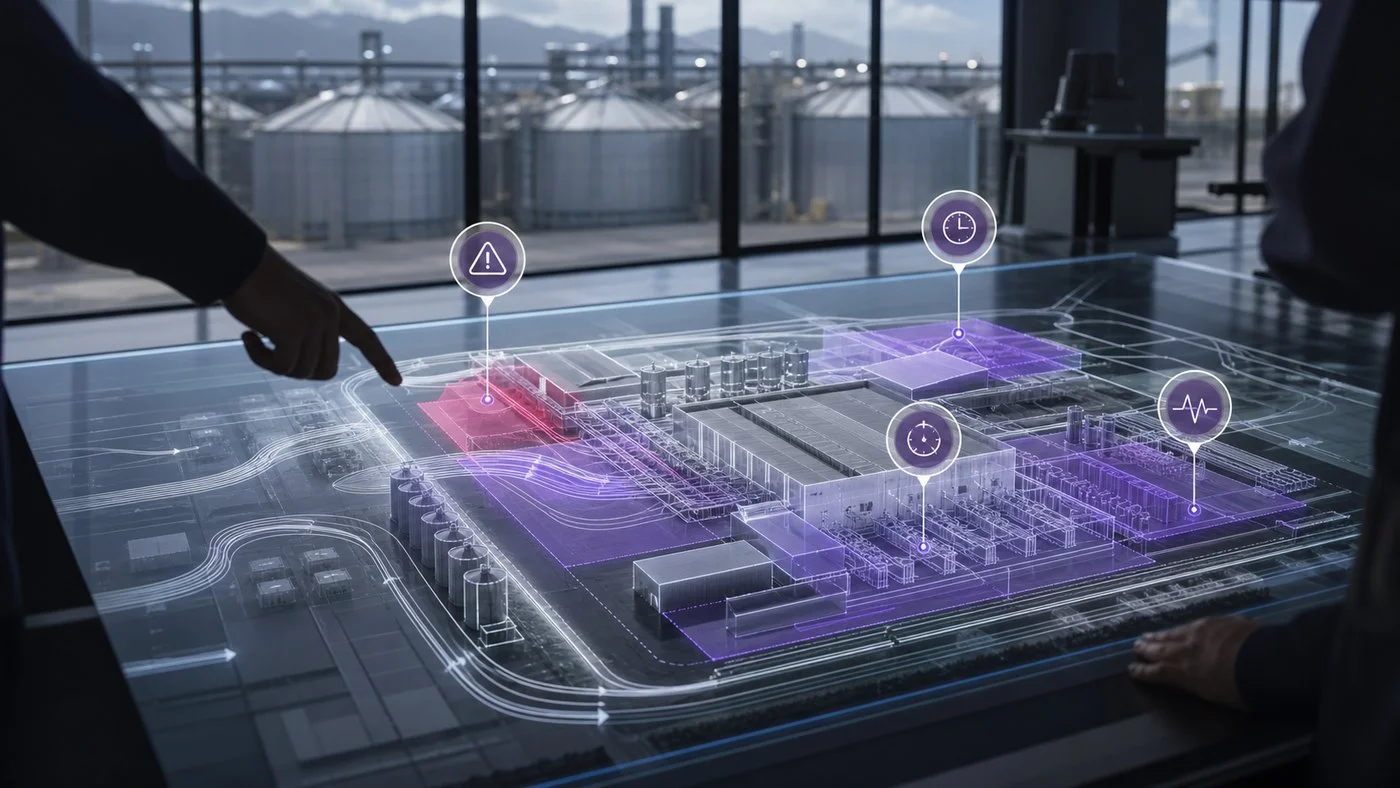
Agilias is a separate technology direction focused on digital twins, operational analytics and Industrial AI for real-world production sites.
The important difference is not only technological. It is methodological. Agilias does not start with a dashboard and then search for a use case. It starts with operational questions that owners, engineers and production teams struggle to answer.
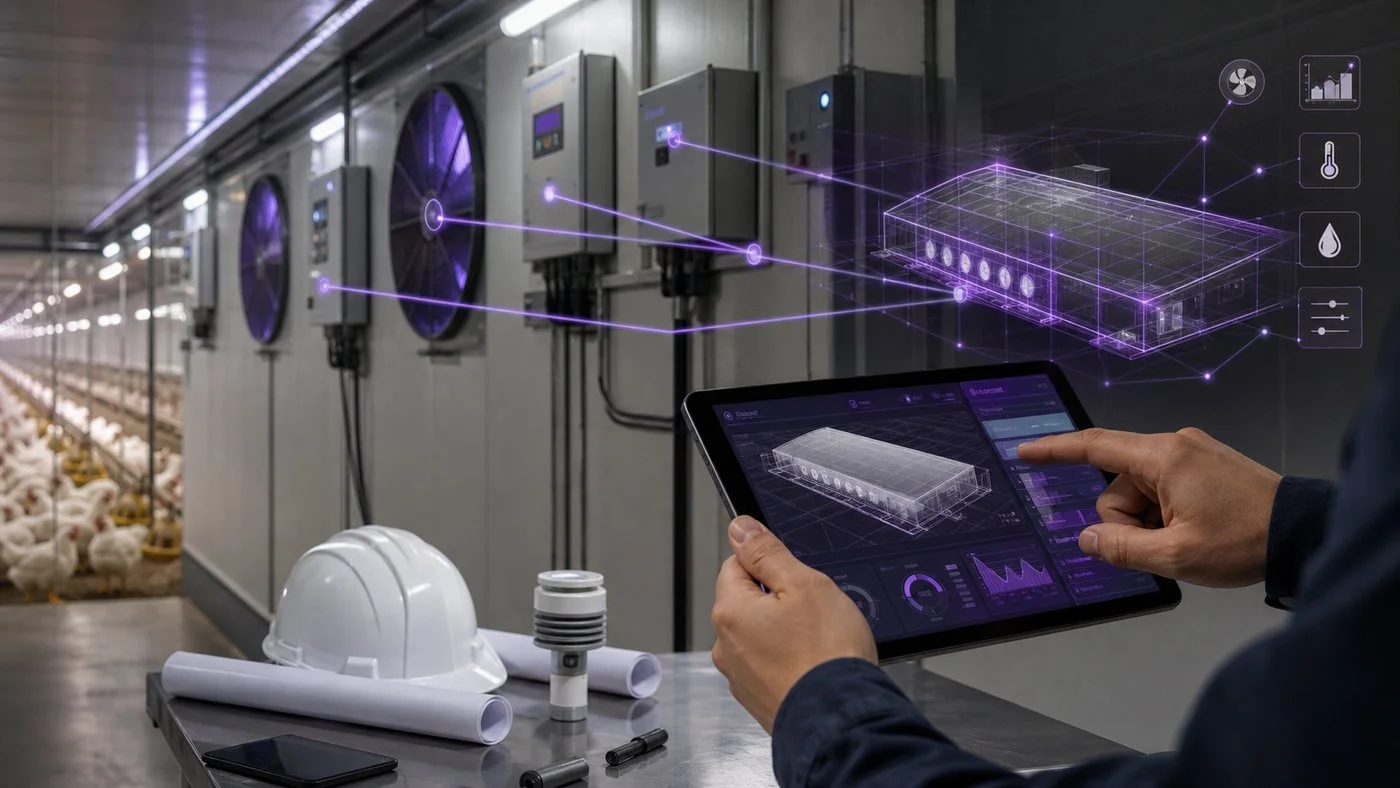
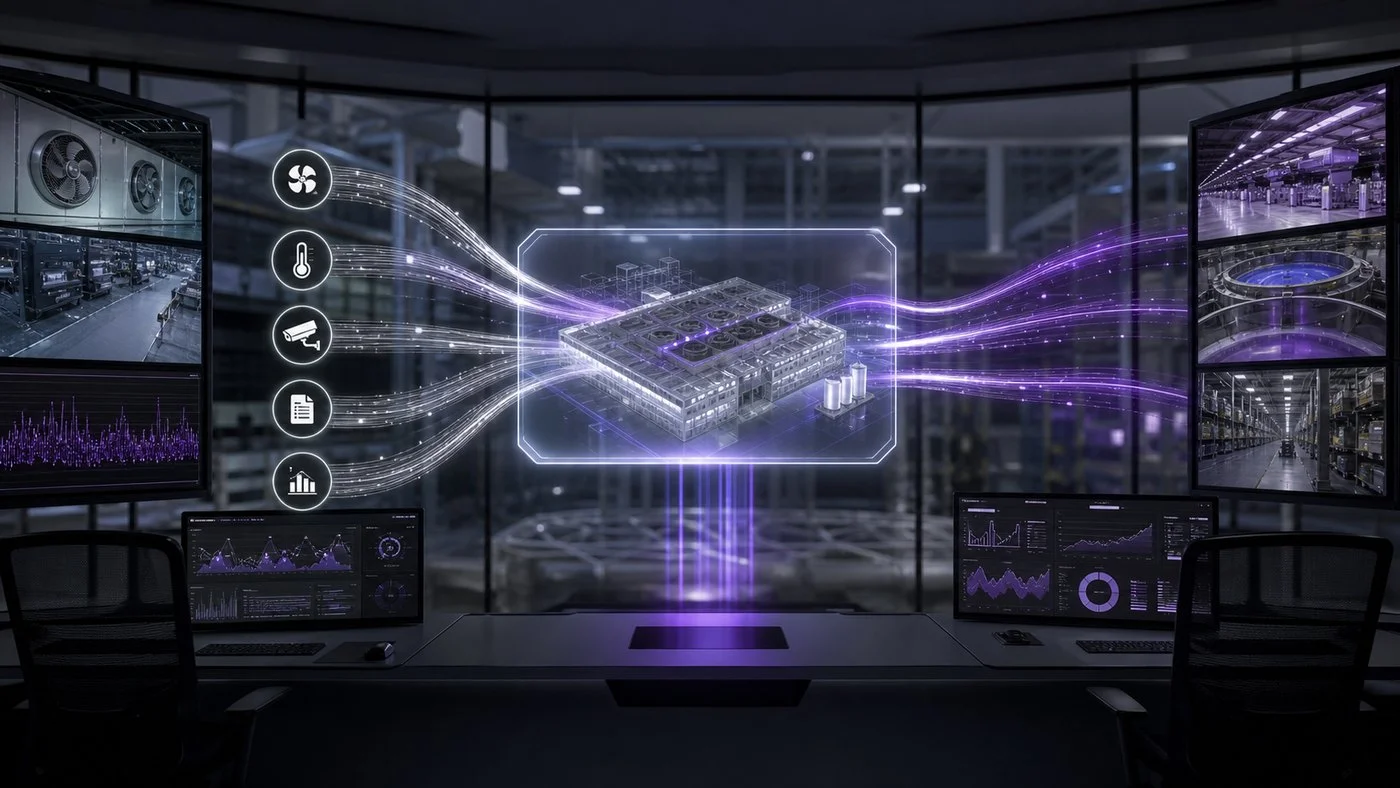
What Agilias connects
Fans, motors, dampers, heaters, cooling units, valves, alarms and operating hours.
Temperature, humidity, CO₂, air pressure, airflow, storage conditions and production-cycle context.
Behaviour, movement, use of space, process anomalies and visible deviations where cameras are already installed.
Energy use, maintenance cost, product loss, quality risk, downtime and management reports.
Where it can be applied first
The first focus areas are close to Agrovent’s engineering experience:
- poultry and livestock houses;
- vegetable, fruit and potato storage facilities;
- greenhouses and controlled-environment agriculture;
- industrial sites with distributed equipment and operational risks.
But the logic is wider than agriculture. Any physical business that depends on equipment, people, energy, climate, quality and time-sensitive decisions can eventually become a candidate for this kind of digital layer.
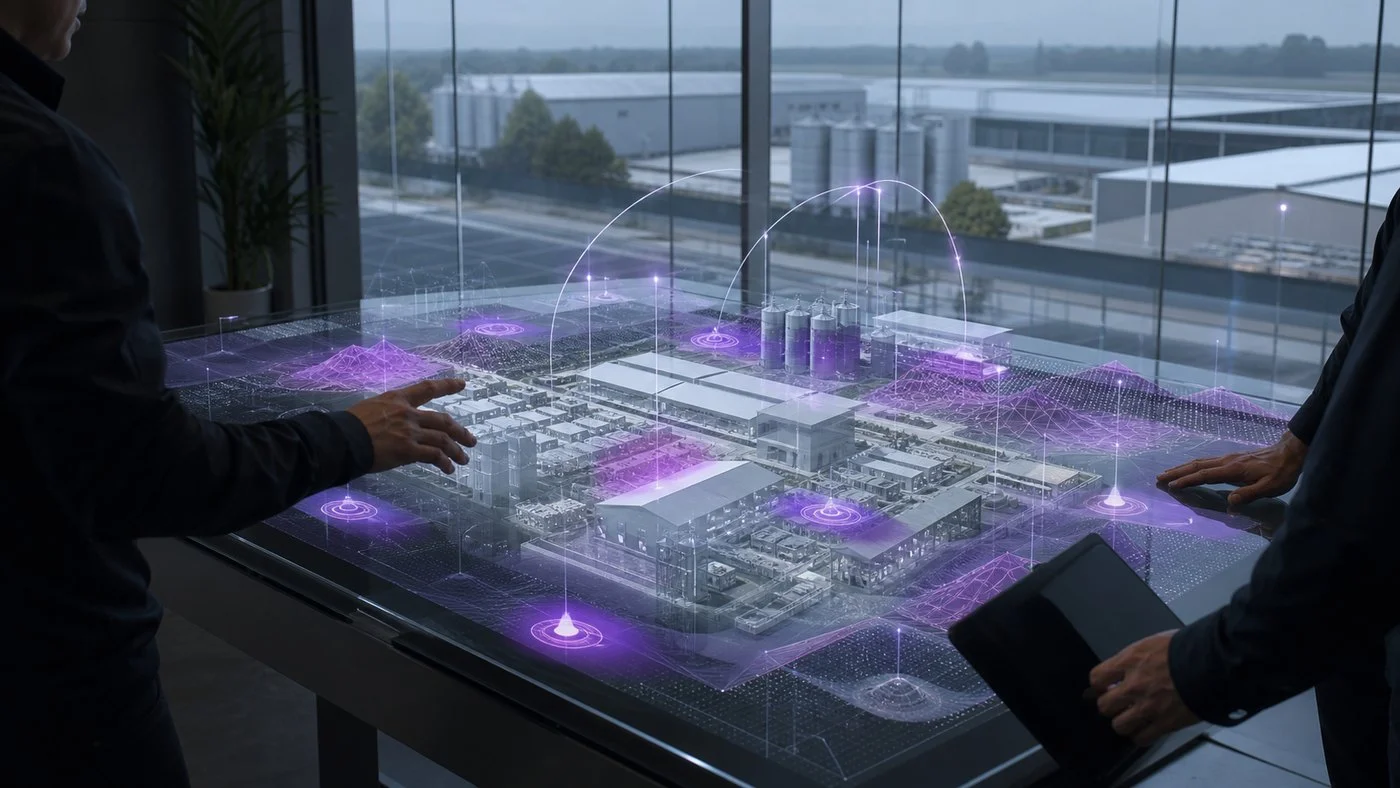
How Agilias differs from a standard IT product
| Typical software-first approach | Agilias domain-first approach |
|---|---|
| Start with available data and build dashboards around it. | Start with the operational question and collect only the data needed to answer it. |
| Treat equipment, cameras and reports as separate integrations. | Connect them around one site model and one decision process. |
| Focus on interface, AI features and platform architecture first. | Focus first on where the site loses money, stability, quality or time. |
| Assume digital transformation means replacing existing systems. | Begin above existing infrastructure where possible: controllers, cameras, logs and reports. |
The first practical route: pilot before platform
Agilias is being built around real facilities, not abstract AI promises. A reasonable first step is not a large transformation project. It is a focused pilot with one site, one decision problem and a measurable operational question.
- Define the production problem and expected economic effect.
- Identify existing data sources: controllers, cameras, logs, reports and operating events.
- Build a limited digital model for the selected site or process.
- Deliver findings that can be checked by engineers and managers.
- Decide whether the pilot should become a permanent product deployment.
Learn more about Agilias
The Agilias section explains the product architecture: Agilias Twin, Agilias Vision, Agilias Ops and Agilias Predict.
Open the Agilias section


 How to prevent storage potato diseases?
Prevention of potato diseases. Tools for managing potato storage
How to prevent storage potato diseases?
Prevention of potato diseases. Tools for managing potato storage  Smart Farming: How Big Data impact Agriculture
It is expected that the use of Big Data will have a great impact on agriculture and cover the entire supply chain, will change the roles and attitudes of market players.
Smart Farming: How Big Data impact Agriculture
It is expected that the use of Big Data will have a great impact on agriculture and cover the entire supply chain, will change the roles and attitudes of market players.  Livestock housing ventilation technologies
Learn how accelerator fans improve heat dissipation, stabilize barn microclimates, and increase milk yield by optimizing airflow for dairy cattle
Livestock housing ventilation technologies
Learn how accelerator fans improve heat dissipation, stabilize barn microclimates, and increase milk yield by optimizing airflow for dairy cattle  Bulk Potato Storage in India: Engineering for Fries and Chips
When bulk potato storage works for Indian fries and chips supply chains—and why variety, intake handling, airflow and processing logistics must be designed together.
Bulk Potato Storage in India: Engineering for Fries and Chips
When bulk potato storage works for Indian fries and chips supply chains—and why variety, intake handling, airflow and processing logistics must be designed together.  Cabbage. Storage parameters
Discover optimal conditions for long-term cabbage storage: temperature, humidity, and CO₂ standards. Engineered solutions for India, Africa, and Saudi Arabia.
Cabbage. Storage parameters
Discover optimal conditions for long-term cabbage storage: temperature, humidity, and CO₂ standards. Engineered solutions for India, Africa, and Saudi Arabia.  New video: We take care of quality of your life
Take a part of our goals. Your choices matter.
New video: We take care of quality of your life
Take a part of our goals. Your choices matter.