Bulk storage
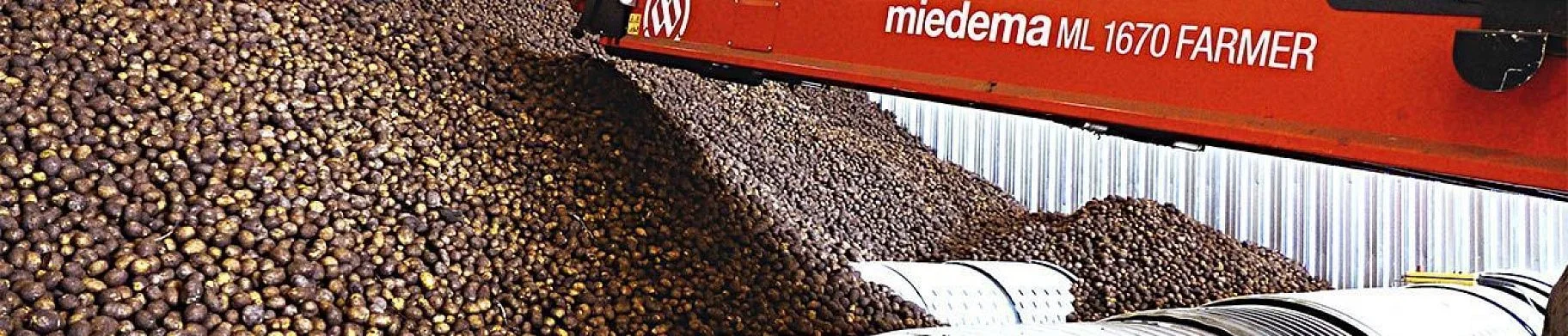
Bulk Storage: A High-Capacity, Cost-Effective Solution
Bulk storage is one of the most widely used methods for preserving vegetables in Russia — and for good reason. Its simplicity, reliability, and ability to handle massive volumes have made it a top choice for producers. Potatoes, one of the most in-demand crops worldwide, are especially well-suited for this type of storage.
Key Advantages
-
Supports very high storage volumes
-
Ensures stable, uniform temperatures across the entire chamber
-
Provides effective ventilation and drying
-
Requires minimal technological equipment
-
Offers fast construction timelines and budget-friendly installation
Bulk storage is ideal for potatoes, onions, and beets — crops essential to markets across India, Africa, and Saudi Arabia.
Bulk Storage Requirements
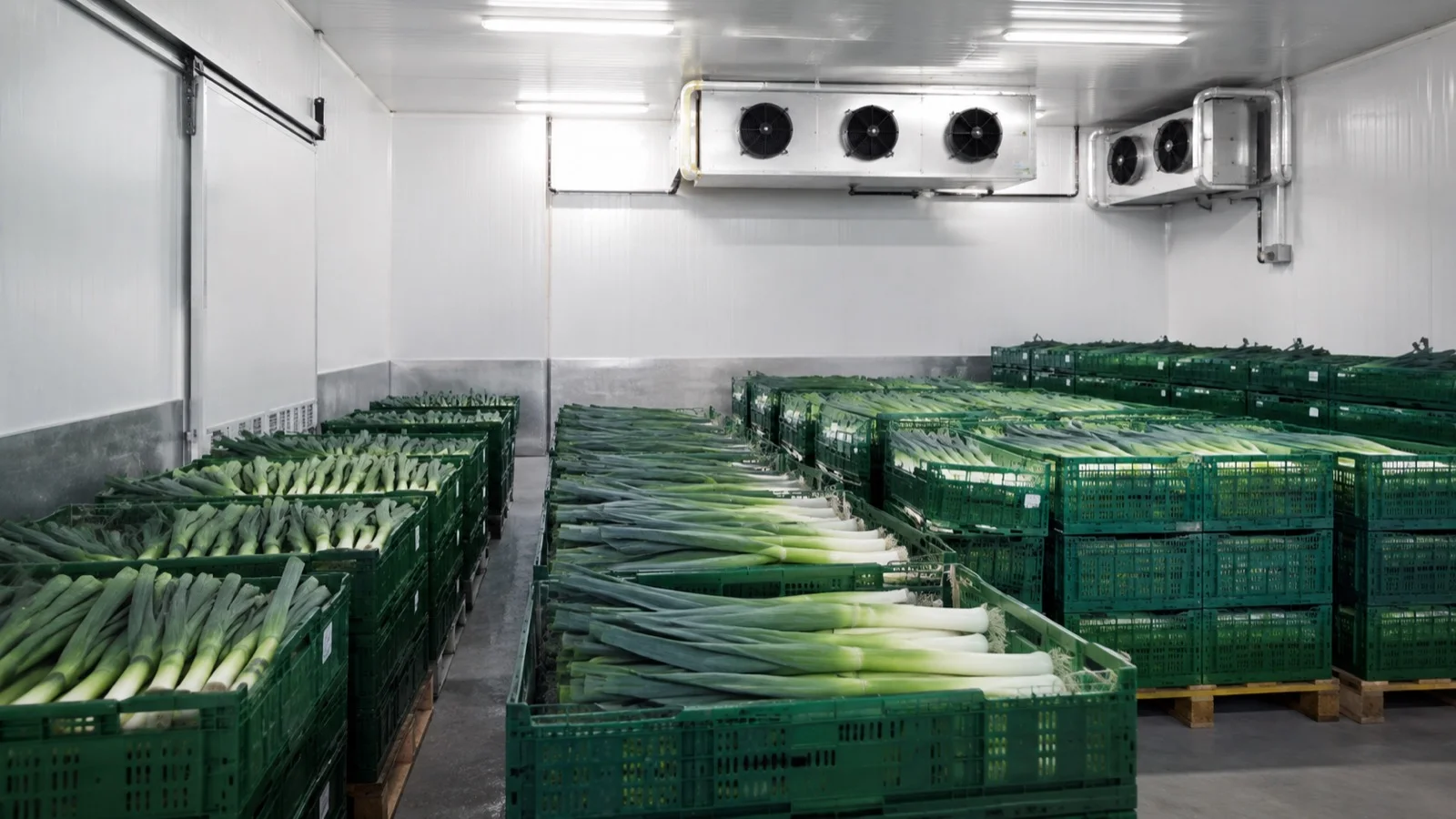
Bulk vegetable storage must be fully isolated from the external environment and well-insulated from cold air. Inside the facility, crops are stored in designated sections or rooms.
Depending on the type, variety, and purpose of the vegetables, the number of individual storage compartments can be significant. Each room maintains its own microclimate optimized for a specific crop.
How Microclimate Control Works
At the core of any efficient bulk-storage system is the air-preparation chamber.
It typically consists of one structural wall of the storage building and an internal load-bearing wall.
Airflow Process
-
Fresh air enters the facility through intake valves on both sides of the building.
-
It moves into the air-preparation chamber, where temperature and humidity are adjusted.
-
Regulation is achieved using:
-
Recycle valves
-
Humidifiers
-
Heaters
-
Coolers
-
-
Once conditioned, the air is pushed into perforated pipes by high-pressure fans.
-
Fans may be mounted directly inside the pipes or positioned on the hollow floor of the chamber.
-
-
The prepared air then flows through air ducts into the vegetable storage area.
Pipes, Floors, and Air Distribution
Perforated pipes can be made of galvanized steel for extended service life, while wooden pipes offer a cost-effective alternative.
To increase usable capacity, many modern storage facilities rely on a slotted floor system, installed above underfloor air ducts. This design:
-
Maximizes available storage space
-
Improves the distribution of conditioned air
-
Enhances equipment accessibility
-
Provides efficient ventilation, humidification, and heating of stored produce
Exhaust air is removed through open intake and recycle valves, where it mixes with fresh incoming air to maintain stable conditions.
To prevent condensation build-up, dedicated fans — some equipped with heating elements — are used to maintain continuous air movement.
Planning to build or upgrade a bulk vegetable storage system tailored for hot climates or large industrial facilities?
Contact us for engineered, climate-specific solutions for India, Africa, and Saudi Arabia.



More articles
 Your own turkey breeding business for meat
News
Your own turkey breeding business for meat
News
 Farming in space
Why are companies looking for viable farmland off Earth?
News
Farming in space
Why are companies looking for viable farmland off Earth?
News
 Existing building reconstruction
The question of the necessity of reconstruction should be studied in a complex, because its cost can be equal to the cost of the building a new one...
News
Existing building reconstruction
The question of the necessity of reconstruction should be studied in a complex, because its cost can be equal to the cost of the building a new one...
News
 Things to keep in mind when building a vegetable storage
Learn the essential factors to consider when planning a vegetable storage facility: technology choice, layout, location, regulations and budgeting. Ideal for projects in India, Africa and Saudi Arabia. Contact Agrovent for expert storage design and engineering
News
Things to keep in mind when building a vegetable storage
Learn the essential factors to consider when planning a vegetable storage facility: technology choice, layout, location, regulations and budgeting. Ideal for projects in India, Africa and Saudi Arabia. Contact Agrovent for expert storage design and engineering
News
 Tomato storage and growing technology
Learn how to store tomatoes for maximum shelf life and quality. Ripeness stages, temperatures, humidity, controlled atmosphere, ethylene treatment, sorbilene, and best practices for long-term tomato storage
Tomato storage and growing technology
Learn how to store tomatoes for maximum shelf life and quality. Ripeness stages, temperatures, humidity, controlled atmosphere, ethylene treatment, sorbilene, and best practices for long-term tomato storage
 Expert Talk: Microbial Preparations for Onion Storage in Maharashtra
Alexander Samsonov explains how locally validated microbial biocontrol trials may complement curing, ventilation and climate control for onion storage in Maharashtra.
Expert Talk: Microbial Preparations for Onion Storage in Maharashtra
Alexander Samsonov explains how locally validated microbial biocontrol trials may complement curing, ventilation and climate control for onion storage in Maharashtra.

Leave your contacts and we will get back to you