Oh, a wonderful new world: how not to 'become obsolete' in the trends of the future

Agriculture is entering a new era. Climate pressure, population growth, automation, and smart technologies are reshaping how the world grows food - and redefining the skills and professions needed to support global food security.
The Future of Agriculture: Professions, Skills, and Technologies Transforming the Sector
For decades, few people questioned soil quality, air pollution, or climate changes. Today, with rapid population growth and increasing pressure on natural resources, it has become clear that traditional farming systems can no longer sustain the world.
By 2030 the global population will reach 9 billion, and by 2050 - almost 10 billion. This means one thing: without sustainable agriculture, there won’t be enough food. Degraded soils, deforestation, water scarcity, and declining biodiversity already limit global food production. The urgency of the problem has forced the agricultural sector to reinvent itself.
Agriculture is undergoing a deep transformation - driven by technology, sustainability, and the need for new professional competencies.
Key Skills for the Agriculture of the Future
To work in an unpredictable and rapidly evolving world, specialists must develop a new skill set shaped by digitalization, automation, and environmental challenges.
1. Digital literacy
Modern agriculture depends on interfaces: sensors, drones, robots, software platforms, remote monitoring systems. Specialists must quickly navigate digital tools to make informed decisions.
2. Ability to learn and adapt
Information flows are growing exponentially. The key requirement is the ability to learn continuously, absorb new technologies, and adapt to changing conditions.
3. Systems thinking
Agriculture is no longer isolated — it's connected to climate, markets, logistics, ecology, and global supply chains. Understanding these links is essential.
4. Emotional maturity
Surprisingly, emotional intelligence becomes more important in a high-tech world. It helps build identity, make responsible decisions, collaborate effectively, and master complex tools.
Experts predict that instead of dividing skills into “hard” and “soft,” society will soon use more advanced categories: contextual, cross-context, and existential competencies.
Professions of the Future in Agriculture
1. Agronomic Economist
A specialist who combines agronomy, economics, and market analytics.
They optimize production strategies, manage risks, increase profitability, and adapt products to market needs.
Required skills: systems thinking, robotics & AI basics, risk analysis, and scenario planning.
2. Agricultural Ecologist
A profession driven by the global environmental crisis.
Such specialists design principles for waste reduction, resource efficiency, and restoring degraded ecosystems.
They must collaborate across disciplines and maintain strong “green thinking.”
3. Smart Machinery Operator
Automation doesn’t eliminate people — it changes their role.
Operators manage drones, sensors, robotic harvesters, and autonomous tractors.
They need knowledge of programming, AI, robotics, and agronomic workflows.
4. Urban Farmer
With the rise of vertical farms on rooftops and in megacities, new specialists are needed to design, maintain, and optimize urban food systems.
Skills: system thinking, multitasking, robotics & AI, hydroponics/aquaponics.
5. GMO Agronomist
This expert integrates biotechnology into agricultural production.
GMOs help develop crops resistant to stress, diseases, and climate volatility — a critical need for the future.
Skills: biotechnology, multicultural communication, customer-orientation.
6. Agrocybernetic Specialist
This person implements digital technologies on farms, teaches teams, and oversees automation processes.
Must understand programming, robotics, AI, and system integration.
The Common Thread: Sustainability + Innovation
All future agricultural professions share one core foundation:
environmental responsibility and readiness for continuous learning.
The agriculture of tomorrow belongs to people who are:
-
proactive
-
adaptive
-
technologically literate
-
systems-oriented
-
environmentally conscious
This combination will allow professionals to remain relevant - regardless of how the sector evolves.



More articles
 Is rabbit breeding as a business profitable or not?
Learn how to start a profitable rabbit farming business. Breeds, housing, feeding, disease prevention, and market strategies for India, Africa, and KSA
News
Is rabbit breeding as a business profitable or not?
Learn how to start a profitable rabbit farming business. Breeds, housing, feeding, disease prevention, and market strategies for India, Africa, and KSA
News
 African Agriculture in a New Context
Africa holds enormous agricultural potential, but progress requires investment in smallholder farmers, water infrastructure, innovation, and climate-resilient policies. Explore the key challenges and solutions shaping the future of African food systems.
News
African Agriculture in a New Context
Africa holds enormous agricultural potential, but progress requires investment in smallholder farmers, water infrastructure, innovation, and climate-resilient policies. Explore the key challenges and solutions shaping the future of African food systems.
News
 Weight loss when storing potatoes
Minimization of weight loss of potatoes during storage. Relative humidity in the vegetable storage
News
Weight loss when storing potatoes
Minimization of weight loss of potatoes during storage. Relative humidity in the vegetable storage
News
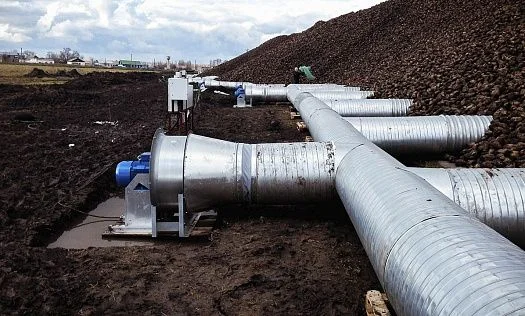 Airflow resistance of sugar beets
Learn how root size, debris, airflow direction, and packing density impact airflow resistance in sugar beet piles. Use data-driven design to size fans, avoid hot spots, and reduce sugar losses during 100–120 days of storage.
News
Airflow resistance of sugar beets
Learn how root size, debris, airflow direction, and packing density impact airflow resistance in sugar beet piles. Use data-driven design to size fans, avoid hot spots, and reduce sugar losses during 100–120 days of storage.
News
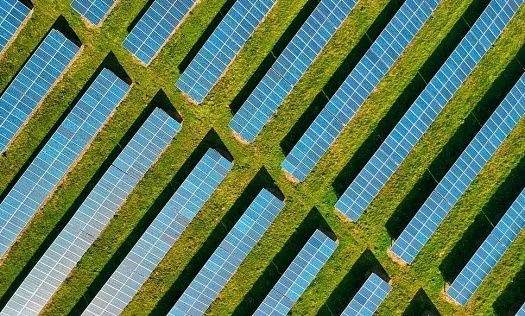 Agrovoltaics: The Future of Farming Powered by the Sun
Learn how solar energy and agriculture are merging through agrovoltaic technology. Discover the Insolight “Insolagrin” project - a groundbreaking solar farm that could transform global food and energy production.
News
Agrovoltaics: The Future of Farming Powered by the Sun
Learn how solar energy and agriculture are merging through agrovoltaic technology. Discover the Insolight “Insolagrin” project - a groundbreaking solar farm that could transform global food and energy production.
News
 What is permaculture?
Basic principles and history of permaculture
What is permaculture?
Basic principles and history of permaculture

Leave your contacts and we will get back to you