Why broiler business is a good business idea?

How to Build a Profitable Broiler Chicken Business: Key Principles and Requirements
Raising poultry for meat is one of the most commercially attractive agricultural ventures. Broiler production combines fast turnover, high demand, and strong profitability—even for beginners. But despite the simplicity of the concept, consistent profits depend on strict adherence to several core rules: proper feed, high-quality chicks, optimal microclimate, and well-planned product sales.
Below is a complete breakdown of what must be followed to ensure that a broiler business remains productive, efficient, and profitable.
Why Broiler Farming Works as a Business
Modern broiler crosses are bred specifically for rapid and efficient meat production. Their key characteristics include:
-
Fast weight gain
-
High feed conversion ratio (FCR)
-
Low activity (energy-efficient growth)
In only 6 weeks, broilers reach 2.2–2.7 kg, consuming around 4–5 kg of feed. A cycle longer than 7 weeks becomes unprofitable because feed consumption rises faster than weight gain.
With one broiler house, it’s possible to run 6–7 full cycles per year.
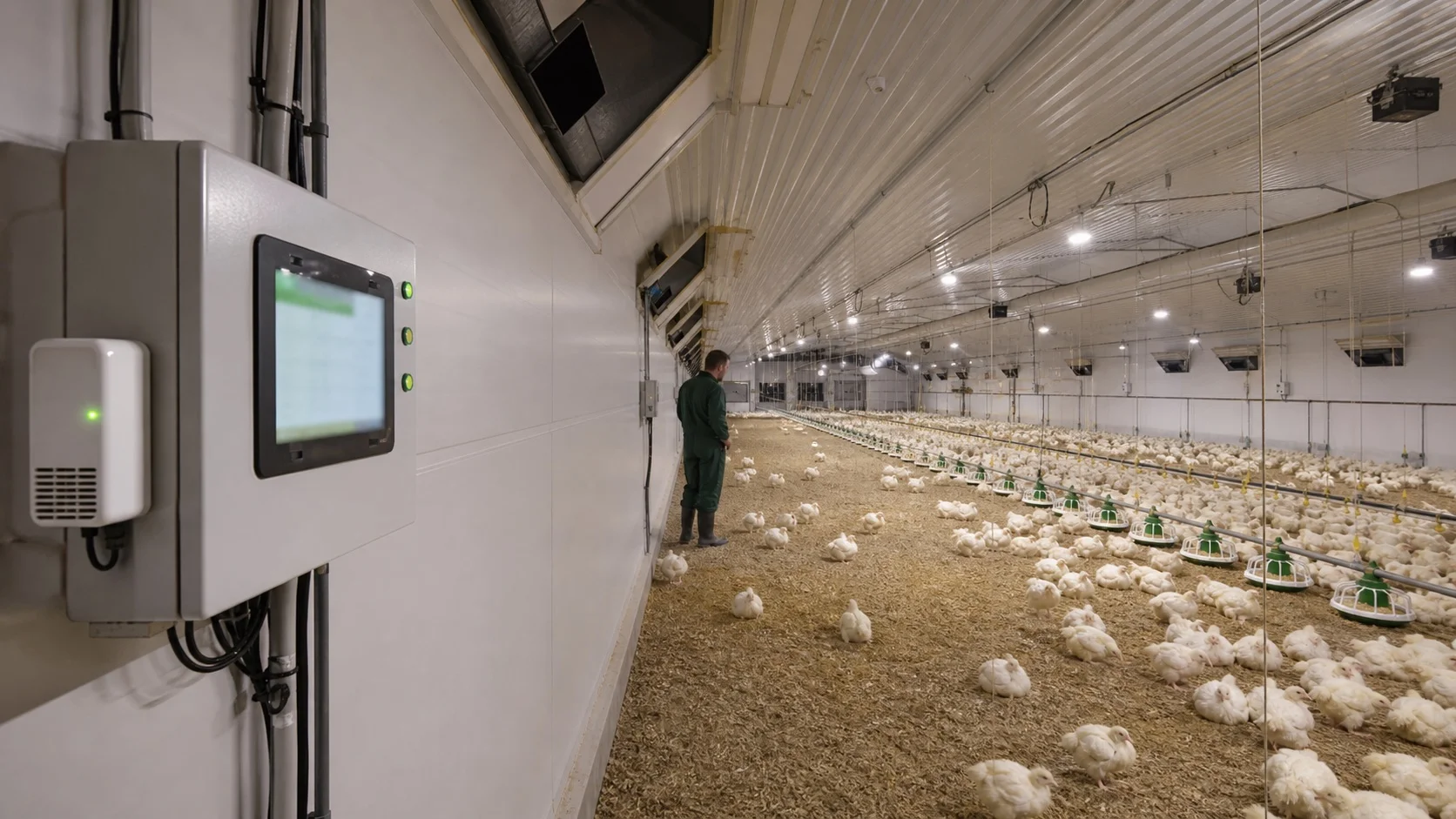
Broilers, however, are physiologically vulnerable: rapid growth predisposes them to cardiovascular and musculoskeletal issues, and any environmental stress can significantly reduce performance. This is why modern equipment, stable microclimate, and full automation are critical components of successful production.
Rule #1: Quality Feed Determines Profitability
Feed quality directly determines:
-
growth speed
-
feed conversion ratio
-
health and uniformity
-
final carcass quality
-
total profitability
Broilers require balanced feed containing protein, energy, fats, amino acids, minerals, and vitamins. The best results come from commercial complete feeds manufactured using precise formulations and professional technology.
Farm-mixed homemade feed almost always results in:
-
slower growth
-
uneven flock development
-
higher feed consumption
-
lower profitability
Feed is not the place to cut costs—successful broiler farming simply isn’t possible without proper nutrition.
Rule #2: Start With High-Quality Day-Old Chicks
The potential of your entire flock is determined on Day 1.
Always purchase chicks from reputable hatcheries that provide:
-
verified breeding stock
-
proper primary vaccinations
-
strong early-life uniformity
-
guaranteed disease control standards
Before choosing suppliers, check feedback from experienced farmers and local poultry associations.
Healthy chicks = faster growth, better survival, stronger performance.
Rule #3: Comfortable Conditions = High Productivity
Broilers respond instantly to environmental changes. Poor microclimate leads to:
-
uneven growth
-
higher mortality
-
weak immunity
-
wet litter
-
poor feed conversion
To avoid losses, broiler houses must be equipped with:
-
automatic feeding systems
-
automatic drinking lines
-
intelligent climate control
-
proper ventilation and heating
Ventilation Is the Most Critical System
Even a short ventilation malfunction—especially in hot weather—can cause:
-
mass mortality
-
heat stress
-
suffocation due to CO₂ buildup
Losses increase dramatically as broilers get older (heavier birds = higher risk).
Because outdoor temperatures may change drastically within hours, the broiler house must be controlled by an automated microclimate controller that adjusts:
-
fan speed
-
air intake
-
exhaust ventilation
-
heating
-
cooling
-
humidity levels
With automation, the building can maintain optimal conditions 24/7 without human intervention.
Rule #4: Feed and Water Must Always Be Accessible
Broilers grow continuously, which means they must have:
-
feed available at all times
-
clean, fresh water at all times
Modern systems handle this automatically:
Automatic Feeding Lines
As the trough empties, the feed distribution system turns on automatically and refills it.
Automatic Drinking Lines
Broilers drink a lot—especially during heat stress. Even brief water restrictions:
-
lower feed intake
-
slow growth
-
worsen FCR
Drinking systems ensure stable water supply and help maintain bird health.
Rule #5: Secure Your Sales Channel Before You Start
One of the most common mistakes among first-time broiler farmers is forgetting to plan sales. Since broilers reach market weight in just 42 days, you cannot afford to delay sales negotiations.
Typical sales outlets include:
-
local stores
-
butcher shops
-
restaurants and cafés
-
school and institutional catering
-
wholesale buyers
-
food markets
-
direct-to-consumer deliveries
Marketing opportunities include:
-
social media promotion
-
community groups
-
local food fairs
-
cooperation with delivery services
Broiler meat is in high demand worldwide, and demand will only continue to grow. Even small producers can easily occupy a profitable niche—if they prepare their sales channels early.
Turnkey Solutions for Broiler Producers
Agrovent specializes in providing complete equipment packages for floor-based broiler production, including:
-
automated feeding systems
-
automatic drinking lines
-
ventilation and heating systems
-
integrated climate control
Hundreds of farms trust our solutions to increase productivity, reduce operating costs, and stabilize performance across all production cycles.
Need equipment for broilers? Contact us—our specialists will help design the optimal system for your farm.



More articles
 Vegetable proteins for life
New vegetable protein products are a variety of options that can satisfy the taste of almost any person.
News
Vegetable proteins for life
New vegetable protein products are a variety of options that can satisfy the taste of almost any person.
News
 Framed Agricultural Storage Buildings - Custom Warehouses by Agrovent
Discover high-performance framed buildings for agricultural storage. Agrovent designs modular, insulated warehouses with climate control and automation for vegetables, fruits, and root crops. Energy efficient. Scalable. Built to last.
News
Framed Agricultural Storage Buildings - Custom Warehouses by Agrovent
Discover high-performance framed buildings for agricultural storage. Agrovent designs modular, insulated warehouses with climate control and automation for vegetables, fruits, and root crops. Energy efficient. Scalable. Built to last.
News
 Apple Storage: How Controlled-Atmosphere (CA) Technology Extends Shelf Life and Profitability
Harvesting apples is only half the job - keeping them fresh is where the real challenge begins. Learn how modern cooling and Controlled-Atmosphere (CA) storage can protect your apples from spoilage, preserve nutrients, and keep your profits growing all year long.
News
Apple Storage: How Controlled-Atmosphere (CA) Technology Extends Shelf Life and Profitability
Harvesting apples is only half the job - keeping them fresh is where the real challenge begins. Learn how modern cooling and Controlled-Atmosphere (CA) storage can protect your apples from spoilage, preserve nutrients, and keep your profits growing all year long.
News
 Floating farms in Bangladesh
Old-new model of farming in the face of climate change
News
Floating farms in Bangladesh
Old-new model of farming in the face of climate change
News
 Napa cabbage. Storage parameters
earn optimal conditions for long-term napa cabbage storage: temperature, humidity, and controlled atmosphere. Ideal solutions for India, Africa, and Saudi Arabia
News
Napa cabbage. Storage parameters
earn optimal conditions for long-term napa cabbage storage: temperature, humidity, and controlled atmosphere. Ideal solutions for India, Africa, and Saudi Arabia
News
 Carrots. Storage parameters
Preparation of the product. The volume of goods. Storage temperature.
Carrots. Storage parameters
Preparation of the product. The volume of goods. Storage temperature.

Leave your contacts and we will get back to you