Cold Storage as a Business: Rental Model for Fruit and Vegetable Storage
Cold Storage as a Business: Rental Model for Fruit and Vegetable Storage
Africa • India • Middle East • Latin America • Europe • North America
The global fruits and vegetables sector is changing rapidly. Farmers, wholesalers, and exporters all need dependable short- and medium-term storage — but few want to tie up capital in constructing their own facilities.
A powerful alternative is emerging: commercial cold storage built as an independent business and leased to multiple users.
This model expands access to modern storage, reduces post-harvest losses, and strengthens supply chains from farm to market.
Facility Design and Optimal Capacity
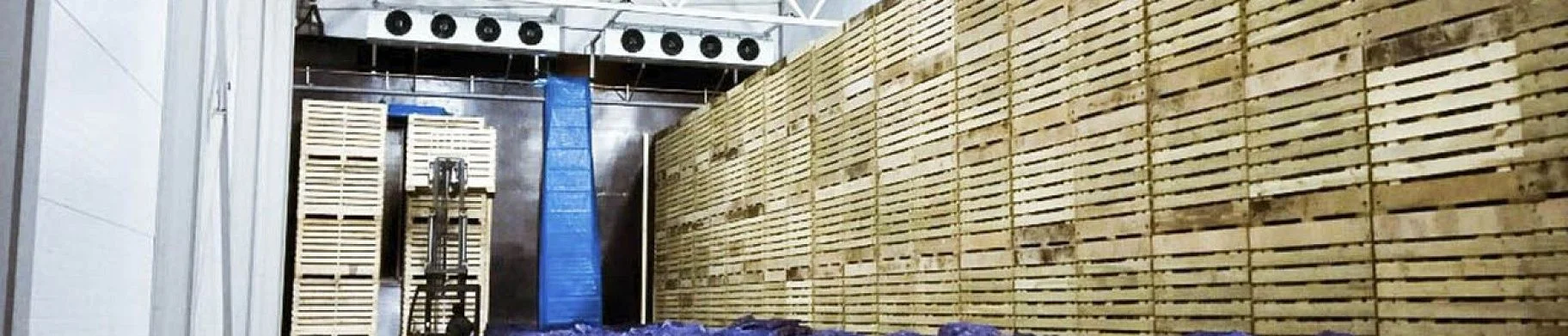
Most rental cold storage buildings are designed for efficiency and high turnover:
-
rectangular layout for smooth logistics,
-
wide aisles for forklifts,
-
loading docks for fast intake,
-
chambered rooms with precise climate control.
Common chamber capacities:
-
500, 700, or 1000 tons for general-purpose storage,
-
100–150 tons for fruit-specific rooms (e.g., apples, pears), allowing separation by variety, grade, or tenant.
Each room typically supports:
-
controlled fresh-air intake for purge cycles,
-
CO₂ management systems,
-
humidity regulation,
-
temperature uniformity for sensitive crops.
Bulk storage is rarely used — it complicates dispatch, traceability, tenant billing, and multi-crop scheduling.
How the Rental Business Model Works
Revenue comes from several streams:
1. Space Rental
-
Pricing per ton or per chamber,
-
Daily • Weekly • Monthly rates depending on tenant needs.
2. Seasonal Contracts
-
Harvest peaks,
-
Export windows,
-
Festival and holiday demand spikes.
3. Value-Added Services (High-Margin Upselling)
-
Pre-cooling,
-
Sorting and grading,
-
Packaging and palletization,
-
Fumigation,
-
QA sampling,
-
Inventory reporting and digital tracking.
4. Utilization Rate
Year-round occupancy is the main driver of profitability.
Multi-tenant, multi-crop facilities achieve the highest stability.
Global Trends and Regional Insights
India - One of the world’s largest cold storage networks.
Originally potato-focused — now rapidly diversifying into onions, apples, citrus, and perishables.
Government incentives and PPPs continue to accelerate investment.
Africa - Rental hubs near wholesale markets (Kenya, Nigeria, Egypt) reduce post-harvest losses by 30–40%. Many projects combine pre-cooling + cold room infrastructure to support horticulture exporters.
Latin America - Producers in Chile, Peru, Mexico rent chambers to align harvest cycles with shipping availability for avocados, grapes, berries, and mangoes.
Europe & North America - Cold storage is integrated into 3PL/4PL networks — part of distribution centers supplying retail, e-commerce, and fresh-food logistics.
Technology Stack for Modern Cold Storage
Refrigeration
-
Ammonia or freon systems
-
Typical setpoints: 0–15 °C, depending on crop
-
Hot-gas defrost where necessary
Humidity Management
-
Industrial humidifiers/dehumidifiers
-
Prevents weight loss and condensation issues
Controlled Atmosphere (CA / ULO)
-
O₂/CO₂ regulation
-
Essential for apples, pears, kiwifruit
-
Extends storage to 8–10 months
Insulation & Envelope
-
PIR/PUF panels
-
Thermal breaks
-
Reflective roofing
-
Lower kWh/ton and reduced OPEX
Digital Monitoring & Automation
-
T/RH/CO₂ sensors
-
Data logging, alarms
-
SCADA or mobile apps for remote control
-
Predictive maintenance tools
Advantages of the Rental Cold Storage Model
✔ Access over ownership — SMEs and cooperatives use modern storage without heavy capital investment.
✔ Scalable — rent only what you need.
✔ Lower food loss — better conditions → higher marketable volume.
✔ Extra income streams — operators profit from value-added services.
✔ Job creation — technicians, logistics teams, QA specialists.
Limitations and Operational Risks
⚠ High upfront CAPEX for land, construction, refrigeration plant, and electrical infrastructure.
⚠ Energy-driven OPEX — requires stable supply, backup generators, and smart energy management.
⚠ Seasonality — occupancy fluctuates with crop cycles.
⚠ Technical skills — trained operators and QA teams are essential for consistency.
Illustrative Unit Economics
| Parameter | Example |
|---|---|
| Total capacity | 10,000 t (e.g., 10 × 1,000-t rooms) |
| CAPEX | $5–7 million (depends on country and technology) |
| Rental rate | $8–12 / t / month |
| Utilization | 80% for 8 months/year |
| Annual revenue | $640k–$960k (excluding value-added services) |
| Payback period | ~7–10 years (faster with incentives and high demand) |
Actual ROI varies by:
-
crop mix,
-
energy tariffs,
-
financing terms,
-
service portfolio,
-
tenant stability.
Critical Operational Rule
Cold rooms cannot fix poor-quality intake.
For multi-tenant storage, enforce strict standards at receiving:
-
pre-cooling,
-
hygiene,
-
sorting,
-
removal of damaged produce.
This protects all users and reduces cross-contamination risk.



More articles
 Apple Storage: How Controlled-Atmosphere (CA) Technology Extends Shelf Life and Profitability
Harvesting apples is only half the job - keeping them fresh is where the real challenge begins. Learn how modern cooling and Controlled-Atmosphere (CA) storage can protect your apples from spoilage, preserve nutrients, and keep your profits growing all year long.
News
Apple Storage: How Controlled-Atmosphere (CA) Technology Extends Shelf Life and Profitability
Harvesting apples is only half the job - keeping them fresh is where the real challenge begins. Learn how modern cooling and Controlled-Atmosphere (CA) storage can protect your apples from spoilage, preserve nutrients, and keep your profits growing all year long.
News
 How to prevent storage potato diseases?
Prevention of potato diseases. Tools for managing potato storage
Harvest
How to prevent storage potato diseases?
Prevention of potato diseases. Tools for managing potato storage
Harvest
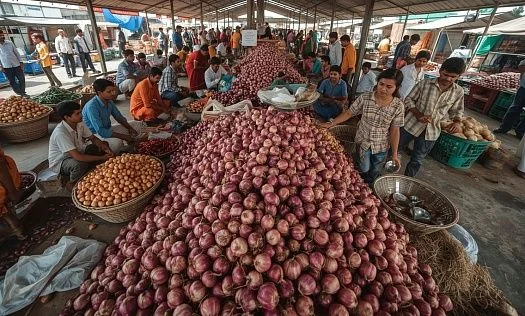 Should India Change Its Onion Storage Culture?
An evidence-based look at how controlled airflow, temperature and humidity can reduce onion storage losses in India without copying one universal storage model.
News
Should India Change Its Onion Storage Culture?
An evidence-based look at how controlled airflow, temperature and humidity can reduce onion storage losses in India without copying one universal storage model.
News
 Is rabbit breeding as a business profitable or not?
Learn how to start a profitable rabbit farming business. Breeds, housing, feeding, disease prevention, and market strategies for India, Africa, and KSA
News
Is rabbit breeding as a business profitable or not?
Learn how to start a profitable rabbit farming business. Breeds, housing, feeding, disease prevention, and market strategies for India, Africa, and KSA
News
 Agrovoltaics: The Future of Farming Powered by the Sun
Learn how solar energy and agriculture are merging through agrovoltaic technology. Discover the Insolight “Insolagrin” project - a groundbreaking solar farm that could transform global food and energy production.
Agrovoltaics: The Future of Farming Powered by the Sun
Learn how solar energy and agriculture are merging through agrovoltaic technology. Discover the Insolight “Insolagrin” project - a groundbreaking solar farm that could transform global food and energy production.
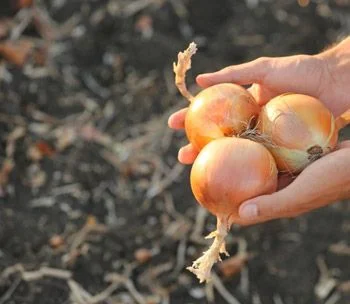 Storing Onions the Smart Way: Proven Methods That Actually Work
Onion storage isn’t guesswork - it’s a science. From choosing the right variety to managing temperature and humidity, small decisions determine whether your crop lasts weeks or months. Here’s a clear, practical guide to what truly works.
Storing Onions the Smart Way: Proven Methods That Actually Work
Onion storage isn’t guesswork - it’s a science. From choosing the right variety to managing temperature and humidity, small decisions determine whether your crop lasts weeks or months. Here’s a clear, practical guide to what truly works.

Leave your contacts and we will get back to you