Green revolution saves lives
How the Green Revolution Saved Millions of Lives - And Why the World Needs a New One
How does the Green Revolution save lives?
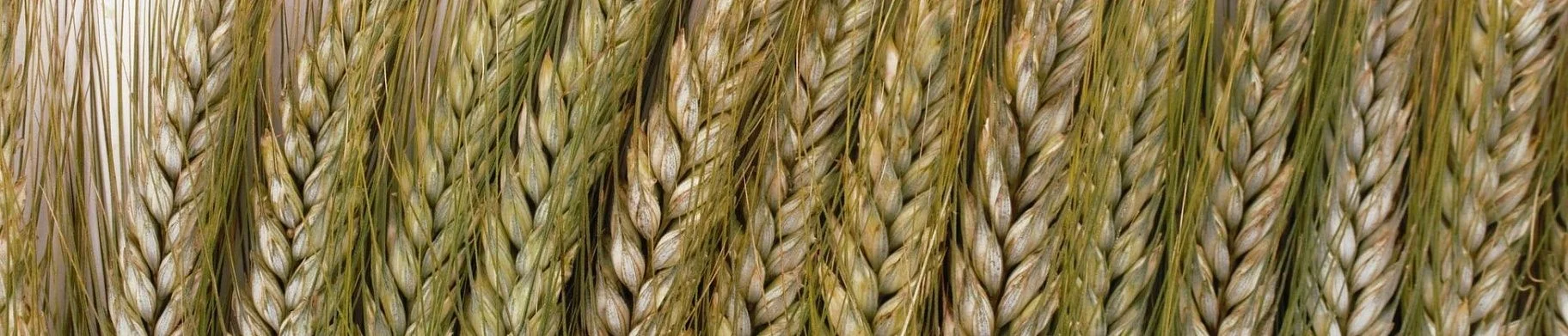
Despite its comic-book-worthy name, the Green Revolution is not a superhero from a Marvel movie. It is the global agricultural transformation that took place from the 1940s to the 1970s — a period that dramatically increased food production and reshaped the future of developing countries.
The Green Revolution introduced:
-
high-yielding crop varieties
-
improved breeding techniques
-
synthetic fertilizers and pesticides
-
irrigation expansion
-
mechanized farming technologies
Although these changes spread worldwide, the impact was strongest in developing regions such as India, Pakistan, Colombia and Mexico, where improved varieties of wheat, rice and maize became the backbone of food security. These crops were more productive, more resilient and more tolerant to pests, diseases and harsh environments — a critical breakthrough for nations facing rapid population growth.
A World That Needed More Food — Fast
One of the biggest challenges of the 20th century was feeding a rapidly growing global population.
Every day, around 400,000 children are born — roughly 4 people every second, or over 200 million every year. Each new life needs calories, nutrients and stable food systems.
In the 1920s, nearly two-thirds of the world’s population suffered from chronic hunger.
By the end of the century, that number fell to one-quarter — largely thanks to the Green Revolution.
From 1960 to 1990:
-
Wheat and rice harvests in Asia doubled
-
The average person consumed one-third more calories
-
Food shortages decreased
-
Health outcomes improved
This agricultural transformation pulled entire regions back from famine.
Did the Green Revolution Reduce Infant Mortality?
Yes — dramatically.
Researchers at the University of California analyzed data from 1961 to 2000 across multiple developing countries. They compared increases in grain production with reductions in infant mortality.
Their conclusion:
-
Infant mortality decreased by an average of 5%
-
Roughly 5 million children were saved every year by the year 2000
-
Hunger-related deaths declined as calorie availability increased
If the Green Revolution saved 5 million children per year before 2000, then by 2021 the total number of lives saved is likely in the tens or even hundreds of millions.
Food is not just sustenance — it is survival.
Criticism and Environmental Concerns
The Green Revolution had its downsides:
-
soil degradation
-
overuse of synthetic fertilizers and pesticides
-
chemical runoff into water and soil
-
reduced nutritional quality in some crops
Despite these issues, most scientists agree:
the benefits still outweighed the costs — especially in regions where hunger was the leading cause of death.
The Future: The World Needs a Second Green Revolution
The UN estimates that by 2050, the world’s population will grow by 2 billion people, more than half of them in Africa.
Without innovation in agriculture, current food systems will not keep up.
Experts predict:
-
If high-yield crops spread widely across Africa, infant mortality could drop by 31%
-
Climate-resilient agriculture will be critical
-
New technologies must avoid the mistakes of the past
Key Principles of a New Green Revolution
1. Move away from heavy chemical use
Adopt biogenic, organic and sustainable fertilizers.
2. Rely on genetic engineering and advanced breeding
Develop new crop varieties that:
-
resist pests and diseases
-
withstand extreme weather
-
deliver higher yields with fewer inputs
3. Replace harmful pesticides
Shift to biological protection systems and integrated pest management.
4. Strengthen policy and investment
Governments must support research, irrigation, storage infrastructure, farmer training and agri-tech development.
Only by combining technology, sustainability and policy support can humanity produce enough food beyond 2050.
Want to Learn More About Post-Harvest Technology and Smart Farming?
Our specialists design state-of-the-art storage solutions that support the next generation of climate-resilient agriculture.
📞 Call: +971 50 437 7119
📧 Email: info@agrovent.com



More articles
 New video: We take care of quality of your life
Take a part of our goals. Your choices matter.
News
New video: We take care of quality of your life
Take a part of our goals. Your choices matter.
News
 How to Store Potatoes Properly: 7 Proven Rules for Long-Term Preservation
Discover how to store potatoes for months without loss. Learn how to sort, dry, cool, and manage humidity to keep your harvest healthy and fresh with Agrovent’s climate control systems.
News
How to Store Potatoes Properly: 7 Proven Rules for Long-Term Preservation
Discover how to store potatoes for months without loss. Learn how to sort, dry, cool, and manage humidity to keep your harvest healthy and fresh with Agrovent’s climate control systems.
News
 Existing building reconstruction
The question of the necessity of reconstruction should be studied in a complex, because its cost can be equal to the cost of the building a new one...
News
Existing building reconstruction
The question of the necessity of reconstruction should be studied in a complex, because its cost can be equal to the cost of the building a new one...
News
 Maximum value - minimal environmental impact: innovation in protein production
What unexpected sources of plant protein could become commonplace very soon?
News
Maximum value - minimal environmental impact: innovation in protein production
What unexpected sources of plant protein could become commonplace very soon?
News
 Post-harvest processing and cooling of berries
How to extend the shelf life of a berry crop?
News
Post-harvest processing and cooling of berries
How to extend the shelf life of a berry crop?
News
 Container storage
Discover the advantages of container vegetable storage: low spoilage, fast logistics, and stable climate control. Ideal for carrots, cabbage, potatoes and onions
Container storage
Discover the advantages of container vegetable storage: low spoilage, fast logistics, and stable climate control. Ideal for carrots, cabbage, potatoes and onions

Leave your contacts and we will get back to you