Damper Drives & Gearboxes for Storage Ventilation

Agrovent damper drives for potato and vegetable storage ventilation. Mechanical selection, control integration, position feedback and commissioning.

Damper drives and ventilation automation

Turn a control command into reliable damper movement

Agrovent drive systems connect agricultural climate automation to the mechanical equipment that controls the air path. The motor, gearbox, shaft, linkage and damper must work as an assembly, with a control sequence matched to the storage process.

In a potato store, moving a flap is not an isolated task. Fresh-air intake, recirculation and exhaust must be coordinated with the fans and the selected operating mode. A correctly specified drive helps the control system put the air-handling equipment into the required position.

Agrovent brings drive selection and integration together with control-panel engineering and climate controllers.

Discuss your damper drive
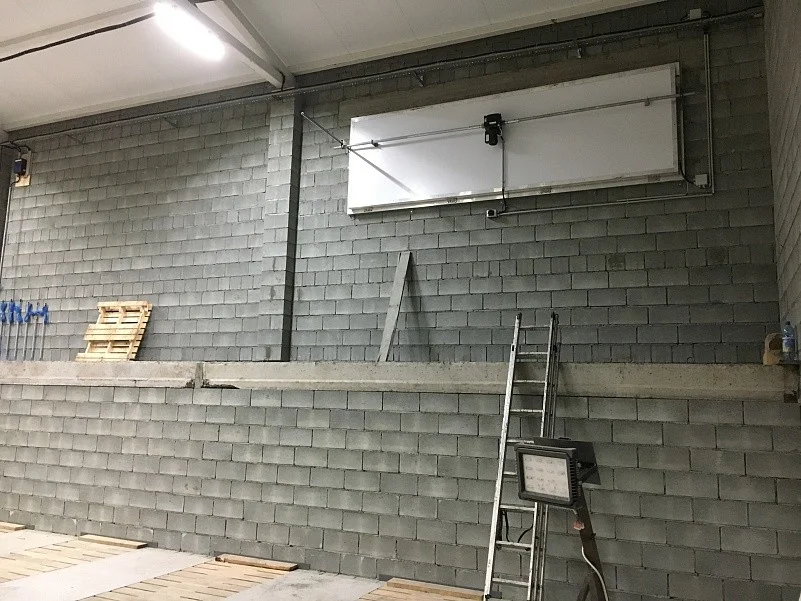
Motorized insulated ventilation damper in the closed position in a potato storage project
Motorized ventilation damper in Agrovent's 3,500-tonne bulk potato storage project.

One drive assembly, several engineering responsibilities

Mechanical movement

The gearbox changes the motor's output speed and torque. The shaft or linkage transfers that movement to the flap. Mounting stiffness, alignment and available travel determine whether the assembly moves freely throughout its working range.

Position control

The controller requests a movement or position. Depending on the selected equipment, end switches or a position signal can report the result. A command alone does not prove that the damper has reached its destination.

Process coordination

Drive operation is part of the ventilation sequence. The project defines the relationship between damper position, fan operation, outside-air conditions and the storage mode, including what happens when a required signal is missing.

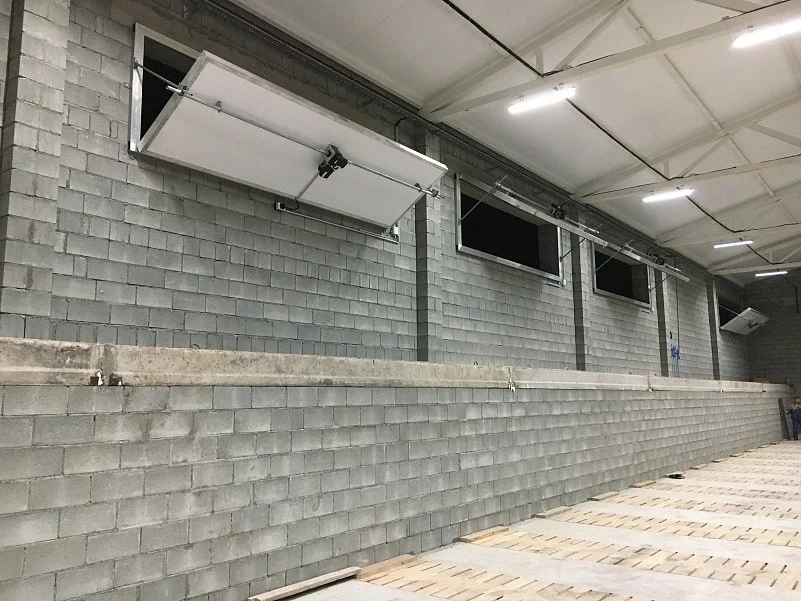
Open insulated ventilation dampers with drive mechanisms and linkages above the potato storage air channel
Open dampers and their mechanical drive arrangement in the same 3,500-tonne potato storage installation.

Ventilation control for potato and vegetable storage

Storage ventilation may use outside air, recirculated air or a combination of both. The permitted operating modes depend on the crop, its condition, the storage stage and the available equipment.

The automation must coordinate the relevant air paths. Opening an inlet without considering the exhaust route or the fan sequence can produce a different operating condition from the one intended. The commissioning process therefore checks the complete sequence, not just whether each motor turns.

Temperature, humidity and other process measurements inform the control strategy through the controller. The gearbox does not measure these conditions itself. See Agrovent sensors and our vegetable storage solutions.

Sealing is also an assembly property: flap geometry, frame, seals, alignment and the closing arrangement all matter. A drive alone cannot guarantee an airtight opening or a particular reduction in storage losses.

Select the drive around the actual mechanism

Damper size is only the starting point. The selection brief should include the moving mass, hinge arrangement, required travel, linkage geometry and the loads acting on the assembly during operation.

The available torque must be assessed across the movement, with particular attention to starting, closing and any position where the linkage has an unfavourable mechanical advantage. A larger motor is not a remedy for a binding shaft or an incorrectly mounted flap.

The mounting arrangement should provide a stable reaction point and allow inspection of the couplings, fasteners and travel limits. Access for replacement should be considered before the surrounding equipment and building finishes are completed.

Electrical ratings and performance limits are confirmed for the selected drive. Torque, supply voltage, travel time, enclosure protection and operating temperature are not universal specifications for every Agrovent installation.

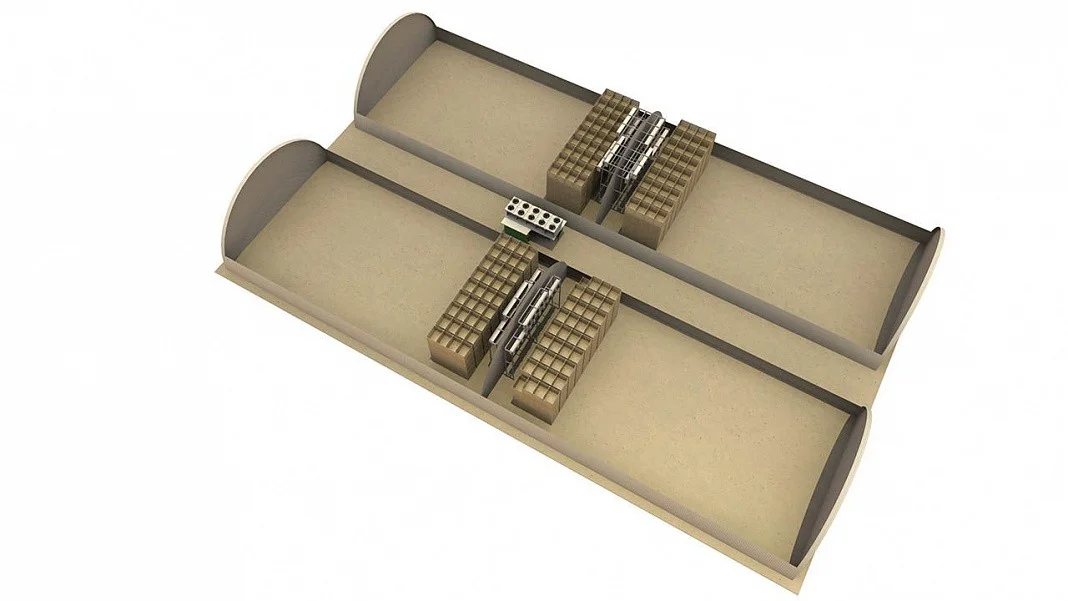
Project rendering of an insulated ventilation damper showing mechanical drive components
Engineering rendering from Agrovent's 12,000-tonne potato storage project. This is a project visualisation, not a photograph.

What we establish before selecting equipment

Damper and installation

  • Opening dimensions, flap construction and installation orientation.
  • Required stroke or angle and the proposed transmission mechanism.
  • Mounting points, available space and maintenance access.
  • Environmental exposure, condensation and cleaning conditions.

Electrical and control interfaces

  • Available supply and the selected motor's electrical requirements.
  • Required operating mode and compatible controller outputs.
  • End-position detection or position feedback, where specified.
  • Cable routes, local isolation and control-panel interfaces.

Operating behaviour

  • Required travel time and expected frequency of movement.
  • Fan and damper sequencing for each operating mode.
  • Response to power loss, signal loss and interrupted travel.
  • Manual operation, alarms and the agreed restart procedure.
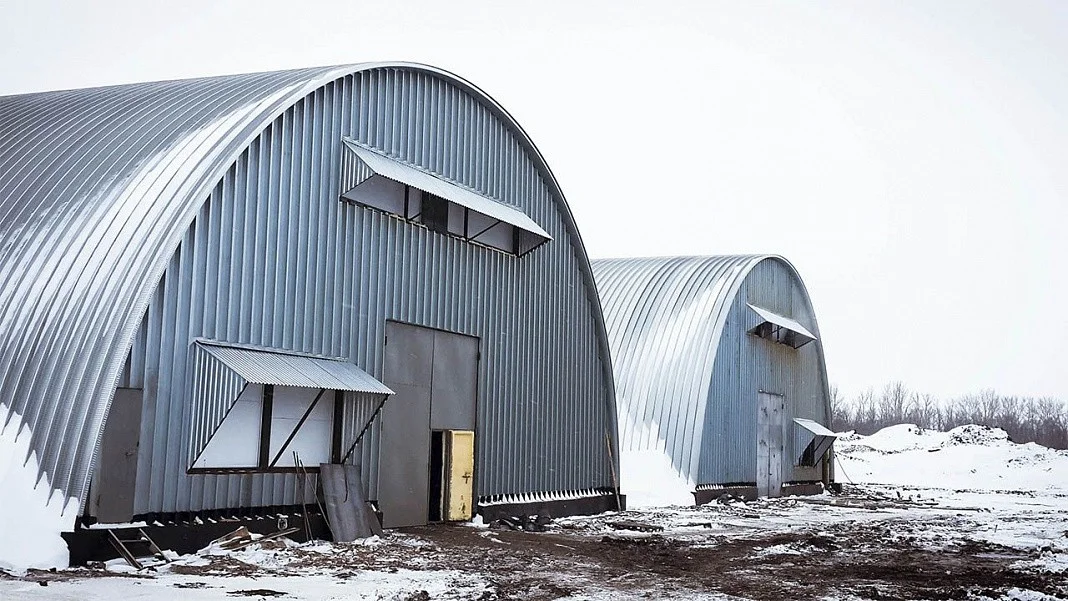
External ventilation flap installation on potato storage buildings in winter
External ventilation openings in Agrovent's 12,000-tonne potato storage project. The installation context matters when specifying drive operation and protection.

Define power-loss behaviour instead of assuming it

Not every drive returns automatically when power is lost. The required final position and the means of reaching it must be established for the actual application. A backup supply, a suitable return mechanism or another engineered arrangement may be required.

The published 12,000-tonne potato storage project describes backup power and automatic closure of the inlet and exhaust dampers following a power interruption. That is a documented solution for that project, not a standard feature promised for every gearbox.

The design must also distinguish loss of electrical power from loss of the control signal or an obstruction that prevents movement. These events can require different detection methods and responses.

On restoration of power, the controller should return to operation according to the agreed sequence. Operators need to know which positions are confirmed and whether inspection or acknowledgement is required.

Installation, commissioning and ongoing service

  1. Check the mechanical assembly. Confirm mounting, shaft alignment, linkage clearance and free movement using the equipment manufacturer's procedure.
  2. Verify direction and travel. Match the physical opening and closing directions to the controller commands and set the permitted limits.
  3. Check feedback. Confirm that each switch or position signal refers to the correct damper and corresponds to its physical state.
  4. Test the operating sequence. Check the agreed relationship with fans, operating modes, alarms and restart behaviour.
  5. Record the handover settings. Keep equipment identification, wiring, limits, control settings and service instructions with the installation documentation.

Service should distinguish an electrical fault from a mechanical restriction or an incorrect command. Information about the requested position, actual feedback and observed movement makes troubleshooting more effective.

Inspection intervals and maintenance tasks follow the selected equipment's instructions and site conditions. Work on moving parts requires suitable isolation; manual operation must not expose staff to unexpected automatic movement.

Connect the mechanism to the wider control system

Drive selection belongs alongside ventilation equipment, sensors, controllers and the electrical design. For a storage installation combining ventilation and cooling, the operating philosophy should define how those systems interact.

Where the required signals are available, monitoring and climate intelligence can help compare requested movements, position feedback and process conditions. Remote monitoring does not replace the local control and protective functions.

Questions about ventilation drives

Is a gearbox the same as a complete actuator?

No. A gearbox is the mechanical reduction component. A complete drive assembly also involves the motor, mounting and transmission, and may include limit switches or position feedback. The supply scope should identify exactly what is included.

Can a drive be connected to an existing controller?

Compatibility must be checked against the actual controller, drive and wiring. Supply requirements, output type, feedback and operating logic should be reviewed before a replacement or upgrade is confirmed.

Will the damper close automatically during a power cut?

Only if the selected assembly and power-loss strategy provide that function. The required position and return method are specified and tested for the project.

What should I send for a replacement or new installation?

Send photographs of the complete mechanism and existing nameplates, damper dimensions, available drawings, supply details and controller information. Include the required operation, any fault symptoms and the site environment.

Start with the damper, not just the motor

Share your storage layout or existing installation with Agrovent. We can review the drive requirement as part of the mechanical and automation system and define the next engineering step.

Discuss your storage ventilation project
Any questions? We are always in touch!

Leave your contacts and we will get back to you

img: test 123