To deep rip or not?

Storage Quality Starts in the Field - Not in the Warehouse
Most discussions about post-harvest quality focus on refrigeration, ventilation, and controlled-atmosphere systems. But after years of watching storages perform differently under the same technology, one conclusion is clear:
Storage quality is determined in the field — weeks or even months before harvest.
Breaking the Plow Pan = Stronger Roots, Healthier Crops
When the chisel plow enters the field, the goal isn’t just loosening the soil - it’s breaking the plow pan, the dense compacted layer that blocks root growth.
Once this layer is disrupted:
-
Soil begins to breathe.
-
Moisture moves deeper rather than stagnating on the surface.
-
Roots access steady nutrition and consistent water.
-
Plants grow with less stress, fewer fluctuations, and more uniform size.
For potatoes and onions, this is the foundation of what we call “storability”: firmness, strong skins, and fully matured tissues.
Deep Rooting = Better Use of Water & Micronutrients
In loosened soil:
-
Roots grow deeper.
-
Plants absorb more calcium, magnesium, boron, and potassium.
-
Heat waves and sudden temperature swings cause fewer growth shocks.
The result? Smooth, even development and stronger cell structure - exactly what determines whether the crop survives storage or collapses in the first weeks.
Fewer Mechanical Injuries During Harvest
Soil structure affects much more than plant growth.
In compacted soil, hard clods strike bulbs and tubers during harvest, causing:
-
cracks,
-
bruises,
-
cuts,
-
and micro-injuries.
Every one of these becomes an entry point for pathogens in storage.
Well-loosened soil means smoother lifting, fewer impacts - and drastically fewer storage losses.
For Onions: Soil Structure vs. Black Mold (Aspergillus niger)
Black mold is the biggest enemy of onions in warm climates. And the infection often starts before harvest, especially in:
-
compacted soil,
-
fields with stagnant moisture,
-
uneven aeration,
-
delayed curing.
In loose, well-drained soil:
-
onion necks close tightly,
-
dry skins form correctly,
-
micro-cracks are minimal,
-
and A. niger has no entry points.
Quality at harvest = fewer tons lost in storage.
For Potatoes: Mature, Tough Skin = Long-Term Protection
Proper soil loosening supports:
-
uniform tuber sizing,
-
earlier skin set,
-
higher dry matter,
-
and a tough, fully matured periderm.
No storage chamber — even the most advanced one — can compensate for a poorly matured tuber.
The Hidden Truth of Storage Economics
A chisel plow cannot cool, ventilate, or dehumidify.
But it does something no storage facility can ever do:
It gives the crop the internal strength needed to survive months of storage.
And in the end, this determines:
-
how many tons rot,
-
how many dry out,
-
and how many reach the market in perfect condition.
For me, it’s one continuous chain:
Field → Post-Harvest Handling → High-Quality Storage → A Consistent, Sellable Crop.



More articles
 Apple Storage: How Controlled-Atmosphere (CA) Technology Extends Shelf Life and Profitability
Harvesting apples is only half the job - keeping them fresh is where the real challenge begins. Learn how modern cooling and Controlled-Atmosphere (CA) storage can protect your apples from spoilage, preserve nutrients, and keep your profits growing all year long.
Harvest
Apple Storage: How Controlled-Atmosphere (CA) Technology Extends Shelf Life and Profitability
Harvesting apples is only half the job - keeping them fresh is where the real challenge begins. Learn how modern cooling and Controlled-Atmosphere (CA) storage can protect your apples from spoilage, preserve nutrients, and keep your profits growing all year long.
Harvest
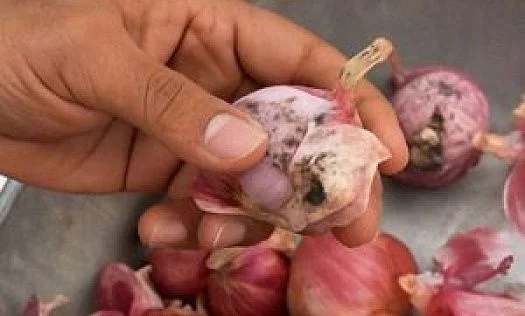 Black Mold in Onion Storage: Aspergillus niger Risks and Handling
Black mold in stored onions is commonly associated with Aspergillus niger. Learn how moisture, condensation and handling damage increase risk, and what storage managers should check before deciding how to handle an affected lot.
News
Black Mold in Onion Storage: Aspergillus niger Risks and Handling
Black mold in stored onions is commonly associated with Aspergillus niger. Learn how moisture, condensation and handling damage increase risk, and what storage managers should check before deciding how to handle an affected lot.
News
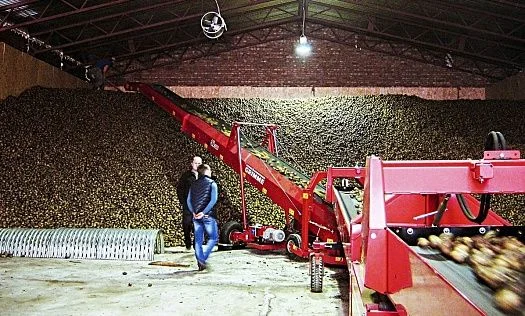 Bulk storage
Learn how bulk storage works: airflow design, microclimate control, perforated pipes, and slotted floors. Ideal for potatoes, onions, and beets in India, Africa, and Saudi Arabia.
Microclimate
Bulk storage
Learn how bulk storage works: airflow design, microclimate control, perforated pipes, and slotted floors. Ideal for potatoes, onions, and beets in India, Africa, and Saudi Arabia.
Microclimate
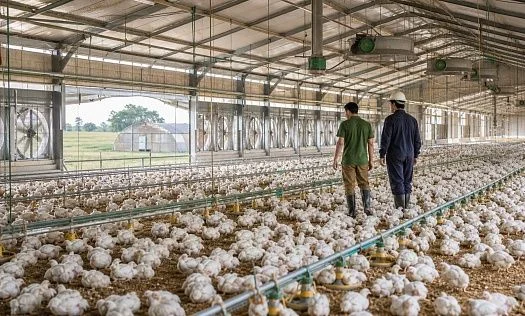 Why Poultry Data Systems Miss What the Birds Are Telling Us
Poultry production ranges from integrated networks to independent and family-run farms. Across these models, sensors measure the building — but not always how the flock experiences it.
News
Why Poultry Data Systems Miss What the Birds Are Telling Us
Poultry production ranges from integrated networks to independent and family-run farms. Across these models, sensors measure the building — but not always how the flock experiences it.
News
 New video: We take care of quality of your life
Take a part of our goals. Your choices matter.
News
New video: We take care of quality of your life
Take a part of our goals. Your choices matter.
News
 How to Extend Potato Shelf Life: 8 Expert Tips for Long-Term Storage
Discover how to store potatoes safely and profitably in warm or variable climates. Learn eight proven methods to prevent spoilage, reduce losses, and extend shelf life - from ventilation and temperature control to CO2 management and modern storage design.
How to Extend Potato Shelf Life: 8 Expert Tips for Long-Term Storage
Discover how to store potatoes safely and profitably in warm or variable climates. Learn eight proven methods to prevent spoilage, reduce losses, and extend shelf life - from ventilation and temperature control to CO2 management and modern storage design.

Leave your contacts and we will get back to you