Careers in agriculture

Agriculture is no longer just tractors and fields. From AI engineers to plant scientists and sustainability experts - here are the careers shaping the future of global food production.
Modern Agriculture: A High-Tech Industry Full of Careers
Gone are the days when working in agriculture meant farming, milking cows, or driving a tractor. Today, agriculture is one of the most technologically advanced global industries, integrating engineering, AI, data science, biotechnology, sustainability and robotics.
A single search reveals 50+ agricultural careers - and that’s not even counting the word “farmer”.
Below are some of the most in-demand roles shaping the future of food systems.
Top Careers in Modern Agriculture
Agricultural Engineer
Key functions:
-
Designing machinery and smart equipment
-
Automating farm processes
-
Improving sustainability and resource use
-
Planning agricultural construction projects
-
Advising businesses on efficiency and environmental impact
Soil & Plant Scientist
What they do:
-
Study soils, microorganisms and nutrient cycles
-
Develop high-yield crop varieties
-
Test alternative cultivation methods and genetic technologies
Agricultural Products Sales Specialist
Focus:
-
Selling equipment, seeds, fertilisers, animal feed
-
Providing technical consultations to producers
Animal Geneticist
Tasks:
-
Improving livestock genetics
-
Supporting breeding programs
-
Increasing productivity through safe selection methods
Environmental Scientist
Responsibilities:
-
Monitoring environmental risks
-
Developing sustainability strategies
-
Solving pollution and land degradation issues
Agronomist
One of the most critical roles in the food system.
Functions:
-
Advising producers on soil health and crop selection
-
Improving yields
-
Managing fertilisation and irrigation strategies
Precision Farming Specialist
Tasks:
-
Supporting farms using GPS, sensors, drones, AI
-
Calibrating equipment
-
Training staff in data-driven farming
Beyond the Field: Tech Careers Transforming Agriculture
Support industries around agriculture are accelerating. AI, robotics and IoT are redefining how food is produced, monitored and sold.
New high-demand fields include:
-
Robotics engineers
-
Data analysts
-
Machine learning specialists
-
Software developers
-
Drone pilots
-
IoT integrators
As agriculture faces climate shifts, the need for specialists in biology, chemistry, physics, meteorology and soil science is at an all-time high.
Changing Perceptions: Agriculture Is Not Just Farming
Many people still believe agriculture = farming.
In reality, 80% of the agri-food value chain happens beyond the farm gate — research, logistics, processing, marketing, sustainability, biotechnology and B2B technologies.
The challenge for education systems worldwide is to correct these outdated perceptions.
Young people often see agriculture as low-tech or low-income, even though the industry today offers some of the fastest-growing and highest-paying STEM careers.
Schools, colleges and universities increasingly introduce:
-
Drone operations
-
Robotics labs
-
AI-based crop modelling
-
Sustainable farming modules
-
AgriTech entrepreneurship programs
The Future Workforce: Skills That Matter
To thrive in tomorrow’s agriculture, professionals need:
Core future skills:
-
Systems thinking
-
Digital literacy (interfaces, software, automation)
-
Analytical intelligence
-
Emotional competence & communication
-
Fast self-learning
-
Multitasking & adaptability
Agriculture is becoming one of the most multidisciplinary industries in the world. The people who will succeed are those who stay open to new knowledge and technologies.



More articles
 Potato storage diseases
Learn how to identify major potato storage diseases—pink rot, soft rot, silver scurf, dry rot—and prevent losses through proper diagnostics and microclimate control.
News
Potato storage diseases
Learn how to identify major potato storage diseases—pink rot, soft rot, silver scurf, dry rot—and prevent losses through proper diagnostics and microclimate control.
News
 Breathing and suffocating of sugar beet root crops during storage
Beet respiration intensity factors. Measures to prevent suffocation of root crops
News
Breathing and suffocating of sugar beet root crops during storage
Beet respiration intensity factors. Measures to prevent suffocation of root crops
News
 Green revolution saves lives
Discover how the Green Revolution increased food production, reduced hunger and lowered infant mortality in developing countries — and why a new Green Revolution is essential for India, Africa and global food security by 2050.
News
Green revolution saves lives
Discover how the Green Revolution increased food production, reduced hunger and lowered infant mortality in developing countries — and why a new Green Revolution is essential for India, Africa and global food security by 2050.
News
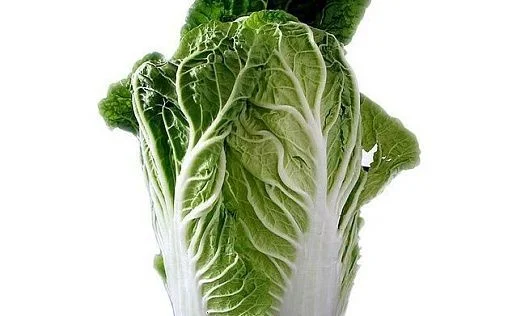 Napa cabbage. Storage parameters
earn optimal conditions for long-term napa cabbage storage: temperature, humidity, and controlled atmosphere. Ideal solutions for India, Africa, and Saudi Arabia
Harvest
Napa cabbage. Storage parameters
earn optimal conditions for long-term napa cabbage storage: temperature, humidity, and controlled atmosphere. Ideal solutions for India, Africa, and Saudi Arabia
Harvest
 Why Apples Crack in Storage and How to Prevent It?
Stable temperature, humidity, and airflow keep potatoes and apples healthy during storage - preventing sprouting, cracking, and post-harvest losses.
News
Why Apples Crack in Storage and How to Prevent It?
Stable temperature, humidity, and airflow keep potatoes and apples healthy during storage - preventing sprouting, cracking, and post-harvest losses.
News
 Existing building reconstruction
The question of the necessity of reconstruction should be studied in a complex, because its cost can be equal to the cost of the building a new one...
Existing building reconstruction
The question of the necessity of reconstruction should be studied in a complex, because its cost can be equal to the cost of the building a new one...

Leave your contacts and we will get back to you