5 Proven Ways to Improve Soil Health for Sustainable Farming and Higher Yields

Healthy Soil: The Foundation of Productive and Sustainable Agriculture
Healthy soil is a farmer’s most valuable asset. It supports crops and livestock, enriches ecosystems, stores carbon, and helps prevent erosion and flooding.
Good soil management means caring for what’s under the ground as much as what grows above it. The soil must have the right balance of water, air, and nutrients - creating a cycle where:
The farmer cares for the soil, the soil nourishes the plant, the plant feeds the animal, and the animal sustains the farmer.
That cycle is what keeps agriculture alive.
Why Soil Structure Matters
The physical structure of soil directly affects plant growth, water movement, erosion, and nutrient cycling. Soil texture - the balance between sand, silt, clay, and organic matter - determines how well roots grow and how efficiently air and water move through the ground.
Healthy soil retains water after rainfall, provides nutrients to crops, prevents nutrient leaching, and minimizes erosion. When texture or structure is poor, plants suffer - and so does yield.
Soil structure depends on multiple factors:
-
Wet/dry and freeze/thaw cycles
-
Natural soil texture
-
Livestock and animal movement
-
Farming and tillage practices
Five Practical Tips to Improve Soil Health
1. Monitor Soil’s Physical Health
Healthy soil should have good structure, a rich earthy smell, and plenty of life - especially worms and microbes.
A well-aerated soil supports aerobic conditions that help beneficial microorganisms thrive and retain carbon. These microbes convert nutrients into forms plants can easily absorb, strengthening both soil and crop health.
Regularly observe your soil’s appearance, smell, and texture throughout the year. If it’s compacted or lacks biological activity, it’s time for corrective action.
2. Increase Organic Matter
Organic matter is the engine of soil fertility. It consists of decaying plant and animal residues that feed beneficial organisms and build structure.
For every 1% increase in organic matter, one hectare of soil can store up to 70,000 additional liters of water and capture ten times more carbon from the atmosphere.
Adding organic material improves:
-
Water infiltration and moisture retention
-
Air circulation within the soil
-
Biodiversity and biological activity
-
Resistance to pests and diseases
Aim for at least 3% organic matter, verified through regular soil testing (every two years). Use compost, green manure, crop residues, or cover crops to maintain and boost soil fertility.
3. Protect and Promote Soil Biodiversity
Soil biodiversity - the vast web of microorganisms, fungi, insects, and worms - keeps soil alive. In a balanced ecosystem, the living mass below the surface should match the living mass above it.
These organisms recycle nutrients, store carbon, and reduce greenhouse gas emissions. Reducing pesticide dependency, rotating crops, and maintaining organic cover helps preserve this underground biodiversity.
4. Monitor Soil Chemistry
Healthy soil chemistry ensures that plants get the nutrients they need - but balance is key. Essential elements such as nitrogen, phosphorus, potassium, calcium, and magnesium must be available in the right proportions. Excessive use of fertilizers or agrochemicals can harm beneficial microbes and disrupt pH balance.
To manage this:
-
Conduct a comprehensive soil analysis.
-
Review pH, nutrient levels, and cation exchange capacity.
-
Work with your agronomist to fine-tune fertilizer application for optimal plant nutrition and soil health.
5. Avoid Soil Compaction
Soil compaction restricts root growth and reduces water infiltration — one of the biggest hidden problems on farms. Compacted soil keeps moisture on the surface instead of letting it soak deep, increasing erosion and reducing drought resilience.
To prevent compaction:
-
Avoid working the soil when it’s too wet.
-
Use wider tires or controlled traffic systems.
-
Rotate crops with deep-rooting plants to naturally loosen the subsoil.
Healthy, well-structured soil allows deep rooting, balanced moisture, and thriving microbial life — creating the perfect conditions for strong crops.
Soil Health Is the Start of Crop Storage
Every successful harvest starts long before storage — it begins in the field. Healthy soil improves crop quality, nutrient content, and even shelf life after harvest.
If you’re planning to invest in modern vegetable or fruit storage facilities, start by investing in your soil. Agrovent helps farmers design sustainable storage and climate-control systems that work hand-in-hand with healthy soil management.
📞 Call: +971 50 437 7119
📧 Email: info@agrovent.com



More articles
 Your own turkey breeding business for meat
News
Your own turkey breeding business for meat
News
 Bulk storage
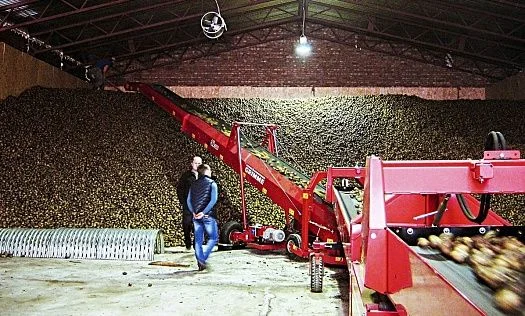
Learn how bulk storage works: airflow design, microclimate control, perforated pipes, and slotted floors. Ideal for potatoes, onions, and beets in India, Africa, and Saudi Arabia.
News
Bulk storage
Learn how bulk storage works: airflow design, microclimate control, perforated pipes, and slotted floors. Ideal for potatoes, onions, and beets in India, Africa, and Saudi Arabia.
News
 How to prepare the vegetable storehouse for the potato storage season?
Learn how to prepare storage facilities, manage curing, prevent diseases, and handle potatoes correctly to ensure long-term quality and minimal losses
News
How to prepare the vegetable storehouse for the potato storage season?
Learn how to prepare storage facilities, manage curing, prevent diseases, and handle potatoes correctly to ensure long-term quality and minimal losses
News
 Container storage of products
What is container storage and its benefits
News
Container storage of products
What is container storage and its benefits
News
 What is vegetable drying and dew point?
Learn how to properly dry onions, potatoes and other vegetables before storage. What affects drying - temperature, humidity, dew point, airflow - and how to prevent crop losses using correct microclimate management
News
What is vegetable drying and dew point?
Learn how to properly dry onions, potatoes and other vegetables before storage. What affects drying - temperature, humidity, dew point, airflow - and how to prevent crop losses using correct microclimate management
News
 How will the ban on chlorprofam affect the potato market?
Analysts predict that a ban on chlorprofam will pose additional challenges for European potato producers.
How will the ban on chlorprofam affect the potato market?
Analysts predict that a ban on chlorprofam will pose additional challenges for European potato producers.

Leave your contacts and we will get back to you