


CO2 Control in Vegetable Storage Chambers
Fresh crops continue to breathe after harvest. In a closed potato, onion, carrot or cabbage storage chamber, this biological process increases carbon dioxide concentration, especially near the lower zones of the room. If CO2 is not removed in time, the storage atmosphere becomes unstable: respiration products accumulate, air exchange becomes less predictable and crop quality can suffer during long-term storage.
Agrovent's CO2 removal system is designed as a dedicated exhaust circuit for vegetable storage facilities. It monitors carbon dioxide concentration, removes air from the zone where CO2 normally accumulates and helps keep the chamber atmosphere within the selected operating range without forcing the main active ventilation system to run every time gas correction is needed.
How the System Works
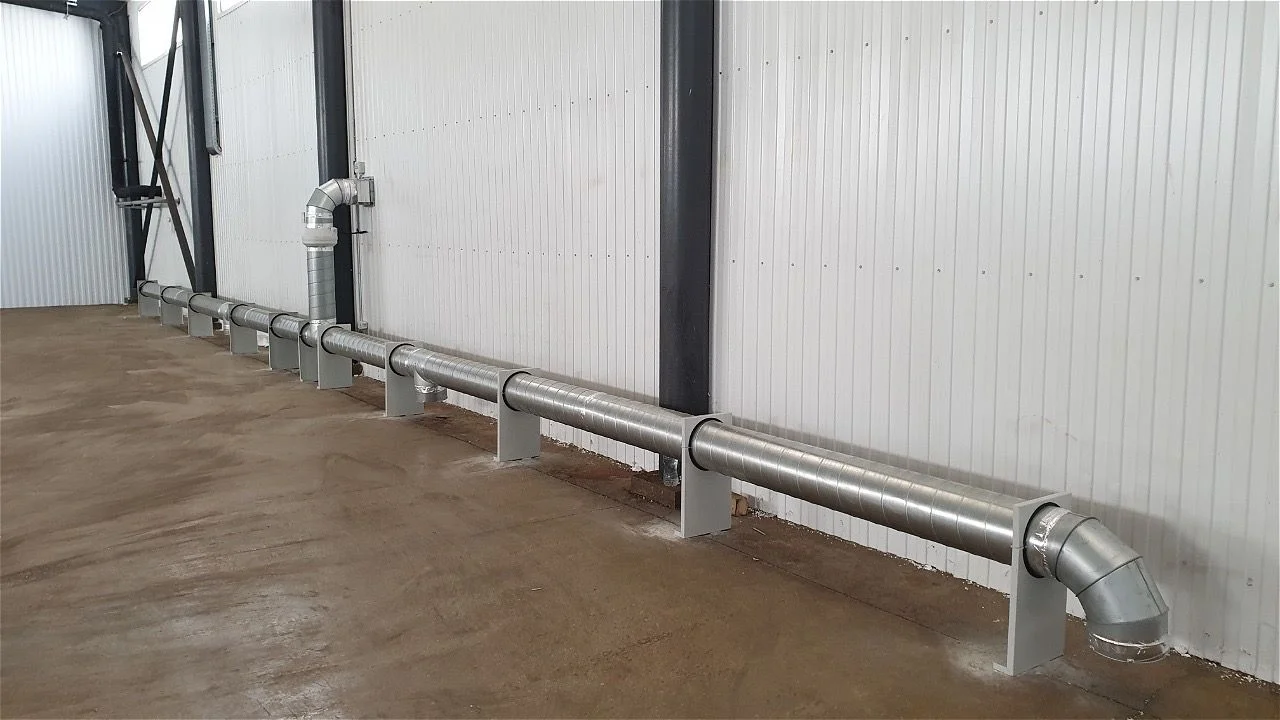
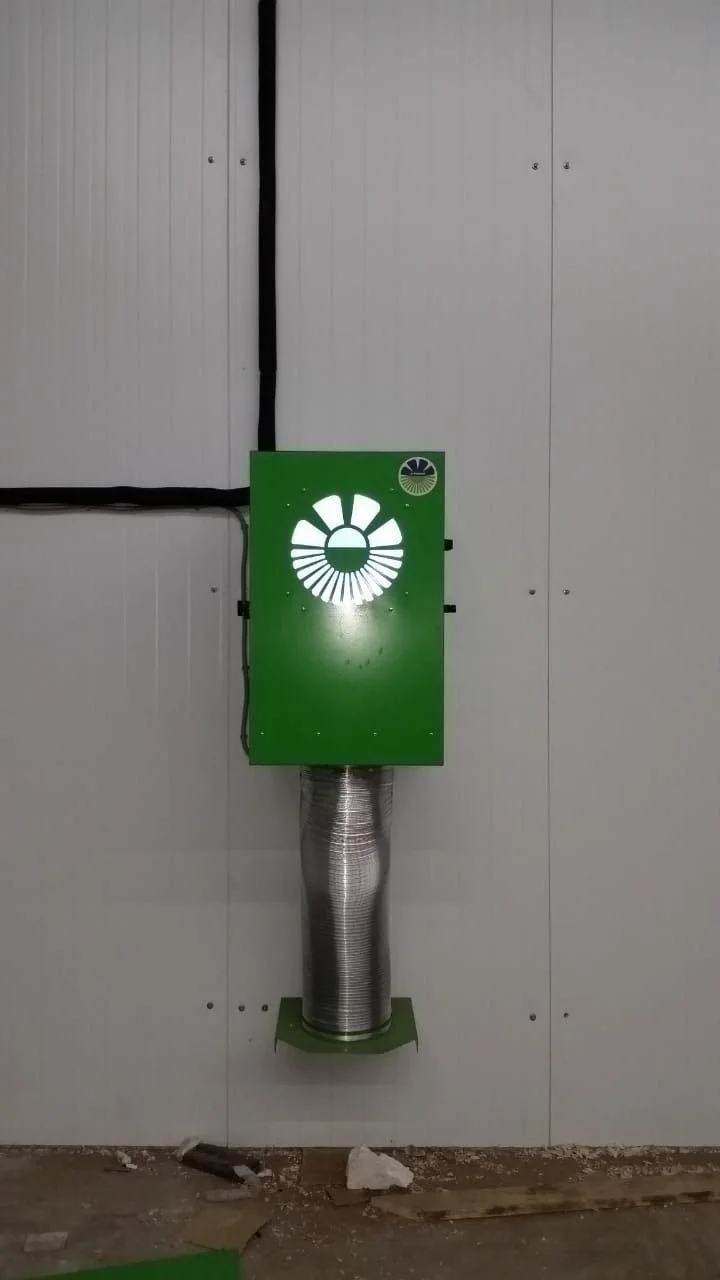
A CO2 sensor is installed in the storage room according to the chamber geometry, crop type and expected gas accumulation zones. When the measured concentration reaches the configured threshold, the controller starts the extraction fan. The duct network takes air from the lower part of the chamber and discharges it outside the storage room through a controlled exhaust path.
This approach is different from using the main ventilation cycle for every correction. Main ventilation is usually responsible for drying, curing, cooling, air distribution and humidity management. CO2 removal works as a narrower control layer: it solves the gas-concentration problem while reducing unnecessary disturbance of temperature and humidity.
- CO2 monitoring: the sensor tracks carbon dioxide concentration inside the storage room.
- Automatic start: the controller activates extraction when the configured threshold is reached.
- Lower-zone extraction: air is removed from the part of the chamber where CO2 tends to accumulate.
- Controlled discharge: the exhaust route removes gas-rich air through ductwork, fan sections and wall connections.
- Microclimate protection: targeted gas removal helps avoid unnecessary temperature and humidity disturbance.
- System integration: the unit is coordinated with ventilation, dampers and the general storage-control strategy.
Engineering Composition
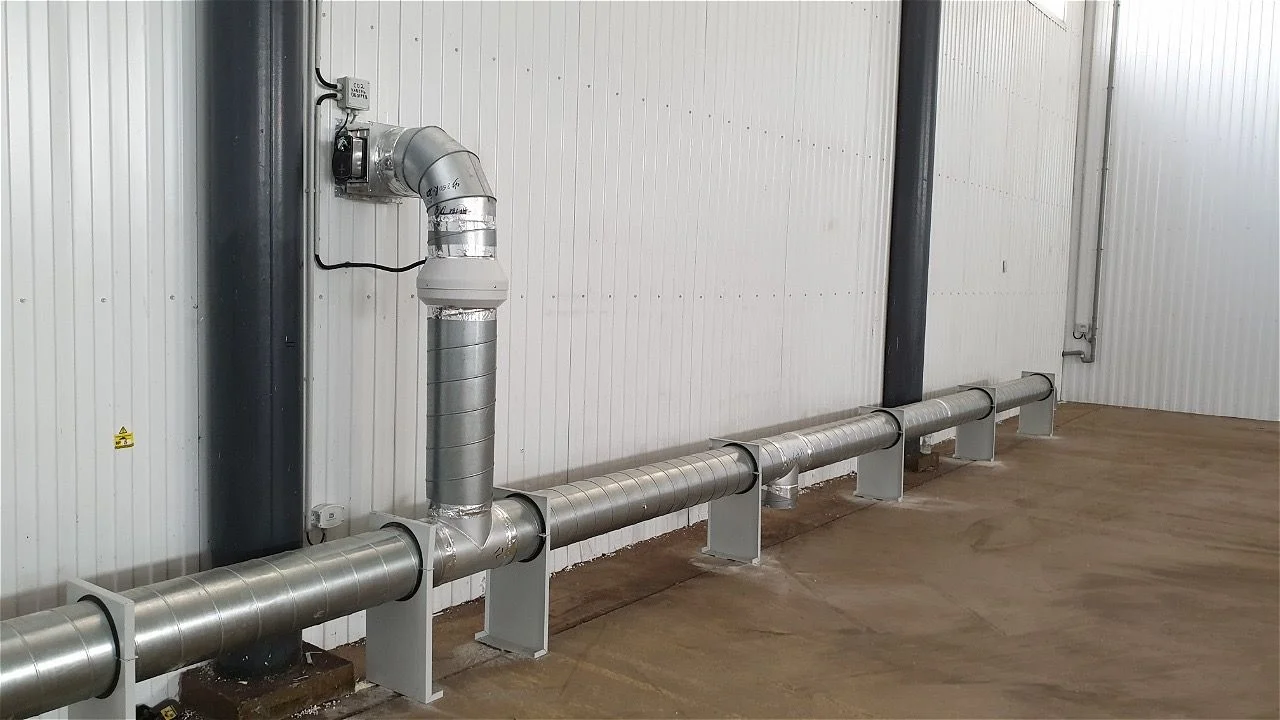
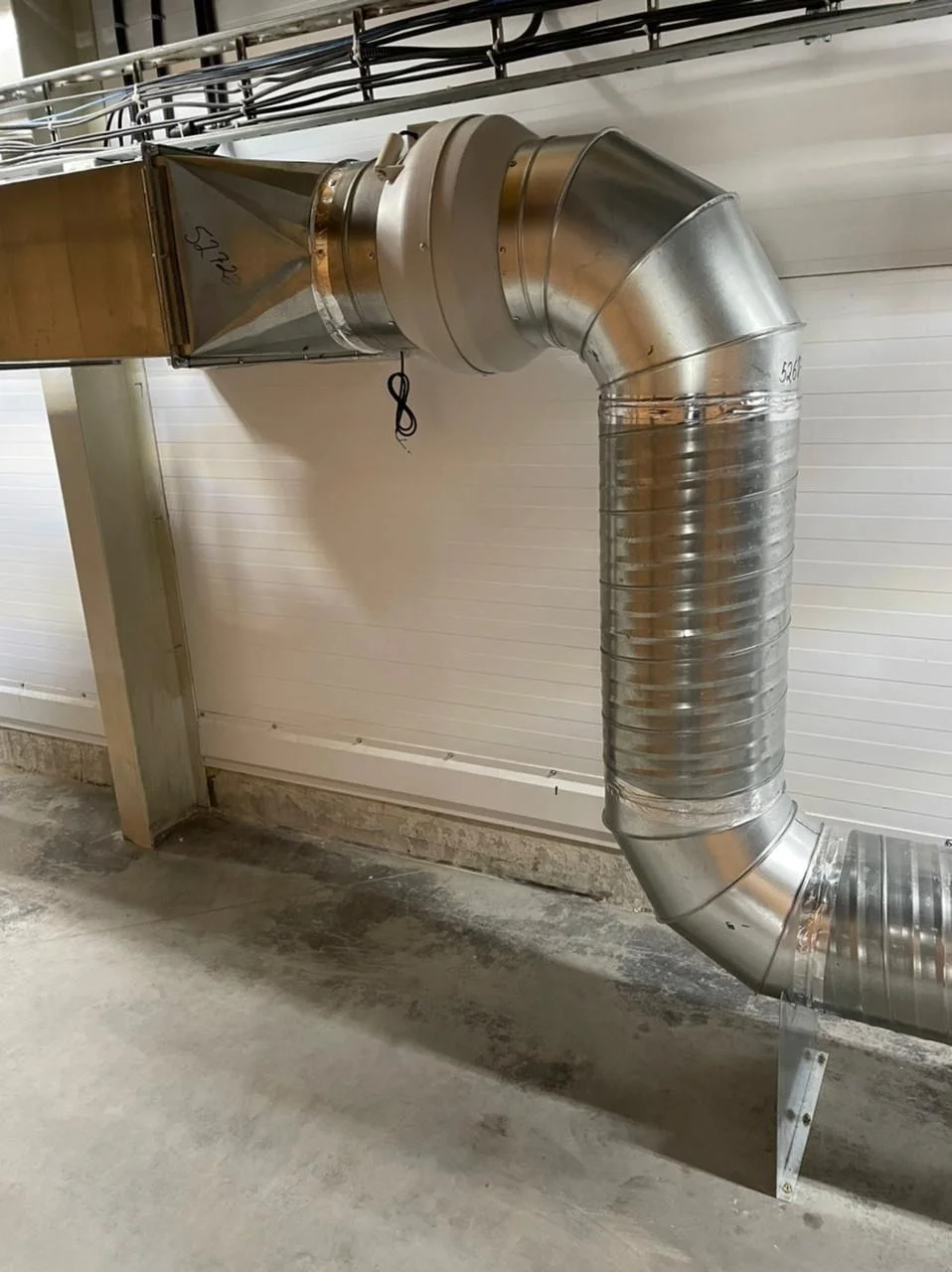
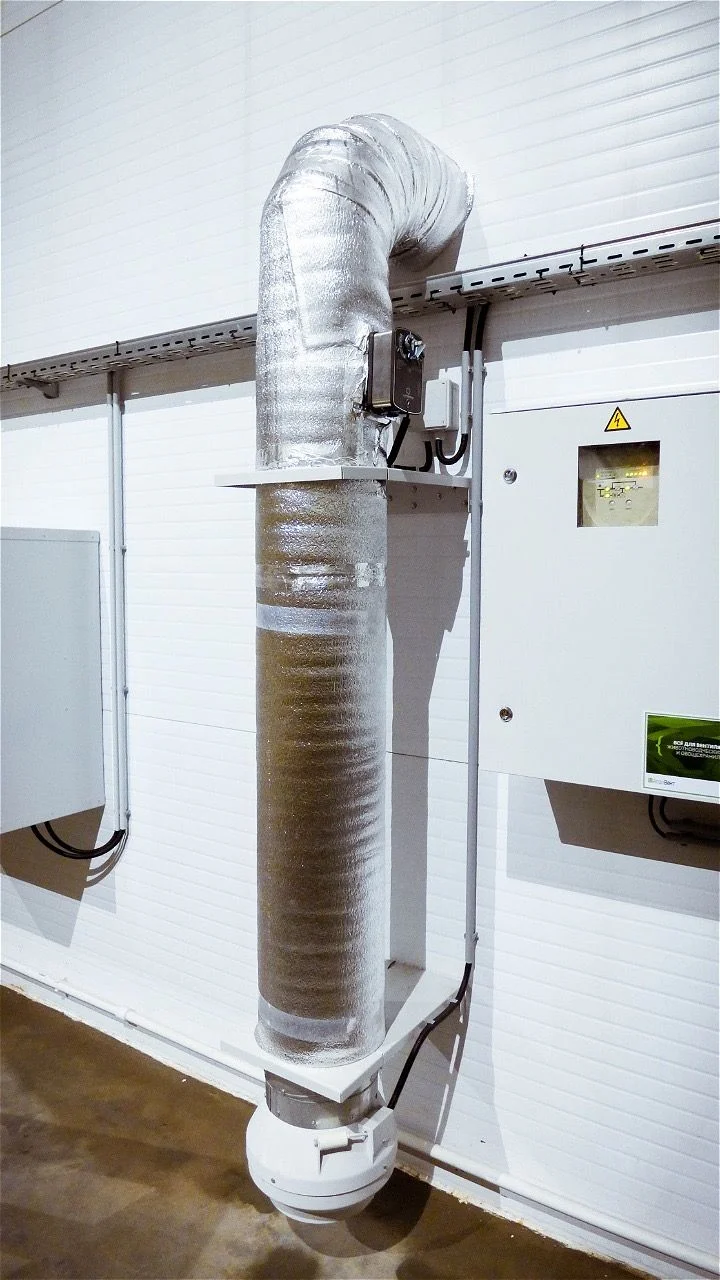
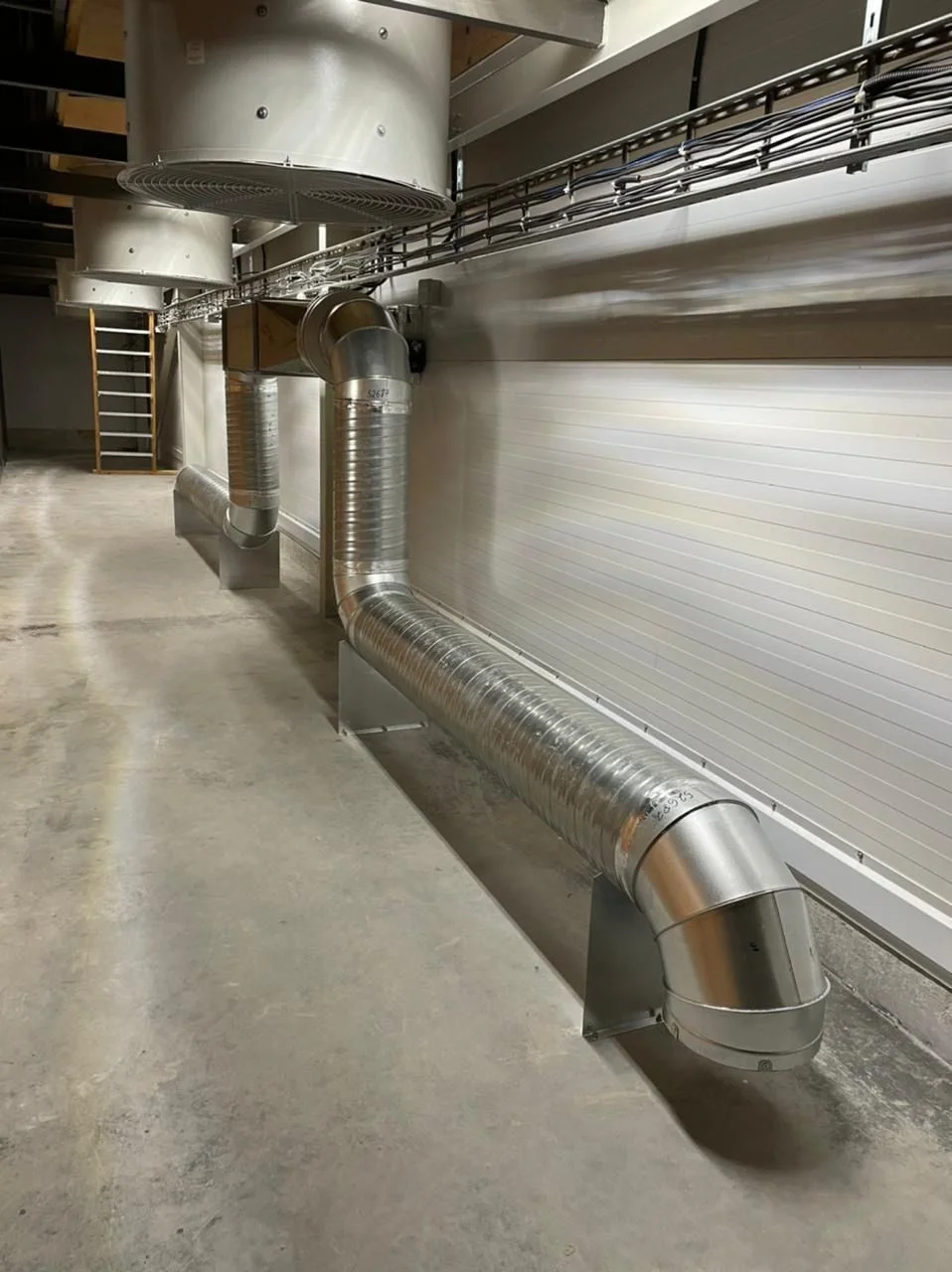
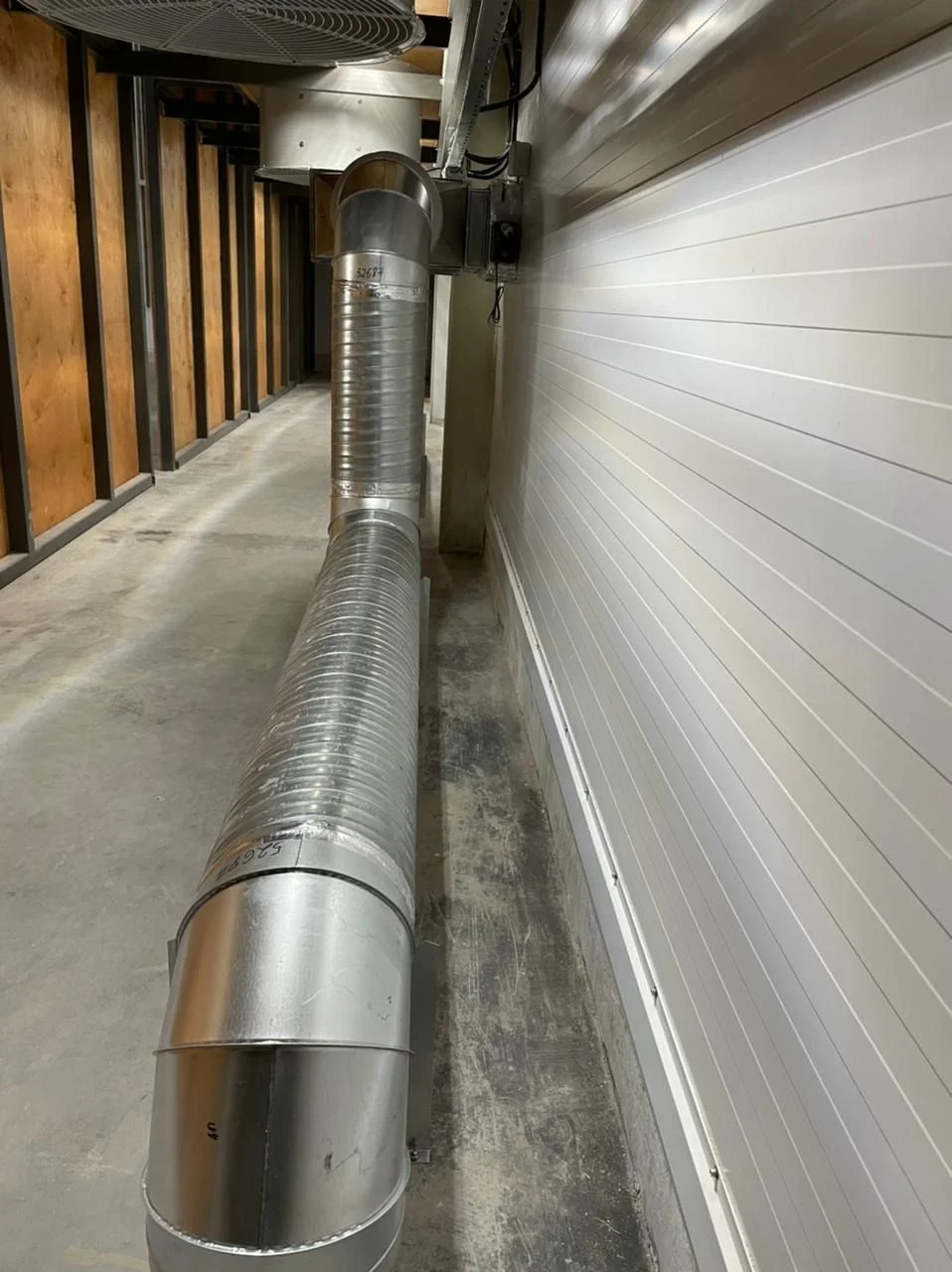
A typical system includes a CO2 sensor, controller, exhaust fan, galvanized ductwork, chamber-side intake points, wall or roof discharge sections, supports, transitions and electrical connection elements. The exact configuration is selected after checking the chamber volume, crop loading method, storage mode, location of service corridors and available exhaust path.
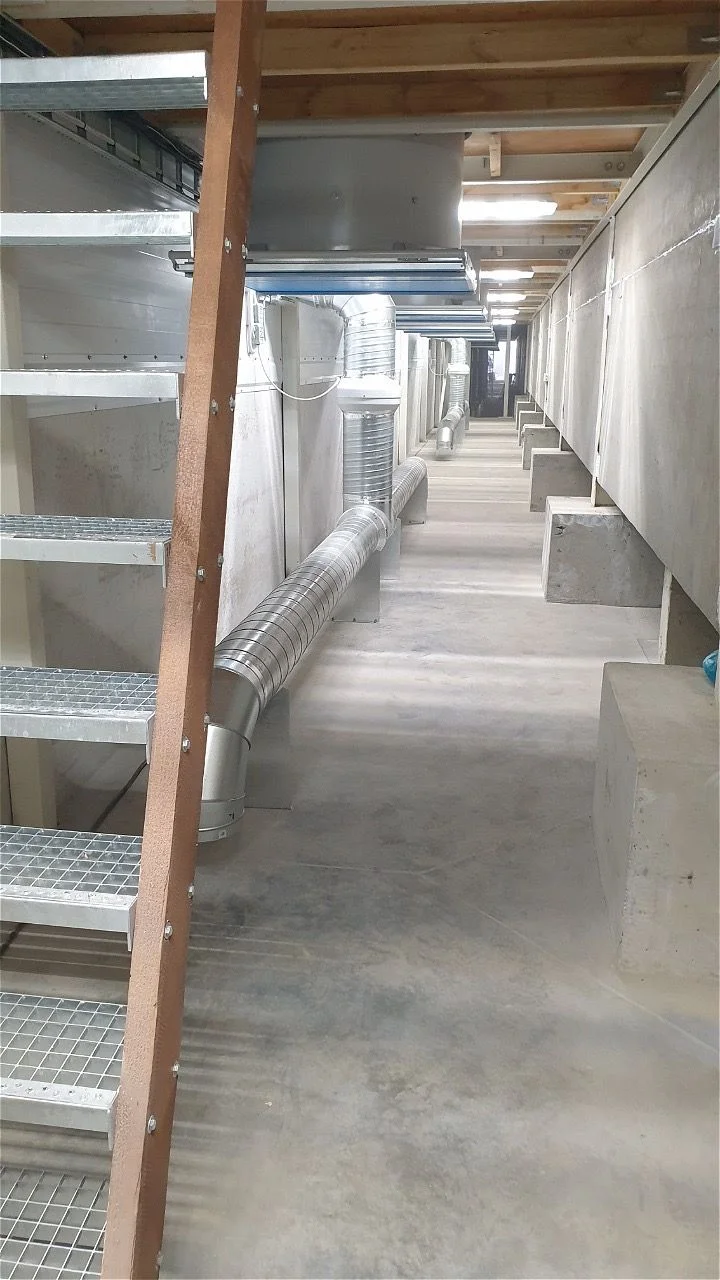
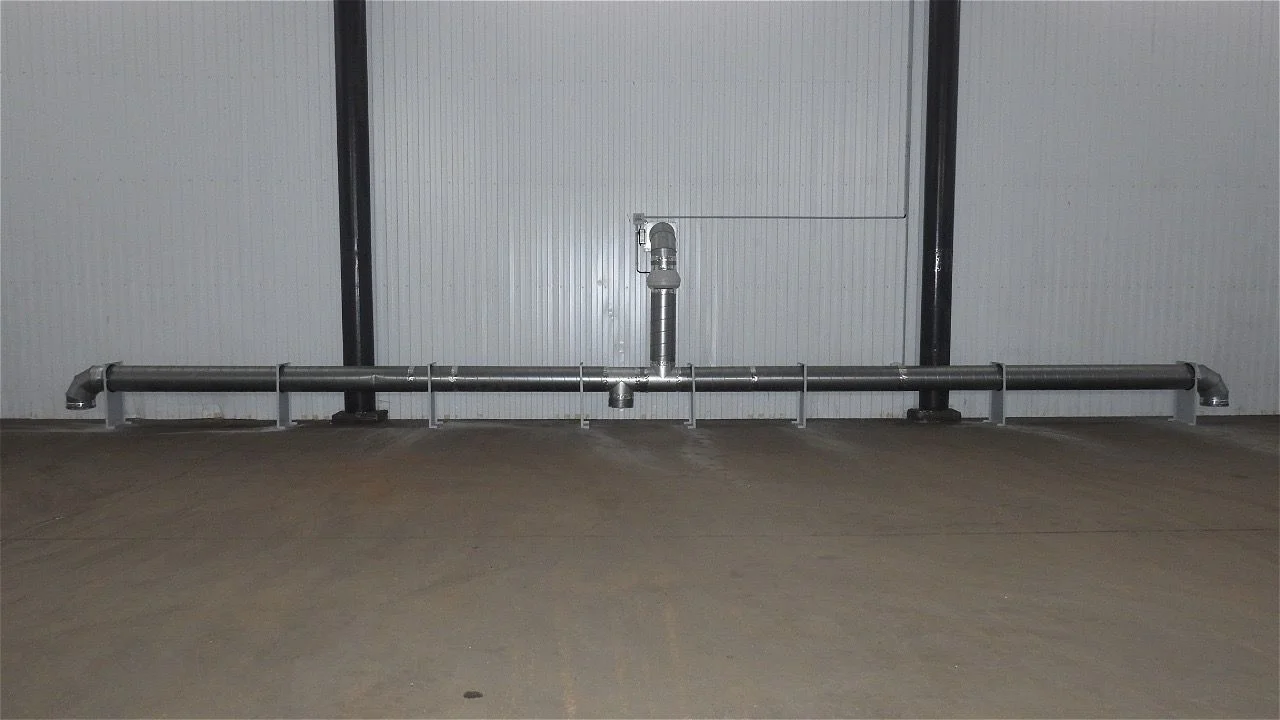
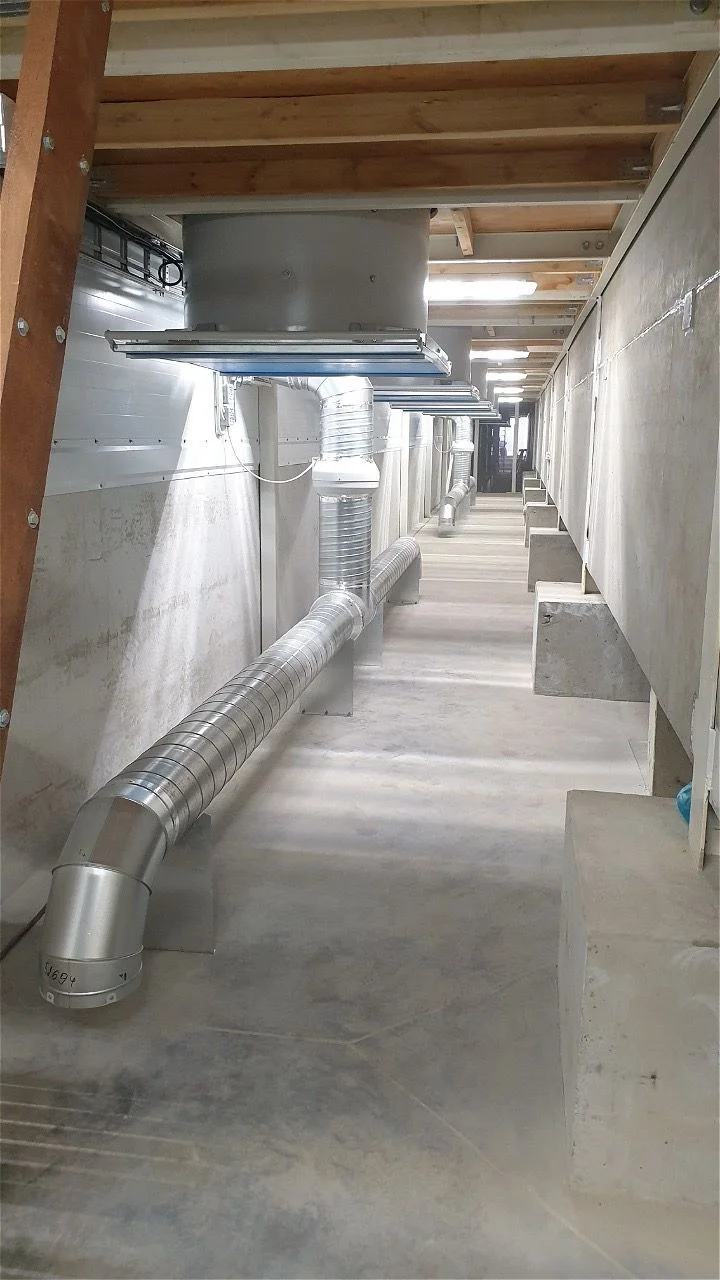
For bulk storage, the duct route is usually placed so that it can remove air from the lower accumulation area without interfering with crop handling. For container storage, the exhaust path is often integrated into the service corridor and connected to individual chambers or sections. In both cases, the engineering task is not only to install a fan, but to place the intake and discharge points correctly so the system removes CO2 from the right zone.
Where It Is Used
The system is suitable for long-term storage of potatoes, onions, carrots, cabbage and other crops where air quality has to be corrected without disturbing the selected temperature and humidity mode. It is especially useful in storage rooms where the main ventilation system is designed for drying, curing and cooling, while CO2 correction needs to happen separately and more precisely.
In practical operation, CO2 concentration can change unevenly during the season. It depends on crop condition, loading density, storage temperature, room tightness, door operation and the current ventilation strategy. A dedicated extraction system gives the operator a separate instrument for controlling this parameter instead of relying only on periodic full-air-exchange cycles.
Design and Installation Details
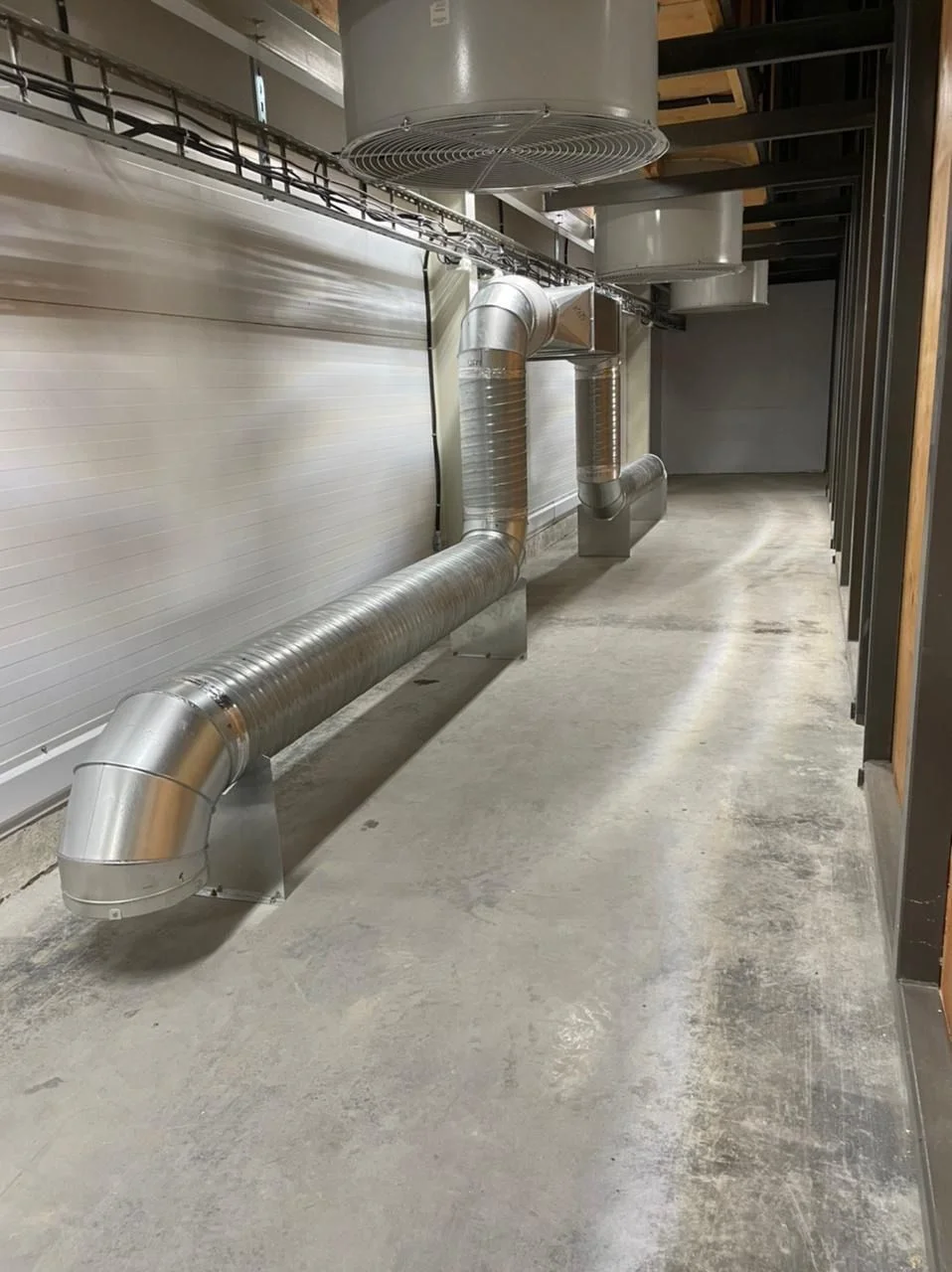
The ductwork is normally made from galvanized steel components and fixed on supports or brackets so the route remains accessible for inspection. Elbows, transitions and fan sections are selected to maintain the required extraction capacity and to keep pressure losses within the project range. Where the exhaust route passes through cold zones or external envelopes, insulation and condensation control may be required.
The automation logic is configured according to the storage concept. Set points can be adjusted during commissioning after the facility is loaded and real operating data becomes available. This is important because the correct threshold depends not only on crop type, but also on the storage technology and the way the chamber is operated.
Engineering Result
CO2 removal is not a replacement for a properly designed storage ventilation system. It is an additional control layer that keeps the chamber atmosphere within safe limits, reduces unnecessary full ventilation cycles and helps maintain predictable storage conditions throughout the season.
For the owner or operator, the practical value is control. The system makes the storage room less dependent on manual decisions, helps avoid excessive air exchange and gives the automation platform another measurable parameter for keeping crop storage conditions stable.
Discuss the equipment and installation requirements with Agrovent.
Discuss your project
