

Tomato storage and growing technology
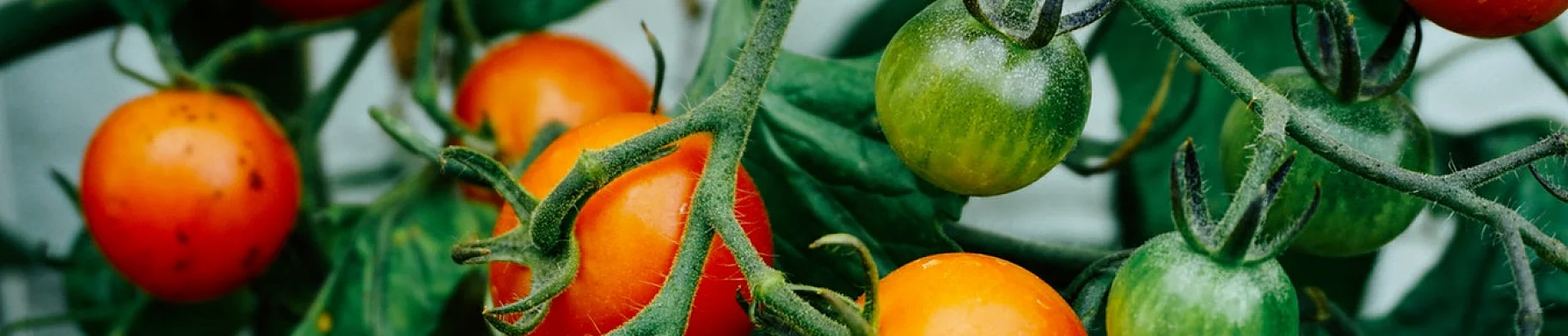
How long can tomatoes be stored without losing taste and firmness? Everything depends on ripeness, microclimate, and post-harvest treatment. We break down the full tomato storage technology - from harvest to controlled ripening.
Tomato Storage Technology: How to Preserve Quality, Flavor, and Shelf Life
Proper tomato storage isn’t just about keeping fruits cool — it’s a full system that begins with harvest maturity, careful handling, and precise microclimate management. When storage technology is followed correctly, tomatoes maintain juiciness, density, and market quality for extended periods, providing year-round supply for retailers and processors.
Why Tomatoes Store Well
Tomatoes have two critical characteristics that make them suitable for long-term storage:
-
Density holding ability — the fruit retains firmness over time.
-
Shelf-life potential — minimal weight loss and stable flavor with proper storage conditions.
These qualities allow tomatoes to maintain commercial value when handled and stored correctly.
Harvesting: The Foundation of Successful Storage
Tomatoes must be harvested by hand to avoid mechanical damage. The stage of maturity directly determines shelf life and storage parameters.
Three maturity stages
-
Green (mature-green)
– Full size, green or milky color.
– Used for long-term ripening, salting, marinating. -
Pink maturity
– Yellowish-pink fruit, suitable for long-distance transport and ripening in 4–5 days. -
Full (red) maturity
– Fully ripe, ready for immediate consumption or processing.
Storage Conditions by Ripeness Stage
| Ripeness | Temperature | Relative Humidity |
|---|---|---|
| Green | +8…+10 °C | 85–90% |
| Pink | +4…+6 °C | 85–90% |
| Full (red) | +1…+2 °C | 85–90% |
Important:
Tomatoes are extremely sensitive to low temperatures. Chilling injury stops ripening and causes softening, discoloration, and poor flavor.
The final harvest must be done before night temperatures drop below +6…+8 °C.
Post-Harvest Handling
-
Harvest without stems to avoid punctures.
-
Sort immediately by size and maturity.
-
Place in 1–2 layers in crates (max 8 kg).
-
Use paper or plastic film to protect the waxy layer.
-
Transport under shade; never leave tomatoes in direct sunlight.
Small and medium fruits store longer than large ones.
Technologies for Controlling Ripening
Depending on your goal - speed up or slow down ripening - tomatoes can be managed with specific technologies.
Slow Ripening (Extended Storage)
1. Controlled Atmosphere (CA)
Best for green and mature-green tomatoes.
-
Temperature: 11–13 °C
-
CO₂: 5% for 48 hours, then reduced to 1%
-
O₂: 5–8%
-
Humidity: 85–90%
Milk-stage tomatoes can ripen for 1–1.5 months at:
-
8–10 °C
-
1–3% CO₂
-
8–10% O₂
2. Sorbilene (ethylene absorber)
A porous carrier (vermiculite, zeolite, activated carbon, silica gel) impregnated with potassium permanganate.
-
Dose: 5 g per 10 kg
-
Extends storage:
– Brown tomatoes: +5–7 days
– Milk maturity: +10–12 days
Accelerated Ripening
Ethylene treatment
Most effective and commercially proven method.
-
Dose: 1 m³ per 2,500 m³ chamber
-
Loading density: 60–80 kg/m³
-
Temperature: 20–22 °C
-
Humidity: 85%
Cycle:
Ethylene → 30 minutes ventilation → repeat.
Temperature acceleration
-
At 18–20 °C:
– Milk: 15–17 days
– Brown: 10 days
– Pink: 6 days -
At 28–30 °C: fastest ripening, but uneven softening may occur.
Storage Equipment
-
Low-capacity crates and trays
-
Rack pallets with vertical metal posts (reduce pressure, prevent deformation)
-
Ventilated rooms with controlled temperature and humidity
-
CA systems for premium-grade, long-term storage



More articles
 Why Apples Crack in Storage and How to Prevent It?
Stable temperature, humidity, and airflow keep potatoes and apples healthy during storage - preventing sprouting, cracking, and post-harvest losses.
Microclimate
Why Apples Crack in Storage and How to Prevent It?
Stable temperature, humidity, and airflow keep potatoes and apples healthy during storage - preventing sprouting, cracking, and post-harvest losses.
Microclimate
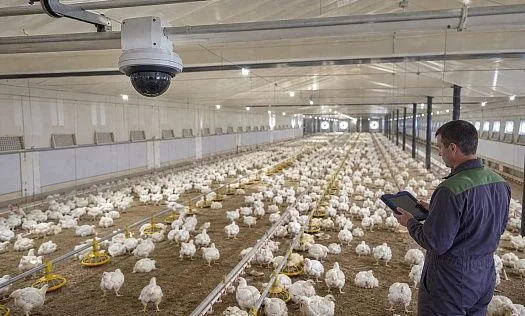 From CCTV to Flock Intelligence: A Practical ValentinaCV Pilot
ValentinaCV turns existing poultry-house video into a structured seven-day behaviour audit — without replacing the climate controller or taking control away from farm staff.
News
From CCTV to Flock Intelligence: A Practical ValentinaCV Pilot
ValentinaCV turns existing poultry-house video into a structured seven-day behaviour audit — without replacing the climate controller or taking control away from farm staff.
News
 Maximum value - minimal environmental impact: innovation in protein production
What unexpected sources of plant protein could become commonplace very soon?
News
Maximum value - minimal environmental impact: innovation in protein production
What unexpected sources of plant protein could become commonplace very soon?
News
 Fast-Build Arch-Type Storage Facilities: A Cost-Effective Solution
In many developing regions, post-harvest losses still reach 20–40%. Traditional warehouses are too expensive and slow to build - but arch-type storage hangars offer a faster, cheaper, and highly effective alternative. Here’s why this model is transforming agricultural supply chains across Africa, India, South and Southeast Asia, and Latin America.
News
Fast-Build Arch-Type Storage Facilities: A Cost-Effective Solution
In many developing regions, post-harvest losses still reach 20–40%. Traditional warehouses are too expensive and slow to build - but arch-type storage hangars offer a faster, cheaper, and highly effective alternative. Here’s why this model is transforming agricultural supply chains across Africa, India, South and Southeast Asia, and Latin America.
News
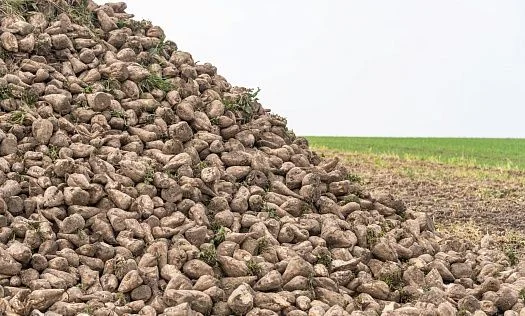 3 factors to maximize sugar beet yield
How to properly grow sugar beets?
Harvest
3 factors to maximize sugar beet yield
How to properly grow sugar beets?
Harvest
 To deep rip or not?
Most storage failures are blamed on cooling or ventilation. But the real cause often lies much earlier - in soil compaction, root stress, and pre-harvest disease pressure. This article explains why the foundation of high-quality storage is built long before the crop enters the warehouse.
To deep rip or not?
Most storage failures are blamed on cooling or ventilation. But the real cause often lies much earlier - in soil compaction, root stress, and pre-harvest disease pressure. This article explains why the foundation of high-quality storage is built long before the crop enters the warehouse.

Leave your contacts and we will get back to you
